
News
-

ProLifers in Pre-Election TV Ads Blitz
Led by Operation Rescue founder and 2024 presidential candidate Randall Terry, a slate of 10 congressional candidates are unleashing a flurry of graphic pro-life TV campaign ads challenging President Donald Trump, his Department of Justice (DOJ), and GOP members of Congress to do more for the unborn.
The brutally honest TV commercials have already aired during The View, ABC’s Good Morning America, and local news. The ads are also scheduled to run during NBC’s The Today Show, CBS Evening News, daytime shows General Hospital and The Young and the Restless, and more.
Some conservatives have expressed their displeasure — if not anger — at Terry because of his bold criticisms of Trump and the GOP-led Congress who have failed to make fighting abortion a top priority.
“Our first loyalty is to God and the babies, not to the Republican Party,” Terry told LifeSiteNews in an exclusive interview.
“Abortion, sadly, is not even in the top 10 voter issues right now in America. It’s hovering between one and three percent. TV ads like this drive abortion back into the center of the political debate, where the babies deserve it to be,” he added.
The ads, which began running in the metropolitan Washington, D.C., area this week, show gruesome photos and video of the five children who were the victims of late-term abortion at a Washington facility in 2022. The ad names all five children: Harriet, Phoenix, Angel, Holly, and Christopher.
Terry minces no words in the commercials, which are currently running on D.C.’s major network affiliates.
“President Trump, Baby Harriet was found in 2022 with four other late-term babies. Your DOJ has done nothing,” begins Terry in a commercial titled, “President Trump, when you meet God.”
“Millions of babies have died from the abortion pill, but you, HHS, and Congress, have done nothing,” continues Terry.
“You said God spared you life. When you face him, what will he say?” he asks.
“You have the power to save millions of his children, but you’re not. You and Congress must honor God and use your authority to end this genocide,” urges candidate Terry.
In a second ad, Terry warns: “If you lose the House or Senate, blame yourselves, because you betrayed your voter base.”
“Mr President, you’re focused on things far less important than ending this genocide,” says Terry. “America cannot be great wading through the blood of innocent babies.”
“God spared your life,” said Terry, adjuring President Trump. “It’s time to use your life to save his children.”
-

Dying South Korea to Legalise Abortion Pills
Korean Christians are strongly condemning the South Korean government’s announcement on Wednesday that the use of abortion pills will be permitted in the country for the first time. As recently as June, the Seoul Administrative Court had ruled that abortion groups could not advertise for the deadly drug within the country. That appears is now set to change.
Despite the fact that the country has a disastrously low birth rate, and is spending huge sums trying to put that right, the decision will cut even further the number of little Koreans who are conceived and survive until birth.
On September 16, the government stated that it plans to allow pill abortions for women up to nine weeks pregnant by early 2027, to be prescribed and dispensed by physicians for the first two years. The Constitutional Court formally decriminalised abortion in 2019, but South Korea’s parliament had deliberately delayed legislating on the issue due to strong opposition from Christian groups.
“This introduction of medication abortion is meaningful because it’s a step to make sure that ending pregnancy is done more safely and within the national healthcare system, and to improve the situation caused by a lack of an effective government oversight system,” Gender Equality and Family Minister Won Min-kyong stated at a press conference.
“The step is designed to approve a local company’s application for importing a two-drug combination pack consisting of mifepristone and misoprostol,” reported the Associated Press. “In July, President Lee Jae Myung, a liberal, instructed officials to explore ways to allow women to use the two-drug combination pack.” The Korea Women’s Association United, a feminist organization, called on the government to ensure that the abortion pill is covered by the national health insurance system.
-
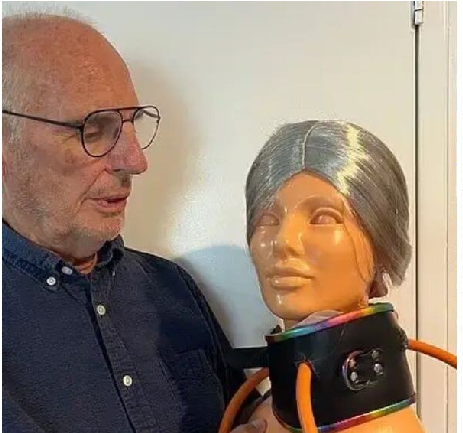
~Dr. Death" Eyes London for Pop-Up Clinic
A euthanasia campaigner and former GP nicknamed ‘Dr Death’ has said he plans to open a “pop-up office” in London to advise people on travelling to Switzerland to end their lives by assisted suicide.
Philip Nitschke, the controversial founder of pro-euthanasia organisation Exit International and inventor of the Sarco gas chamber assisted suicide pod, disclosed that he was considering setting up a “general Swiss referral service” in London to assist people in ending their lives.
“There is so much interest, it would be a pretty useful thing to have in London”, Nitschke said. “It will basically be a place where people can go and speak English to someone because, often, people have trouble trying to organise everything on the internet with the organisations in Switzerland”.
Reflecting on whether this service would even be legal in England, where it is a criminal offence to assist suicide, Nitschke said, “If you’ve got a lot of your population seeking information about assisted dying, then to try and use some form of censorship to try and stop people getting that information reflects pretty badly on any administration that would do that”.
Ahead of the event, MPs and campaigners called on the Home Secretary, Shabana Mahmood, to prevent Nitschke from being allowed into the UK to host this event, in which he planned to demonstrate his Kairos ‘suicide collar’ device.
The collar, called “Kairos”, consists of two balloons that exert pressure on the carotid artery, leading first to unconsciousness and then to death.
Earlier this year, Nitschke said that he would conduct the first assisted suicide using the collar on a woman in Switzerland who would be his first “test subject”.
Ultimately, Nitschke hosted his workshop without the collar.
“I have left the device in the Netherlands. I feared it would be stopped at customs. We are under pressure from authorities about what they call ‘giving dangerous information to vulnerable people’”, he said.
“The device is not expensive to make but we are currently in the testing phase and it would be a real setback to lose it”, Nitschke added.
He has claimed that it is difficult for governments to stop because it can be built at home.
-

Planned Parenthood Says Men Get Pregnant Too!
“People of all genders need abortions,” Planned Parenthood declared on social media, once again uniting its abortion-on-demand business with the promotion of gender-fluid ideology.
The nation’s largest abortion chain made the declaration in a September 4 Instagram post, adding, “Everyone deserves the ability and freedom to decide what is best for them.”
The top replies so far are pushing back on the notion that men can get pregnant, with the first stating succinctly, “I’m liberal guys but wtf is happening lol” (sic).
America’s largest abortion chain, Planned Parenthood has branched out in recent years into transgender “care” as well. However, perhaps in response to strong public sentiment against the transgender agenda, its most recent annual report downplays its involvement in the transition business, listing only a small footnote that “transgender services” are among the various items included in its 50,411 “Other Procedures.”
-
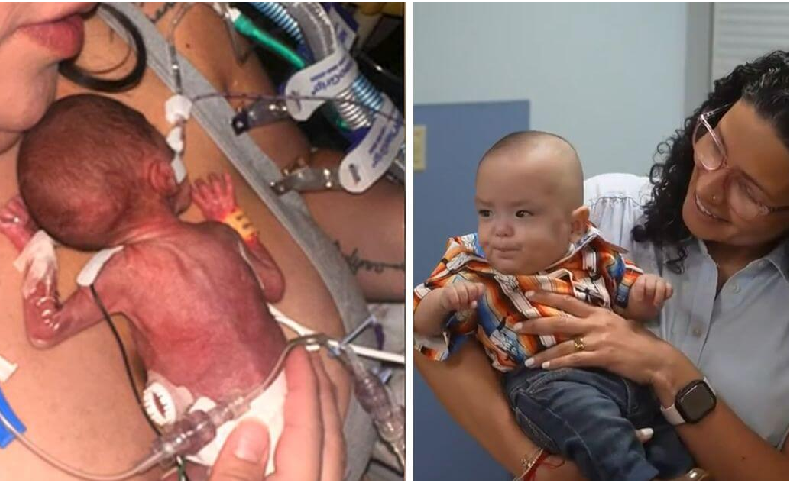
Extremely Premature Baby Now Thriving at Home
A premature baby boy who weighed only 1 lb 2 oz when born, who was given a very low chance of survival, is now thriving at home and hitting his developmental milestones.
Baby Sebastian was born in September, over four months before his due date, after his mother, Vivian, experienced complications during her pregnancy.
Vivian’s waters broke when she was at only 18 weeks gestation due to a condition known as preterm premature rupture of membranes, or PPROM. While the condition does not mean the pregnant woman will definitely go into labour early, it does carry increased risks of infection for both mother and baby.
While Vivian’s doctors speculated that she would likely give birth within five days, and that her baby would likely be stillborn, fortunately this did not prove to be the case.
Vivian remembers one of the doctors telling her, “Hey, I am gonna be completely honest with you. I see this baby coming within the next five days. This baby is going to come, and we’re gonna consider it a miscarriage”. Despite these concerns, her pregnancy continued for another four weeks, and baby Sebastian was born at 22 weeks and one day gestation, extremely prematurely but alive.
Due to being born so prematurely, doctors had concerns about whether Sebastian’s lungs would function properly, a common issue with babies born so early. He had a very low heart rate and low levels of oxygen.
Baby Sebastian remained in the neonatal intensive care unit (NICU) for 113 days, during which time he faced infections and respiratory issues.
Despite these struggles, after those 113 days, Sebastian was finally able to go home from the NICU and join his family.
“Miracles do happen because I’m living proof”, Vivian said. “I hold my miracle every single day. Every single day”.
Now, almost a year later, Sebastian weighs 14 lbs and is thriving at home. He is hitting all of the age-adjusted milestones he has been given, and is expected to grow up to be fully healthy.
-
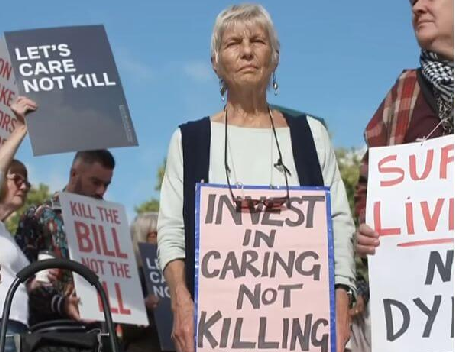
Suicide Bill Defeat Celebrations
Many figures in politics and the media have celebrated the defeat of the Assisted Sucide bill..
Writing in The Telegraph, non-affiliated Peer and former editor of The Spectator Lord (Charles) Moore said that the defeat of the assisted suicide Bill was “a victory for a society which cares for the vulnerable”.
Moore, who participated in many of the debates on the assisted suicide Bill in the House of Lords, detailed how he was impressed by the many people who spoke up “for those who could not do so”.
Despite claims from supporters of the assisted suicide Bill that the House of Lords acted inappropriately and the House of Commons came to the wrong decision, Moore rejected that characterisation, describing the process as “a counter example of Parliament working well”.
“This was the fourth unsuccessful attempt this century to allow people to get state help to kill themselves”, he added. “There cannot be another in this Parliament. Surely there should not be another in this generation”.
Baroness (Rosa) Monckton, a Conservative Peer and opponent of the assisted suicide Bill, agreed that both Houses of Parliament came together to defeat the legislation, saying, “We did our bit, and they did theirs”.
Writing in The Telegraph, Monckton shared that many people were battling against the assisted suicide Bill on behalf of people with Down’s syndrome, including her 31-year-old daughter, Domenica.
Monckton argued that people with Down’s syndrome or other learning disabilities, like Domenica, “could be easily coerced into making a life-or-death decision”.
She recalled that Damian Hinds MP, who is now the Shadow Health Secretary, tabled an amendment to the assisted suicide Bill designed to protect people with Down’s syndrome from the legislation; however, members of the Bill committee, including the Bill’s sponsor, Kim Leadbeater, voted down the amendment.
“Why? On what possible grounds? Such a lack of understanding and compassion is incomprehensible to me”, Monckton said.
She said that, when the Bill was rejected on Friday, she “felt overwhelming relief”, adding that she was “proud to play a small part in this”.
It was the viewpoint of The Telegraph itself, not just Monckton, that the House of Lords “did its job and prevented the Commons from rushing into enacting legislation that would have transformed the country”, arguing in its lead article that “the Lords have proved their worth”.
-
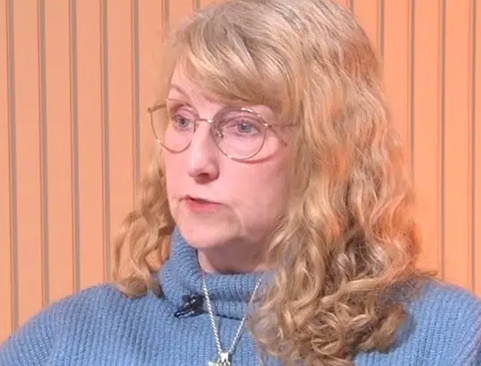
Victory for Sacked Pro-Life Teacher
A Roman Catholic supply teacher has won an out-of-court settlement after being unceremoniously sacked for her pro-life views. Sarah Morse was fired for telling students she was against abortion but has now received a payout from the school involved.
Sarah sued Arbroath High School for unfair dismissal, after it terminated her temporary contract following a brief class discussion on “religion and abortion”.
But prior to last month’s scheduled employment tribunal, at which Morse was seeking compensation for loss of pay and damages “for being cancelled”, the school resolved the dispute in an undisclosed financial settlement.
Last year, Morse was quizzed about her views on a number of ‘hot button’ topics from a US perspective by a group of third-year pupils.
In an interview with the Society for the Protection of Unborn Children (SPUC), who supported the teacher’s legal challenge, Morse recalled: “I hear from one corner of the room, ‘Well, what do you think about abortion?’.”
“I thought for a second and I said, ‘Well, as a faithful Roman Catholic, I don’t support it. I don’t agree with it.’”
When pressed on whether she was also against abortion in the case of rape, she responded that “actually, in the case of rape as well, because I don’t think it’s right to punish, you know, an innocent child for the bad things their parents did”.
Morse continued: “Towards the end of the day, the last class, I got an email from the finance minister of the school saying, ‘Can you please, you know, stop by? I have a few things I need to talk to you about.”
When she attended the meeting, the manager fired Morse on the spot. The explanation given to Morse for her dismissal was the headteacher’s disapproval of how she shared her views on abortion during class.
Reflecting on the event, Morse told The Times: “At no time did I attempt to persuade any student to adopt my position. I taught them that it is possible to have hard conversations with respect and that disagreement is a natural part of a free society.”
-
Assisted Suicide Bill Crushed
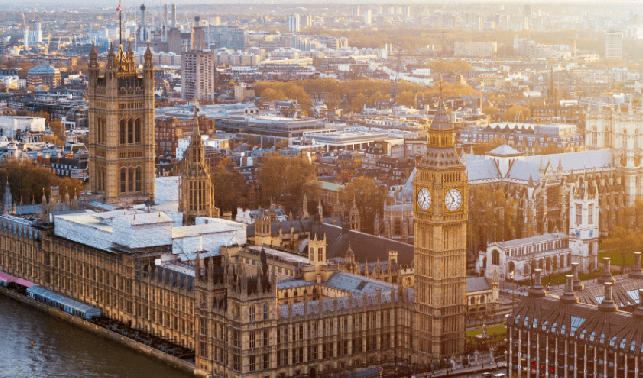
Lauren Edwards’ assisted suicide Bill has been defeated by 286 votes to 270 in a major victory for opponents of the Bill, settling the issue in England and Wales for a generation after a two-year national debate.
The assisted suicide Bill was opposed by the leaders of Labour, the Conservatives, Reform UK and the Liberal Democrats, while not a single Northern Irish MP voted for it.
After a similar major victory in Scotland in March of this year, and the most intense scrutiny that the question of assisted suicide has ever received in England and Wales, MPs in Westminster have rejected introducing assisted suicide.
Reflecting on the campaign that has run across the UK over the last two years against these major attempts to introduce assisted suicide, a prominent pollster has recognised the campaign against assisted suicide as one of the two “most successful 21st Century UK social issue campaigns.”
This is a remarkable reversal of fortunes for the assisted suicide lobby. Kim Leadbeater’s assisted suicide bill was introduced into the most socially and politically progressive House of Commons in British history. Before Second Reading, it was widely thought that it would move through Parliament with very strong majorities and easily become law.
At Second Reading, in November 2024, it was voted through with a majority of 55. This dropped to a majority of 23 at Third Reading in June 2025.
The Bill then moved on to the House of Lords, where it ran out of time before becoming law.
The Bill was then reintroduced in substantially the same form by Lauren Edwards MP in the House of Commons, where it has today been defeated at Second Reading.
Groups and experts who have expressed concerns about the dozens of flaws in the Bill or the need for further safeguards to be added include the Royal College of Psychiatrists, the Royal College of GPs, the Royal College of Physicians, the Royal College of Nursing, the Royal College of Pathologists, the Royal Pharmaceutical Society, the Equality and Human Rights Commission, the Children’s Commissioner, the former Chief Coroner, the British Association of Social Workers, the British Geriatrics Society, Hospice UK, Marie Curie, Age UK, the Association for Palliative Medicine, the Mental Health and Disability Law Committee, a coalition of over 350 disability organisations including Disability Rights UK, Not Dead Yet UK and Disabled People Against Cuts, Care England, Mind charity, the National Down Syndrome Policy Group, the Chair in Palliative Care at King’s College London, a Professor of Law and Medical Ethics at Oxford University, Standing Together Against Domestic Abuse, the House of Lords’ Delegated Powers and Regulatory Reform Committee, the Professor of Public Protection at the University of Gloucestershire, more than 1,000 doctors and overseas experts.
-

Prayers Against Assisted Suicide - Today!
With the key Commons vote on the reintroduction of the Assisted Suicide bill happening today, Christians all over Britai are joining in prayer that the proposal should get voted down.
Among the organisations joining in this are the Christian Institute, Christian Concern, Affinity, CARE, the Christian Medical Fellowship and the Evangelical Alliance.
All of us are praying that Lauren Edwards’ Westminster Bill does not become law. Vulnerable people need to be protected from these careless, callous Bills. They need help to live, not help to die.
-
Pro-abortionists Disrupt Cathedral Service
https://www.youtube.com/shorts/QjxFO9BUbHY
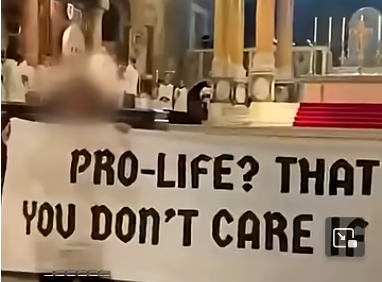
Pro-abortion feminist, “queer,” and “trans” activists stormed London’s famed Westminster Cathedral during a Mass at the start of a pro-life rally and March for Life. Fifteen Catholic bishops were reported to be concelebrating the pro-life Mass.
The obnoxious interlopers positioned themselves in front of the sanctuary and unfurled a large banner that read: “Pro-life? That’s a lie! You don’t care if people die!” all the while screaming that same refrain.
“This morning, members of the Feminist Strike Coalition disrupted an anti-abortion service at Westminster Cathedral hosting the far right group March for Life,” wrote “The Dyke Project” on Instagram following the outrageous intrusion. “Fifteen Catholic bishops attended to call for an END to our right to access safe and legal abortions.”