
News
-
Labour Figure Speaks Out Against Euthanasia
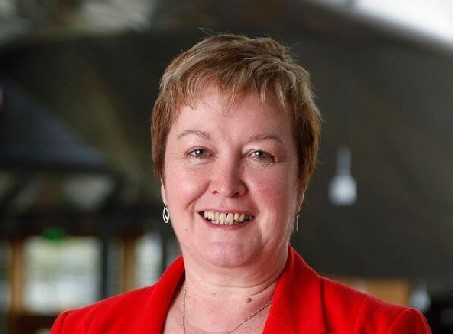
Rhoda Grant, a former Member of the Scottish Parliament (MSP) for the Labour Party, has called for Labour Party MPs to follow the lead of their Scottish colleagues and reject the reintroduced assisted suicide Bill.
The Scottish Bill was defeated in March 2026 by 69 votes to 57, with the Deputy Political Editor of The Scotsman, David Bol, describing the vote as “potentially the biggest decision in the history of the Scottish Parliament”. Now, Rhoda Grant is calling on her Labour Party colleagues in Westminster to follow suit.
In an article for Labour List, Grant explained that she and her Labour Party colleagues in Scotland voted to reject the assisted suicide Bill precisely because of their progressive and left-wing convictions.
The former Labour MSP said that the “Bill risks fuelling tensions within the Labour Party at a particularly sensitive political moment”, adding that the debate in Westminster is caricatured as “compassionate progressives” versus “socially conservative opponents”.
In Scotland, however, Grant said that opposition to the assisted suicide Bill came from Labour values of “solidarity, equality, disability rights, and the protection of vulnerable people”.
Grant argues that the Labour movement was built on the belief that people are not truly free “when crushed by poverty, insecurity, isolation or structural disadvantage”, adding that legalising assisted suicide “risks undermining that principle”.
Choice “does not exist in a vacuum”, she says, explaining that a “choice” made with excellent care is not the same as one made by someone who feels a burden, lacks support, fears loneliness, or thinks their care needs are exhausting their family – all factors that would likely influence people in their decision to end their lives by assisted suicide.
She adds that, in unequal societies, pressure is not always obvious; it is “shaped by economic and cultural pressure rather than overt coercion”, warning that the genuinely progressive answer is not to make death more accessible while leaving suffering unresolved, but to work to reduce suffering through providing better care. “No citizen should ever feel that death is their best option because society failed to provide sufficient care or support”, she said.
-

Civil Service 'Pride' Ban in NI
The Northern Ireland Civil Service (NICS) has halted its participation in LGBT ‘Pride’.
Head Jayne Brady told staff that “in the current legal and case law context, the NICS is not in a position to participate in Pride events this year in an official capacity, where colleagues would be identifiable as representing the organisation”.
However, she added, the decision did not reflect any wider change in NICS “commitment to LGBTQ+ workplace inclusion”.
The Christian Institute’s James Kennedy said: “It is a simple fact that Pride parades are political events. From waving flags for controversial new policies to welcoming or banning political parties based on their stances, everything about them shouts ‘politics’. Their proponents call them protests and they give a platform to outlandish ideologies and identities. There is nothing neutral about them.
“In that light, it is not surprising that Northern Ireland’s Civil Service has told its staff to put away their specially printed ‘NICS at Pride’ t-shirts this year. What is outrageous is how the supposedly ‘impartial’ Civil Service has continued to support Pride for so many years.
“Last year’s Pride event campaigned for puberty-blocking drugs to be given to teenagers, amidst financial support from the PSNI, Translink and NICS. At least this year, we know a little less of our public money will be thrown at these ideological causes.”
-

11-Year-Old Euthanased in Holland
A child under the age of twelve, who was seriously ill, has been euthanised in the Netherlands, in the first case of its kind since the law was changed two years ago.
Sophie Hermans, the health minister admitted to the Dutch parliament that the child had been euthanised at the end of last year. This is the first time that euthanasia has been given to a child under 12 since the law was passed. Before then, euthanasia was only possible for newborns and those over the age of 12.
When the law came into force two years ago it was expected that there would be five to ten cases of euthanasia involving children each year. Under the new legislation, euthanasia is possible for terminally ill children who are suffering unbearably with no hope of recovery.
The Netherlands was the first country to legalise euthanasia in 2002, when it passed a law allowing the practice for those who had incurable illnesses causing unbearable physical or mental suffering. Before the change in the law two years ago euthanasia was allowed for children under the age of one, and 12 years old and over. Children between one and twelve, however, were considered unable to make their own decisions.
After revealing the first death by euthanasia of a child under 12, Ms Hermans said that a review committee had been set up to examine whether the doctor acted in line with the current law. The committee has already spoken with the doctor involved and is expected to make its report public shortly.
-
Abortionist Struggles With Abortion Reversal Pill Oath
An abortionist testifying in an ongoing lawsuit against pro-life pregnancy centers struggled to give a clear answer when asked if he could swear under oath to the abortion industry’s insistence that abortion pill reversal (APR) is ineffective.
In 2023, California Democrat Attorney General Rob Bonta launched a lawsuit against Heartbeat International and RealOptions Obria Medical Clinics, the latter of which runs a chain of counseling centers in the northern part of California, accusing them of violating the state’s False Advertising Law and Unfair Competition Law and seeking an injunction blocking them from promoting APR.
The abortion pill mifepristone (RU-486) works by blocking the natural hormone progesterone that developing babies need to survive. APR consists of administering extra progesterone to counteract mifepristone’s effects, ideally within 24 hours of taking the abortion pill.
Among those Bonta called to build his case was abortionist Mitchell Creinin, author of a study funded by the leftist Society for Family Planning that the abortion lobby has claimed proves APR is unsafe. However, in his newly uncovered deposition, Creinin’s answers painted a far less convincing picture.
Over the course of being repeatedly asked if he could “swear under oath that APR does not work,” Creinin attempted to split hairs, insisting he could swear “that I have no evidence that it does work,” while apparently admitting “I cannot swear under oath” to the definitive statement that it does not. Repeated requests for a simple “yes or no” answer to the question went in vain.
He was even more noncommittal about claims that APR is unsafe, maintaining he had concerns about not following up mifepristone with misoprostol but admitting that he himself prescribes progesterone for off-label uses. “I offer it to patients and tell them the pros and cons, and it’s the patient who decides if she wants to use it,” he testified. “In the short term, it’s safe. In the long term, there is an association with thyroid cancer. So it’s up to them to decide if the… potential benefit outweighs the potential risk.”
Critically, at one point Creinin dismissed pro-APR doctors on the grounds that they are “bound to uphold science in the same way, and they demonstrate they don’t when they try to do statistical analyses on ten people or three people. That’s not science.” It was later pointed out that his own study started with just 12 people, which fell to 10 when two dropped out.
-

Rape Gangs Inquiry Exposes Abortion Industry Too
On June 16, UK MP Rupert Lowe’s devastating report on the systematic sex trafficking, rape, and abuse of tens of thousands of girls across Great Britain by primarily Muslim perpetrators over decades was released. The report runs to 219 pages, and is an excruciating read. The crimes are gut-wrenching; the institutional cover-up rage-inducing.
Lowe launched the investigation last year over the UK government’s reluctance to launch a national inquiry into the rape gangs, crowdfunding to start the project. The Rape Gang Inquiry Report details organized sexual exploitation in almost 40% of UK districts, with an estimated 250,000 victims, and with crimes dating back to the 1950s, escalating sharply with the mass immigrant influx of the late 1990s.
Overwhelmingly, the men were from Muslim, primarily Pakistani, backgrounds; approximately 87% of convicted offenders in British group-based child sexual exploitation cases have distinctively Muslim names. Some estimates in the report suggest that this percentage may be higher. The crimes are not limited to sex trafficking; sexual sadism, torture, enslavement, kidnapping, and every imaginable form of depravity also feature in the report.
One largely overlooked aspect of the inquiry is the use of abortion—the destruction of children in the womb—both as a consequence and a weapon in the hands of the traffickers. The systematic destruction of innocence always results in the physical destruction of innocents. Countless girls were abused until they miscarried, or lost babies due to physical and emotional trauma. Others were forced into abortions.
“Gangs deliberately used pregnancy as a tool of control,” the report states. “Girls as young as 4 were raped repeatedly, some [girls] until they became pregnant. Perpetrators then exploited the pregnancy to bind the victims to them, prevent escape, and exert ongoing coercion. Victims endured multiple pregnancies while still children themselves.”
“Abortions were sometimes arranged by the perpetrators or their associates, often in backstreet conditions that caused lasting physical damage,” the report stated. “Medical services recorded the pregnancies and injuries but discharged the girls back to the abusers without safeguarding or long-term support. Social services and the NHS treated the pregnancies as isolated medical events rather than evidence of organized child rape.”
State institutions—including the abortion industry—ignored obvious crimes, over and over again. “Every statutory agency encountered these pregnancies,” the report emphasizes. “Hospitals and sexual health clinics recorded genital injuries, STIs, and pregnancies in 11- to 16-year-olds, but made no protective referrals. Mental health services discharged girls after suicide attempts linked to the pregnancies without trauma care. Social services closed cases or returned the young mothers to risk environments.”
Police failed to investigate the rapes that caused the pregnancies, even when the perpetrators were named and known. Licensing authorities allowed the taxis that transported pregnant girls to abusers to continue operating. The family law courts made matters worse for victims across the board, often by awarding rapists parental rights over the very children begotten by their heinous crimes. In some cases, such rapists have even been allowed to apply for contact orders to meet their grandchildren.
“The method used to groom children typically followed the same process,” the report states. “Girls as young as 11 were initially befriended by a young Muslim man who then treated the young child like an adult and would then start providing them with alcohol, drugs, and cigarettes. After a few months the girls would then be collected from school gates, care homes, and streets in taxis.”
They were taken to houses, flats, restaurants, and hotels where they were raped repeatedly by groups of men, tortured, filmed for blackmail, and told they were “white trash” or ‘kuffar’ who merited punishment. Some girls were even trafficked to the Middle East and forced into marriage.
One girl, Michelle, became pregnant four times by rape as a child, and had miscarriages, an abortion, and one child who survived. “98% of [my abusers] were Pakistani Muslim,” she said. “If not, they were Iraqi Muslim or Kurdish.” She described an “industrial” scale network of sexual abusers and said that the gangs remained “untouchable” because the authorities feared being called racist.
Marie was seven years old when her abuse began. “She became pregnant as a product of her abuse,” the report states. “On two occasions her mother took her to a woman’s house. There the woman used a knitting needle to perform the abortions. The woman’s husband also raped her.”
Sarah was 15 when she was kidnapped from the street. “Over the years Sarah was subjected to eight forced abortions, one of them five months into pregnancy,” the report notes. “When she accompanied her abuser to medical appointments, he required her to wear a hijab and walk five feet behind him. She was compelled to learn the Quran in Arabic and permitted to speak only Urdu and Punjabi. She was also made to cook and clean for the gang members who abused her.”
The report concludes (page 173) that every step of the way, abortion providers enabled the rapists and sex traffickers:
As for physical health, pregnancies in children under 16, abortions following suspected rape, concealed pregnancies, forced terminations, and suspected backstreet abortions should be treated as safeguarding and potentially criminal matters rather than solely private medical episodes. The child must always be regarded as a victim in need of protection.
When sexually victimized and vulnerable girls were taken for abortions, the abortion staff ended the lives of their unborn children and sent them back to their abusers. The countless victims of the UK’s rape gang scandal include many children conceived in horror and killed to cover up the crimes. Britons are justifiably horrified by this decades-long scandal and the cover-up that enabled it to continue. It should not be overlooked that the abortion industry undoubtedly shares in this guilt.
-

Prem Baby at 22 Weeks Goes Home
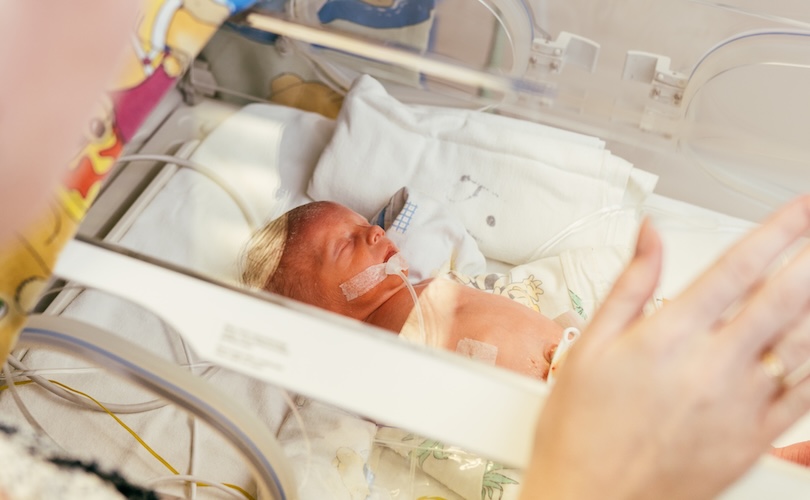
A baby girl, born at 22 weeks and 5 days on World Prematurity Day, defies odds as the youngest ever surviving baby to be born at a hospital in the UAE.
Baby Talia was born weighing only 400g in November. Her birth was so sudden that Talia was still in her amniotic sac when she was born, and her skin was very thin and transparent. Despite her incredibly small size, the medical team immediately started life-saving care, including advanced breathing support and intubation.
As is common with extremely premature babies, it was not smooth sailing once baby Talia was out of the womb, and shortly after birth, she required strong antibiotics. In the first few days of Talia’s life, there was concern about potential brain injury due to infection and Talia’s extreme prematurity.
Baby Talia’s doctor, Dr Maria Theresa Reyes, said that this case pushed the medical team past their current experience. “We have had several 23‑week infants weighing around 500 grams with excellent outcomes”, explained Dr Reyes, but “Talia is our first 22‑week infant, weighing just 400 grams. She is the smallest 22‑weeker ever reported in the UAE”.
Talia’s condition continued to stabilise, as small amounts of breast milk helped her grow and build immunity. Now, after over 4 months in intensive care, baby Talia was finally able to go home to her family. Weighing 2.6kg at the time of her discharge from hospital, doctors found no concerns for long-term health complications.
Her mother, Jade, shared that “our little warrior, Talia, has shown us what strength, courage, and faith really mean”. She further explained that “we spent four months by her side in the NICU, holding on to hope through every moment. We learned how to love through wires, alarms, and uncertainty. How to smile while our hearts were breaking”. Jade said that “the NICU changed us completely”, and that Talia’s family would “always be grateful to the team who stood with us through it all”.
King’s College London Hospital in Dubai has achieved a NICU survival rate of 99.3%, and Baby Talia’s case marks a milestone for neonatal medicine in the UAE, highlighting the growing capabilities of advanced neonatal intensive care
-

Ireland's Abortion Holocaust Set to Worsen
Ireland’s Parliament voted on Wednesday to abolish a mandatory three-day abortion waiting period that has helped to save many babies’ lives.
The legislation aims to end the current requirement that women wait three days before an initial visit to the doctor, who ordinarily must certify that the woman is not past 12 weeks’ pregnancy, and the abortion of her baby. Abortions in later stages of pregnancy are permitted in exceptional circumstances when it is deemed that there is an “immediate risk to the life, or of serious harm to the health, of the pregnant woman.”
Figures show that between 2019 and 2024, about 10,400 women did not return for a second abortion consultation, including women who had a miscarriage or a hospital appointment, but indicating that many babies were saved as a result of the waiting period.
While Parliament voted to strike down the waiting period 86 votes to 70, most deputies from both parties voted against the measure, according to The Guardian. The scale was tipped by votes in favor of the measure by a “handful of cabinet ministers, including the taoiseach (prime minister) Micheál Martin, and the tánaiste (deputy prime minister) Simon Harris.”
Just weeks ago, a similar bill from the Social Democrats seeking to abolish the abortion waiting period failed to pass by an 85-30 vote, with 36 abstentions, Crux Now reported.
Peadar Tóibín, leader of Aontú, decried the vote, saying it has taken away the “last protection for unborn children.”
“The battle for compassion and humanity is not over. It still has to get through the remaining stages of the Dáil and Seanad,” he added.
Tóibín said during a debate on Tuesday that there were 10,852 abortions in Ireland last year, “the highest figure on record.”
“It is equivalent to 400 classrooms of children who are no longer with us as a result of that abortion law. It is absolutely heartbreaking,” he said.
-

Archbishop Denounces Return of Euthanasia Bill
Catholic leaders in the United Kingdom are speaking out against the Starmer government's effort to reintroduce the failed assisted suicide bill in Parliament.
In a statement, Archbishop John Sherrington expressed is concern that the Terminally Ill Adults (End of Life) Bill is set to return to Parliament this autumn after facing significant backlash upon introduction.
“I am deeply disappointed that the previously unsuccessful Terminally Ill Adults (End of Life) Bill is being reintroduced in the House of Commons,” stated Sherrington.
“The recent debate about this Bill showed how many people found the proposed legislation, even if they accepted it in principle, to be flawed and full of unresolved matters. The Catholic Church opposes this Bill in principle and joins with many other people of faith and none in arguing that we should not cross this watershed.”
If enacted, the legislation would permit terminally ill adults with a life expectancy of six months or less to request medical assistance to commit suicide.
Archbishop Sherrington, who serves as lead bishop for life issues for the Catholic Bishops’ Conference of England and Wales, expanded upon the radical nature of the bill, including the moral implications on healthcare providers.
“The Bill undermines freedom of conscience for medical professionals and care workers. It also requires care homes and hospices to participate in assisted suicide, threatening not only their future existence but also the wellbeing of their more vulnerable staff.”
-

Guilty of Murder of Mother and Unborn Child
A man has pleaded guilty to both murder and child destruction after killing a heavily pregnant woman in Northern Ireland.
Sarah Montgomery, 27, and her unborn child were murdered in 2025. She was the mother of two young girls and had already chosen the name Liam Arthur for their new little brother.
Her murderer, Zak Hughes, was sentenced to life imprisonment by the judge, Madam Justice McBride.
A vigil was held for Sarah last year, where she was described as a “lovely” person, who “lived for her two girls who were so excited to have a baby brother join their little family in August”.
The officiator at Sarah’s funeral service said: “Sarah was so looking forward to being a mummy also to her baby, Liam Arthur. It is an utter tragedy that none of us has had, or ever will have, the chance to know him, to see him as a little boy or grown into a young man”.
She added: “Sarah and Liam Arthur and his sisters should have a future ahead of them, but that future has been brutally and unjustly snatched away from them, and from their family and friends.”
Head of Communications at the Christian Institute, Angus Saul, branded the attack “horrific”, but noted that the sentencing highlights a glaring inconsistency in the law.
“This case is a tragedy, but we can give thanks that the killer is finally being brought to justice for both of the lives he destroyed.
“However, this highlights a stark contradiction in our justice system. Earlier this year, the House of Lords voted to decriminalise women in England and Wales who kill their unborn babies at any stage of pregnancy. This means if a woman has had an abortion at the same stage of pregnancy, she would have faced no sanction whatsoever.
“So ‘child destruction’ is deemed acceptable and unpunishable if it is the mother herself who kills her unborn child.
“The unborn deserve protection, and yet politicians have been stripping this away, even when the perpetrator is the person who should have loved them the most.”
-

Assisted suicide legislation set to return to Westminster
Plans to legalise assisted suicide will be brought forward again at Westminster in the form of a Private Member’s Bill.
Labour MP Lauren Edwards came second in the Private Members’ Ballot last month, and says she will bring forward legislation that is identical to Kim Leadbeater’s Bill, which narrowly passed in the House of Commons one year ago.
By using identical legislation, Edwards could invoke the Parliament Acts. This would mean that if the Bill is voted through the House of Commons in an unchanged manner, the House of Lords – where the Leadbeater Bill stalled – could table amendments, but would be unable to reject it outright.
The Parliament Acts have only been used seven times in the last century, and never for a Private Member’s Bill.
Supporters of Kim Leadbeater’s Bill falsely claimed that members of the House of Lords engaged in filibustering to block the legislation prompting Edwards to say: “It’s perfectly reasonable for us to ask the House of Lords to finish the job.”
But opponents say the vast number of amendments was necessary, given the poor quality of the Bill. The Royal College of Psychiatrists, disability groups and hospices all opposed it, and while the Bill passed the House of Commons by 314 to 291, a number of MPs said they only voted in favour because they expected the House of Lords to make vital amendments