News

  • Major Case v Abortion Polls by Post in Louisiana

    The state of Louisiana has asked the Supreme Court to uphold a lower court ruling that blocked the distribution of the abortion pill mifepristone by mail nationwide.

    The Louisiana attorney general’s office said in a filing that a 2023 Biden-era rule allowing mail delivery of mifepristone has led to thousands of illegal abortions in the state, despite its pro-life laws.

    The abortions are also “directly causing tens of thousands of dollars of harm to Louisiana in the form of investigatory costs and Medicaid costs from statistically certain emergency room visits,” according to the state.

    Louisiana thus “had no choice but to file this suit,” the attorney general’s office said.

    The state urged the justices to preserve a decision by the Fifth Circuit Court of Appeals last Friday that halted the Biden rule nationwide and reinstated the previous in-person dispensing requirement. Louisiana also called on the high court to reject emergency appeals by two pharmaceutical companies that make mifepristone.

    The Supreme Court temporarily paused the Fifth Circuit’s ruling for one week on Monday.

    The Biden Food and Drug Administration’s abortion pill policy, issued after the reversal of Roe v. Wade, has massively expanded the use of the mifepristone, undermining pro-life laws and causing serious harm to women, according to data.

    Abortionists and abortion drug networks have mailed tens of thousands of pills into pro-life states under the rule, often enabled by “shield laws” in Democrat states that protect illegal abortion pill distributors from out-of-state law enforcement.

  • 10,000 Babies a Year Could Be Saved

    An early care scheme for women who have suffered miscarriages could save an estimated 10,000 unborn lives a year, researchers have suggested.

    The scheme, trialled at Birmingham Women and Children’s Hospital, provides increasing care to mothers following each miscarriage to enable them to give birth to future children.

    Currently, the NHS requires a woman to lose three babies before offering tests, support and treatment. But the study found that its system carried a 4 per cent lower risk of future loss.

    Tommy’s, the pregnancy and baby charity behind the new support model, estimated that there are around 250,000 miscarriages in the UK each year.

    The organisation criticised the “3 miscarriage wait” for leaving “countless families unsupported, their grief unrecognised and opportunities to improve their situation – and possibly prevent further loss – missed”.

    In contrast, it explained that the new system is “easily achievable, restores dignity to miscarriage care and, ultimately, could save babies’ lives”.

    Sally, 33, who has lost two babies, explained: “Putting these systems in place show women that they are thought about, that one miscarriage is enough to be thought about and to be supported”.

    Baroness Merron, Parliamentary Under-Secretary of State at the Department of Health and Social Care, also welcomed the study: “Pregnancy and baby loss can have a devastating impact on women and families, who too often feel they have been left without the care and support they need. Research like this is crucial”.

  • Britain's Abortion Holocaust

    On this year's anniversary of the coming into effect of the 1967 Abortion Act, 11,105,671 a heart-breaking unborn babies had lost their lives. Monday 27th April marked 58 years since the abortion law came into force. 

    At the current rate of abortion, according to the most recent figures, one baby is lost to abortion every two minutes, 34 lives are ended every hour.

    The number of abortions in England and Wales has reached a record high, with 278,740  taking place in 2023 and a total of almost 300,000 across the whole of the UK. In Scotland in 2024, there were a record 18,710 abortions, 468 more than in 2023. In Northern Ireland, there were 2,899 abortions in the year ended 31 March 2025, compared with 2,795 in the previous year.

    This significant rise in abortions in England and Wales has accompanied the introduction of ‘DIY’ home abortion services that have been operating in England and Wales since March 2020. Since ‘DIY’ home abortions were introduced, a number of significant problems have arisen.

    Abortion statistics released by the Department of Health and Social Care show that in England and Wales, there was a total of 278,740 abortions in 2023, an increase of 26,618 abortions from 2022, when there were 252,122 abortions. This is the highest ever number on record. There were an estimated total number of abortions across the United Kingdom in 2023 of 299,617 – the highest ever recorded.

    Opinion polls repeatedly show that the public wants increased protections for unborn babies and more support for mothers facing unplanned pregnancies – rather than the wholesale removal of legal safeguards around abortion.

    Only 1% of the population wants abortion to be available up to birth, and 70% of women want the abortion limit to be reduced to 20 weeks or lower.

    The UK’s abortion law is failing both women and unborn babies. It is a national tragedy that 11,105,671 lives have been lost since the Abortion Act 1967 came into effect, each one a unique and valuable human being who was denied the right to life Each of these lives was someone’s son or daughter, and each of these lives mattered.

    The societal effects of this loss of life are almost incalculable. There are literally millions of ‘missing’ people because of abortion. Not only those 11,105,671 who actually lost their lives to abortion, but also their likely millions of descendants who never were. Every one of these abortions represents a collective failure of our society to protect the lives of babies in the womb and a failure to offer full support to women with unplanned pregnancies”.

  • Major ProLife Victory in Scotland

    Scotland now has some of the most extreme pro-abortion legislation in the world, so a court verdict in favour of the right of pro-life activists to offer support to worried mothers is very welcome indeed.

    A Scottish grandmother who was arrested for holding a sign in an abortion “buffer zone” has had the charges against her dropped.

    Rose Docherty, 75, was the first person to be charged under the Abortion Services (Safe Access Zones) Act, Scotland’s buffer zone legislation.

    Docherty was arrested and charged in September last year for holding a sign outside the Queen Elizabeth University Hospital in Glasgow that read “Coercion is a crime, here to talk, only if you want”.

    The case against Rose Docherty was dropped following an argument from her legal team that the charges against her violated her Article 10 right to freedom of expression. 

    On hearing the verdict, Docherty said, “This verdict is a major victory for free speech in Scotland and the UK. It shows that peacefully offering consensual conversation on a public street, which is all I have ever done, can never be a crime”.

    “My case shows how ‘buffer zones’ are used by authorities to impose censorship. ‘Buffer zone’ legislation must be repealed in Scotland and across the UK to ensure it is not misused to target peaceful and lawful expression again in the future”, she added.

    Scotland’s buffer zone legislation is the most extreme legislation of its kind in the world.

    It creates a minimum of 200m ‘safe access’, or buffer, zones around any facility that performs abortions, where offering support to women would be criminalised. The 200m is a minimum, as abortion providers can apply for the zone to be extended, with the Act giving the Scottish Government the power to extend any buffer zone beyond the 200m if they judge that the existing zone “does not adequately protect” women seeking an abortion. There is no limit on the size of the buffer zone that can be created under this power.

    The minimum size of the buffer zones in Scotland extends further than the minimum size of any other buffer zones in the world. For example, the Public Order Act 2023 in England and Wales sets the limits of the buffer zones at 150m and the legislation does not give the Government the power to extend buffer zones beyond 150m. Most buffer zones in Northern Ireland are 100m, half the size of those in Scotland. 

    Within these zones, it is illegal to influence a person in regard to their decision “to access… the provision of abortion” in an abortion clinic or a hospital. These provisions make offers of help to women seeking an abortion, such as what Rose Docherty was alleged to have been doing, illegal within a buffer zone, and could criminalise silent prayer.

    Anyone who commits an offence can be fined up to £10,000 on a summary conviction, or an unlimited fine on indictment.

    The provisions of the Act apply to anything that is “visible or audible” within a buffer zone, even if these relate to private buildings. This means it may be illegal for pro-life signs to be displayed from a window within a private home or outside a place of worship if the signs are within the boundaries of or visible to a buffer zone. Similarly, conversations in private homes or outside churches may be included if they are audible inside a buffer zone. Referring to private dwellings, Gillian Mackay, who introduced the legislation, told the Committee “it is essential that such premises are covered by the legislation”.

    What is essential is that babies are saved, and more will be thanks to this court verdict and the courage of Rose Docherty.

  • 2/3 of Public Oppose Return of Assisted Suicide Bill

    More than two-thirds of the British [ublic have seen through the Labour effort to push assisted suicide on the country. New polling has revealed that fewer than one in three (29%) of the general public think that a new assisted suicide bill should be introduced as soon as possible in the same form as the assisted suicide Bill that has failed to become law – as would have to happen should an MP want to use the Parliament Acts to bypass the House of Lords to force the Bill into law.

    In contrast, a majority of the public (53%) think the Bill should either not return or, if it returns, it should be introduced with stronger safeguards, which would mean introducing a different Bill, therefore ruling out the use of the Parliament Acts to bypass the Lords.

    The polling also found that only 34% of the public polled thought the Lords should not be able to block laws passed by elected MPs if the law is not in the Government’s manifesto. Kim Leadbeater’s assisted suicide Bill is a Private Members’ Bill and was not part of Labour’s General Election manifesto.

    Following the failure of Kim Leadbeater’s assisted suicide Bill, polling organisation More in Common asked 2,041 adults in Britain at the end of April this year which safeguards would be important to them should another assisted suicide Bill be introduced. 

    The polling found that the overwhelming majority of the public believes that, if the assisted suicide Bill were to return, palliative care must first be offered as an alternative to assisted suicide before assisted suicide can take place

    90% of respondents who took a position on the question thought that palliative care must be offered as an alternative to assisted suicide first. 52% of respondents agreed it was “essential” that palliative care must be offered as an alternative to assisted suicide first and a further 31% said this was “Good to have”. Only 9% thought it unnecessary.

    The polling also found 71% of those who took a position were supportive of the need for approval from a judge as a safeguard. 34% of respondents agreed it was “essential” that a judge approve assisted suicide and a further 30% said this was “Good to have”.

    In March last year, Kim Leadbeater removed the requirement that a High Court judge approve assisted suicide applications, despite the fact that this was presented as the flagship safeguard of her Bill, and despite assurances from her that this safeguard would not be removed. The More in Common polling shows the overwhelming majority of the public would want this safeguard in place should an assisted suicide Bill return.

    The polling also found 95% of those who took a position were supportive of the need for “strict rules against family or financial pressure on the patient” as a safeguard in cases of assisted suicide. 65% of respondents agreed this safeguard was “essential” and a further 22% said it was “Good to have”.

  • "Abortion Debate Not Over" - Irish Prolifers

    Thousands of people called on Ireland to ‘change course’ on abortion at this year's March for Life in Dublin.

    Independent TD Ken O’Flynn told the crowds marching from St Stephen’s Green to Molesworth Street on Bank Holiday Monday that the debate on abortion “is not over and we will not be silenced”.

    Currently, abortion is available on demand in Ireland up to twelve weeks, with a three-day reflection period. In 2024, there were 10,850 abortions, the highest on record.

    The march organiser, Pro Life Campaign Ireland, wrote: “Several thousand people marched through Dublin today, and the energy, warmth, and hope in that crowd was something special. Our speakers gave powerful, honest addresses.

    “The facts they shared are ones the Government cannot keep ignoring. Since 2018, abortions in Ireland have risen from fewer than 3,000 a year to close to 11,000. Today, 1 in 6 babies’ lives ends in abortion in this country. That is not what people were promised.”

    O’Flynn, TD for Cork North-Central, said that instead of practical support being given to pregnant women in crisis, there is a push to remove safeguards and expand access to abortion. He told the crowds that we “need to change the course that we’re on”.

    Last month, the leader of the Social Democrats introduced an “extreme” proposal to further liberalise Ireland’s abortion law by abolishing the mandatory three-day reflection period.

    Deputy Holly Cairns’s Reproductive Rights (Amendment) Bill 2026 would also allow all babies deemed to have a “fatal condition” to be aborted. Presently, it must be certain that they would die within 28 days of birth.

    The proposals, which will be debated at Second Stage during Private Members’ Time, also decriminalise doctors if they “intentionally end the life of a foetus otherwise than in accordance” with the abortion law.

    In addition, medics’ right to “conscientious objection” would be qualified by a “legal duty to provide prompt and appropriate medical assistance to any person in a medical emergency”.

  • Pastor Clive Convicted - Likely to Appeal

    Retired pastor Clive Johnston has been convicted on two charges under the Abortion Services Act in Northern Ireland for the crime of preaching on John 3:16 on the edge of a buffer zone across from Coleraine’s Causeway Hospital, which commits abortions, in 2025. Johnston called it a “dark day for Christian freedom.”

    John 3:16 reads: “For God so loved the world, that he gave his only begotten Son, that whosoever believeth in him should not perish but have everlasting life.”

    On May 7th, a district judge at the Coleraine Magistrates Court found the former president of the Association of Baptist Churches in Ireland guilty. The Christian Institute, which is supporting him, noted that Johnston “now faces a criminal record and £450 in fines,” and that he will likely appeal his conviction.

    Johnston, a 78-year-old grandfather, delivered the open-air sermon in July 2025. He did not mention abortion in his message, which focused exclusively on the Gospel. There were also no pro-life signs present during the Sunday morning event attended by about a dozen people.

    He was prosecuted on two charges under the 2023 Abortion Services Act for the sermon, which makes it criminal for people to be “impeded, recorded, influenced or to be caused harassment, alarm, or distress” within the 100-150-meter zones (328-492 feet) around abortion facilities or hospitals that provide abortions.

    “We held a small, open air Sunday service near a hospital,” Johnston said after his conviction. “We made no reference whatsoever to the issue of abortion. And yet the buffer zones law is so broad that holding a Sunday service has been found to be a criminal offence. And at 78 years of age, I find myself, for the first time, convicted of a crime.”

    “If someone is out there causing trouble, stirring up violence, harassing or verbally attacking people, then, absolutely, go ahead and prosecute them,” he continued. “But I wasn’t doing any of those things as the police video shows and as everyone involved in this case accepts. So we are going to go away now and discuss what to do next with our legal team. I am obviously keen to find out what options there might be for me to appeal.”


  • Abortion in Israel - the Shocking Reality

    Israel, a nation with a forceful and fiercely anti-Christian religious lobby and a far-right prime minister, has some of the most liberal abortion coverage in the world.

    Among the many additional treatments to be offered to Israelis in the country's coprehensive 'health care' package since 2014 are free-of-charge abortions for women ages 20-33.

    Israel has always had a liberal stance on abortion, allowing women facing medical emergencies or those who are victims of rape or abuse to receive subsidies to help them terminate their pregnancies. Outside of those regulations, women can apply for abortions for reasons ranging from an emotional or mental threat caused by the pregnancy or for not being married to the baby’s father. All women who seek to end a pregnancy must appear before a three-member committee to state their case, but 98 percent of requests are approved. Women under the age of 20 or over the age of 40 are eligible for subsidized abortions regardless of the reasons.

    The rate of abortion in Israel has, however, steadily declined since 1988, and compared to much of the rest of the world, abortion rates in Israel are moderate. At around 9 abortions per 1,000 women of childbearing age, the rate is much lower than England (around 16) and the United States (around 13). 

  • ProLife Priest Offered Euthanasia

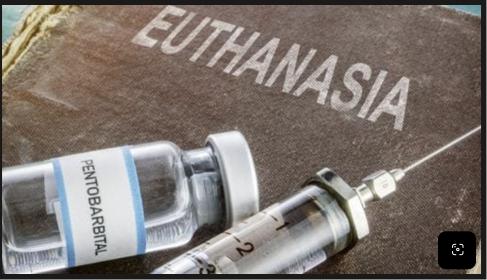
    A Canadian priest has twice been offered an assisted death while recovering from a hip fracture, despite being known to be opposed to euthanasia.

    According to reports, the 79-year-old priest, Father Larry Holland from Vancouver, British Columbia, Canada, said he was not dying then or now, but that medical professionals raised the prospect of ending his life by euthanasia on more than one occasion.

    “I think I was very shocked. It is such a sensitive subject”, he said, describing his reaction when a doctor raised the topic of euthanasia and assisted suicide with him.

    The medical professionals’ mention of this topic left him “kind of silent” for a moment. “There are some things you just don’t talk about to some people”, said Holland.

    After the Catholic priest explained to the doctor that he was morally opposed to euthanasia, the doctor said “he just wanted to make sure that, if a [terminal] diagnosis came up or not … I knew of the different services I had access to”.

    Despite making his views clear, just a few weeks later, the priest was offered euthanasia a second time. The offer came from a nurse whom Holland believed to be uncomfortable raising the topic with him.

    A spokesman for Vancouver Coastal Health, which operates the hospital in which Holland was cared for, said “staff may consider bringing up MAID [medical assistance in dying] based on their clinical judgment, provided they possess the necessary knowledge and skills to do so”.

    The archdiocese’s pro-life chaplain, Father Larry Lynn, said “This must surely be among the most appalling examples of Canada’s coercive and insensitive euthanasia regime”.

    Lynn said it was disturbing when a medical professional raises euthanasia with any patient, but it is particularly bad when the patient is explicitly known to be morally opposed to the practice.

    Amanda Achtman, founder of the anti-euthanasia project Dying to Meet You, and ethics director of Canadian Physicians for Life, said that medical professionals initiating euthanasia discussions in a medical setting is a form of coercion that attacks patients’ deepest convictions when they are vulnerable. She described it as a form of “torment” for someone who has deeply held beliefs and “an attack on their identity”.

  • Gambling Drives Woman to Suicide

    Ellen Mulvey, from Cheshire, lost hundreds of thousands of pounds since she first started gambling in 2018. Although she signed up to Gamstop to prevent herself from accessing UK betting websites, she later turned to using unlicensed firms to place bets, which are not covered by the self-exclusion scheme.

    In Mulvey’s suicide note from November, she admitted: “I have lied, I have an addiction. Thought I had sorted it but recently it got worse.”

    Coroner Elizabeth Wheeler concluded that Mulvey’s gambling “went back many years”, and she had been struggling with “gambling issues, financial issues and issues with a previous relationship” at the time of her death.

    Mulvey’s sister Katie Styring expressed hope that the story will help raise awareness of the “dangers of online gambling, and action should be taken to prevent other families going through the same heartbreak that we are”.