News
-
-

Clergy Condemn Abortion Decriminalisation
More than 200 Church of England clergy have signed a letter objecting to the decriminalisation of women who abort up to birth.
Last week, MPs approved Tonia Antoniazzi’s New Clause 1, an amendment to the Government’s Crime and Policing Bill, which will allow a woman to kill her unborn baby at any stage of pregnancy without sanction, by 379 votes to 137. They also rejected a proposal to reinstate in-person consultations under the pills-by-post scheme.
The letter, which includes signatures from 13 bishops, branded the amendment “a dangerous change”, and warned that the change would put women and unborn children at “even greater risk of harm”.
The clergy stated: “As many elected politicians move further away from the Christian moral values that have hitherto shaped much that is good in our national life, our concern is that the vulnerable and voiceless are increasingly overlooked.”
They said the “tragedy of abortion will invariably move us to compassion for the pregnant woman”, but added that her unborn child “is also deserving of compassion and needs protection under the law”.
The letter raised particular concern about “the availability of the abortion pill by post, without recourse to in-person consultation with a medical professional”, and expressed hope that the House of Lords would change the legislation for the better in their scrutiny of the Bill.
Revd Richard Bastable, who coordinated the letter, said: “The proposed change in the law puts women and unborn children at greater risk, especially in cases of abuse and coercion.”
He added: “This, together with the current debate on assisted suicide, indicates a worrying move to prioritise social liberalism and personal autonomy in a way that causes harm to the most vulnerable and those who are voiceless, both at the beginning and the end of life.
“It is the Church’s task to offer advocacy, protection, and to show society a better way.”
-

Young Christians Clean Up Bombed Church
https://www.youtube.com/shorts/4c-zAIFp3x0
-
91% Oppose Abortion Up to Birth
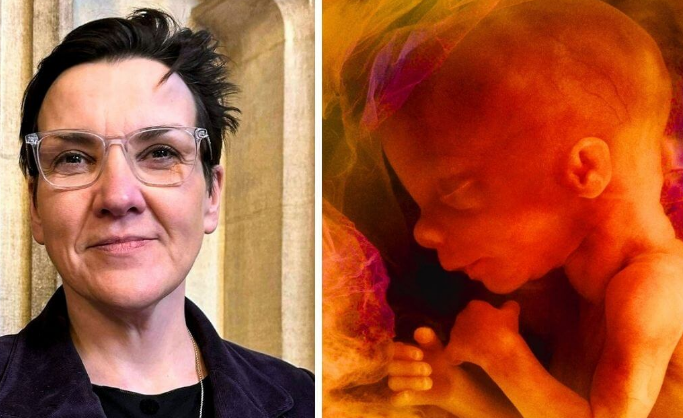
91% of the 28,000 respondents to a recent poll run by The Telegraph said they are opposed to the extreme abortion up to birth law change that was recently voted through by MPs in the House of Commons.
The extreme abortion amendment, tabled by Tonia Antoniazzi MP, was passed by MPs by a vote of 379 to 137.
This amendment, if it remains in the Crime and Policing Bill and if the Bill receives Royal Assent, will change the law so it will no longer be illegal for women to perform their own abortions for any reason, including sex-selective purposes, and at any point up to and during birth, likely leading to a significant increase in the number of women performing dangerous late-term abortions at home.
A Telegraph reader, Rosemary Wells, commented that the law had “legalised murder”, writing “A baby at full term or even six weeks before birth is capable of living outside the womb and is completely sentient. They’re conscious and able to feel pain. This law has legalised murder. This is legalising the destruction of anyone who is inconvenient and unwanted”.
Another reader, Giles Darling, wrote “Imagine how many people alive today could have been legally terminated if this abortion-up-until-birth policy had been the law in the past? A child with a congenital condition or an unwanted genetic trait could miss their chance to be an impactful future scientist or entrepreneur”.
Bernie Carolan, who contacted his MP about the vote, wrote “I asked her to vote no, as medical professionals have publicly raised grave concerns about the procedures involved in late-term abortions. These are not abstract debates – it’s a matter of life and human dignity”.
Even pro-choice readers shared their displeasure at the extreme amendment. Sheridan Cooper wrote “There is no need for this. I’m pro-choice, but the cut-off point is there for a reason,” whilst Nicola Bradley, who also said “I am pro-choice”, described the law change as “disgraceful”.
There has been a large backlash after Tonia Antoniazzi MP said in an interview that she was comfortable with women being able to abort a viable baby at 37 weeks.
These changes are not backed by the general public nor by women in particular. Polling shows that 89% of the general population and 91% of women agree that gender-selective abortion should be explicitly banned by the law – and only 1% of women support introducing abortion up to birth.
-
Assisted Death Bill Faces Defeat in Lords
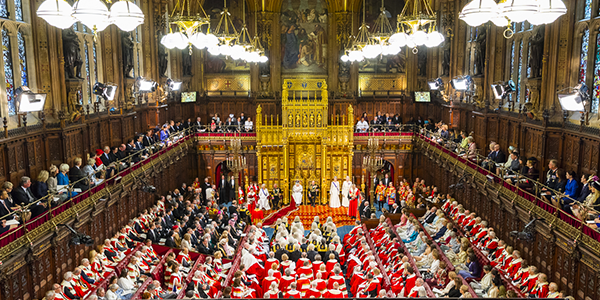
While state-sponsored death was approved by the House of Commons last week, Kim Leadbeater’s dangerous assisted suicide Bill faces much stronger opposition in the House of Lords.
The Commons vote was much closer than expected, as a significant number of MPs saw the failings of the Bill, despite the shortage of time to debate it. With more scrutiny due in the Lords there is a real hope that the monstrous law could be blocked.
Baroness Monckton MBE, whose daughter has Down’s syndrome, has said she is “petrified” at the lack of protections in the Bill for those with learning disabilities, branding it “breathtakingly cruel and ignorant”.
Baroness Campbell of Surbiton, a founding member of Not Dead Yet, warned that disabled people’s lives “will be at great risk if the Bill passes into law”, while disabled Peer Lord Shinkwin feared the proposals ‘puts a price on his head’, and Lord Frost said opponents would contest Friday’s ‘shameful vote’ in the Lords.
Writing in the Daily Mail, Lady Monckton explained: “The biggest concern for every parent is what will happen when we are dead. Who will look after our ‘child’, who will understand their needs, care for them in the right way and facilitate their way through life?
“But now, to add to that worry, is another enormous and unspeakable question – how can we stop them being killed?
“I cannot believe that I am having to write these words. Yet the assisted suicide Bill makes no special provision whatsoever for this disenfranchised group.
“How have we got to this place, where some lives are valued more than others?”
She added: “All legislators – of which I am one, in the House of Lords – should be considering the weakest and most vulnerable when making momentous, and in this case, literal, life and death decisions.”
Consequently, she said, Leadbeater’s plans make her angry: “Angry at the lack of rigour in this bill. Angry at the lack of understanding of people with learning disabilities. Angry at the implicit assumption that their lives are not worth the same as the rest of the population.
“This should never have been a Private Member’s Bill. It has not had the scrutiny or the parliamentary time necessary for such a momentous change in the way we live and die.
“It is a law for the strong and determined against the weak and the vulnerable. All of us in Parliament should know which of those needs the most protection.”
Celebrating the Bill’s passage through the House of Commons, Dame Esther Rantzen claimed that it was now the duty of the Upper House “to scrutinise, to ask questions, but not to oppose.”
But Lord Jackson of Peterborough said it was right for the House of Lords “to amend or delay a bill which was never put to the people in a manifesto, backed by only a minority of MPs, was poorly drafted, rushed and barely scrutinised and will have hugely profound effects on vulnerable people and the resources of the NHS”.
The Daily Telegraph warned that the Bill threatened “potentially calamitous consequences” and that the “only hope of mitigating its worst aspects now lies with the House of Lords”. However, it concluded, “the revision required to make this legislation workable and safe will have to be radical”.
-
Reform to Reverse Tide of Death?
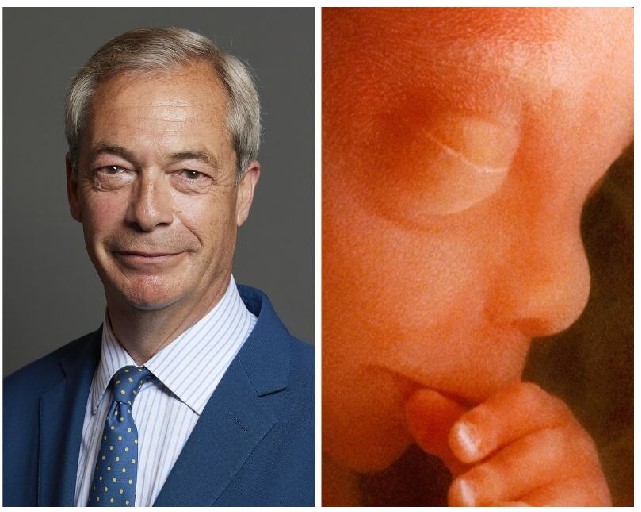
Reform UK is expected to pledge to repeal the Leadbeater assisted suicide Bill and the Antoniazzi abortion up to birth amendments at the next General Election if these proposed law changes become law, according to The Mail on Sunday.
Referring to the proposed change to introduce assisted suicide, the newspaper wrote “Nigel Farage’s party is expected to promise to reverse the law in its next manifesto, assuming the legislation passes in the Lords”.
The Mail on Sunday reported that a campaign source said “Bearing in mind how dangerous this Bill will be for vulnerable people, it’s not unreasonable for different political parties to think about what might need to happen if it does become law”.
“If the leadership of a party is of the view that the legal status quo is dangerous, it would only be natural for them to want to scrap the system”.
Reform UK leader and MP for Clacton, Nigel Farage, who voted against the Bill at Third Reading, has previously spoken out against assisted suicide, warning “the right to die may become the obligation to die” and saying “I fear that the law will widen in scope” if it were to become law.
A Reform UK insider also suggested the party would repeal any law change introduced by the abortion up to birth amendment (NC1), tabled by Tonia Antoniazzi MP, which was passed by MPs by 379 to 137 last week.
-
Parents Face Prison for Protecting Their Children
Parents and church leaders in the Republic of Ireland could face unlimited fines and up to seven years in prison for trying to protect children from the mental problems and surgical and chemical mutilation which are part-and-parcel of the LGBTQ+ "lifestyle".
Under a Member's Bill being put forward by Alliance MLA Eóin Tennyson, even parents would face jail time for being involved in so-called conversion practices — including stopping their children from ‘changing gender’.
-

105 Abortion Mills Closed Since Dobbs
105 abortion facilities across the United State have shut down since the fall of Roe v. Wade, according to a new report.
Next week, June 24 will be the the third anniversary of the U.S. Supreme Court’s blessed ruling in Dobbs v. Jackson Women’s Health Organization, which not only upheld Mississippi’s 15-week abortion ban but overturned Roe and delivered the pro-life cause its most transformative victory since Roe unleashed nationwide abortion-on-demand in 1973, by restoring states’ ability to directly ban abortion.
On June 17, the Associated Press published a report on where abortion “access” stands in this new normal, in which 12 states have banned all or most abortions, with a wide range of lesser abortion restrictions and other pro-life laws given a new lease on life as well.
At the same time, the Trump administration has resumed enforcement of the Hyde Amendment (which forbids most federal funds from directly supporting elective abortions), reinstated the Mexico City Policy (which forbids non-governmental organizations from using taxpayer dollars for elective abortions abroad), cut millions in pro-abortion subsidies through the U.S. Agency for International Development (USAID), and frozen Title X “family planning” grants to nonprofits it said violated its executive orders on immigration and diversity, equity, and inclusion (DEI) initiatives, including Planned Parenthood affiliates in nine states.
Pro-abortion group “I Need An A,” has tallied 105 abortion centre closures as a result of these policies. At the same time, 34 facilities have either opened for the first time or moved from pro-life states to pro-abortion ones.
-
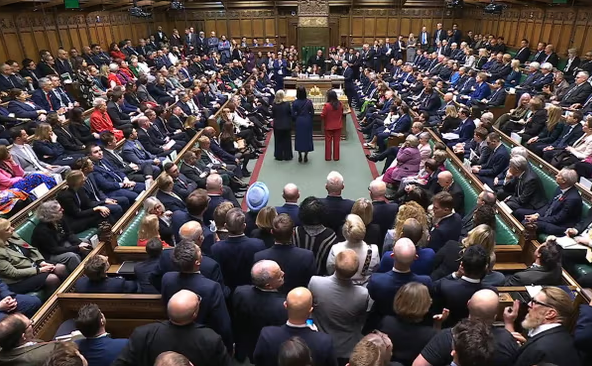
Britain's Herods
Britain's MPs have just emerged as latter-day Herods, promoting the slaughter of babies in the most ghastly abortion holocaust in UK history - legalised abortion right up until birth.
Parliament has voted to further liberalise abortion law in England and Wales, despite pleas to protect unborn children and their mothers.
MPs approved Antonia Antoniazzi’s New Clause 1, an amendment to the Government’s Crime and Policing Bill, which will allow a woman to kill her unborn baby at any stage of pregnancy without sanction, by 379 votes to 137. They also rejected a proposal to reinstate in-person consultations under the pills-by-post scheme.
In Great Britain, abortion is currently permitted for most reasons up to 24 weeks, and up to birth if the unborn child is deemed to have a disability. If the Government’s Crime and Policing Bill becomes law, inducing a miscarriage outside of these exemptions will no longer be a crime for the mother.
Antoniazzi, whose New Clause 1 is endorsed by abortion giant BPAS (the British Pregnancy Advisory Service), recently told Times Radio that she was ‘comfortable with any woman ending a pregnancy at any time’.
During the debate, she claimed that the limited protections still afforded to the unborn after the Abortion Act was passed in 1967 were cruel, unjust, not in the public interest, and a carry-over from the ‘Victorian era’.
An amendment by fellow Labour MP Stella Creasy, to enshrine abortion as a ‘human right’ in British law and decriminalise all abortions for whatever the reason — including sex-selective abortions — did not go to a vote.
A number of MPs spoke against decriminalisation, including TUV’s Jim Allister, who asked “whether there is any other area of law governing the taking of life in which the guardrails of the criminal law have been removed? That is what New Clause 1 proposes when it comes to the voiceless child. Is there no thought of protection for them?”
Labour’s Rachael Maskell urged MPs to “consider the baby’s safety as much as the woman’s safety”, while Carla Lockhart (DUP) told the House: “I believe that both lives matter in every pregnancy — both the mum’s life and the child’s life.”
-