
News
-
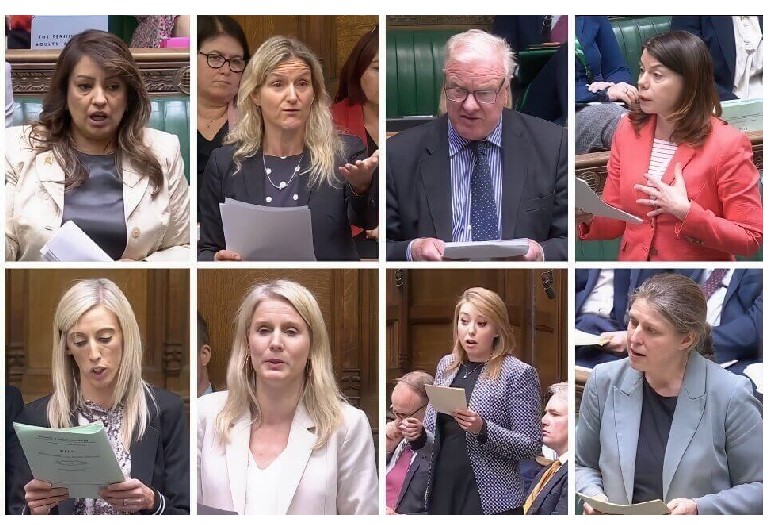
Leadbeater Hides as MPs Savage Death Bill
The sponsor of the Assisted Suicide Bill appeared to go into hiding on Friday as her deeply flawed effort was savaged by a succession of MPs during the Report Stage. hearing. MP Simon Hoare suggested Kim Leadbeater’s absence was “a discourtesy to the House” as she vanished for about 45 minutes.
-
Royal College Against Death Bill
Kim Leadbeater’s increasingly unpopular assisted suicide Bill has been dealt another blow after the Royal College of Psychiatrists (RCPsych) announced it cannot support it.
One of the so-called safeguards in the legislation is that applications for assisted suicide will be dealt with by a three-person panel including a lawyer, a social worker, and a psychiatrist. This was only introduced because the judiciary said High Court involvement was not practical.
Now, ahead of today’s debate in the House of Commons, Dr Lade Smith, the President of the RCPsych, has announced that despite the psychiatrists’ professional body’s official stance remaining ‘neutral’, it cannot support the Bill “as it stands”, and urged MPs to prevent the “inadequate” proposals from becoming law.
In a statement, RCPsych outlined a number of concerns, and said that “Assisted dying/Assisted suicide (AD/AS) is not a treatment”, adding: “AD/AS does not aim to improve a person’s health and its intended consequence is death. The Bill does not specify whether AD/AS is considered a treatment option and this ambiguity has major implications in law in England and Wales. Should this Bill proceed, it should be explicit that AD/AS is not a treatment option.”
It also highlighted that terminal illness is a known risk factor for suicide, and questioned what role a psychiatrist would play on the three-person panel, explaining: “If this Bill proceeds in England and Wales, any role a psychiatrist plays in an AD/AS process should be consistent with the core duties of the profession, including determining whether a person’s wish to die can be remedied or treated.”
It added that “there are not enough consultant psychiatrists to do what the Bill asks”, and that this is compounded by the fact some psychiatrists will choose to conscientiously object – a right that RCPscyh said must be strengthened.
“Professionals must be able to conscientiously object to involvement in any part of the process: We are pleased to see that the Bill no longer requires medical professionals who do not wish to be involved to refer a person to another clinician, but they are still required to signpost patients to information on AD/AS. For some psychiatrists who wish to conscientiously object, this would constitute being involved in the AD/AS process.”
-
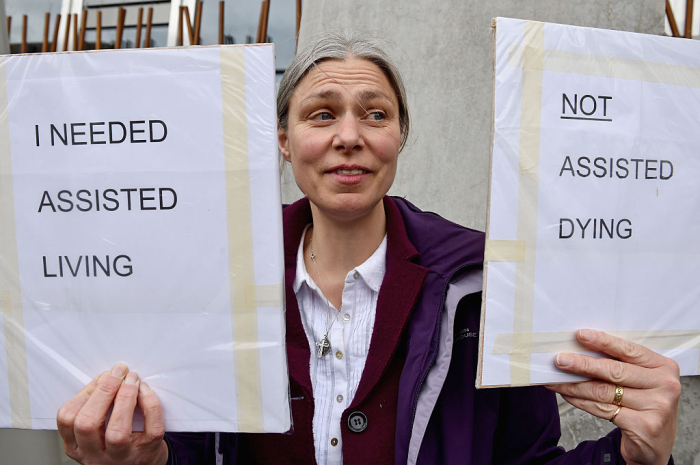
Scots Turn Against Assisted Suicide When Informed
While MSPs and the liberal pro-death lobby are cockahoop over this week's Holyrood vote in favour of assisted suicide, two heartening satatistics show that public support for the measure is in fact extremely flimsy.
A new study has revealed that initial support for the Bill is highest among 45-54 year olds with 83 per cent of those surveyed in favour of it. The lowest level of initial support was found to be among people aged 18-24 at 69 per cent. Having such a gap between younger and older voters is a good sign for the future.
Even better, the poll found that two thirds of Scots oppose assisted suicide when they consider how it operates in practice and think about the arguments against it.
The pollsters said that support for assisted suicide among the general population falls to just 19 per cent when those taking part are presented with 10 arguments against assisted dying, including facts about how it operates overseas.
The study found that among those who initially support assisted suicide, only 25 per cent continued to do so after considering the arguments against.
-
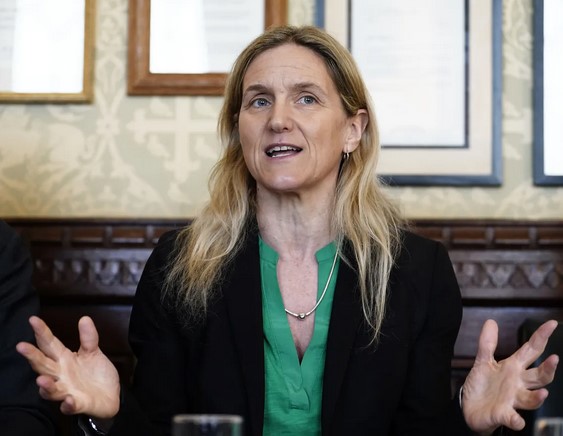
Leadbeater Praises Scottish Vote for State-Sanctioned Murder
It was a dark day for Scotland yesterday as MSPs at Holyrood voted by 70 votes to 56 in favour of the Assisted Dying for Terminally Ill Adults (Scotland) Bill.
Kim Leadbeater, who is leading the push to impose state-sanctioned murder on England and Wales as well, said she is “pleased” that the Scottish Parliament has backed the general principles for assisted dying.
Ms Leadbeater, the MP behind the Terminally Ill Adults (End of Life) Bill, said there are injustices in the current ban on assisted dying, adding that MSPs had “listened to the voices of those with personal experience of those injustices”.
-

60% Fear Assisted Suicide Abuse
Public opinion continues to swing against the Assisted Suicide Bill, which is set to be voted on today in the Scottish Parliament.
-
"People Will Die Unnecessarily
A man who started the assisted suicide process by contacting an assisted suicide clinic after doctors misdiagnosed him with motor neurone disease, is warning MSPs that “people will die unnecessarily” under Scotland’s assisted suicide Bill. The remarkable story comes amidst growing concerns about the Bill’s broad definition of terminal illness.
As MSPs prepare to debate and vote on Liam McArthur’s Assisted Dying for Terminally Ill Adults (Scotland) Bill next week on 13 May, Peter Sefton-Williams, 72, a retired journalist, has warned MSPs that if they “go ahead with this bill, they have to accept that people will die unnecessarily. There will be mistakes and people will die. So is it worth it?”.
Last year, Sefton-Williams was told by his doctor “there is no doubt whatsoever that you have Motor Neurone Disease and that you typically can live between one and a half to four or five years”, and was also told to “not make any plans past six months’ time”. As a result, Sefton-Williams was “absolutely terrified” and immediately began making plans to end his life at the Swiss assisted suicide clinic, Dignitas.
“The day after the diagnosis, I contacted Dignitas, because they said it would take six months to do the paperwork. So I thought, ‘I have to do this in a hurry’”, he said.
As his panic subsided, Sefton-Williams abandoned these plans, and he began to notice his symptoms were not becoming worse but were actually improving. After seeking the opinion of a third specialist, he was told, “this is not Motor Neurone Disease, this is Multifocal Motor Neuropathy”.
“It’s very rare, it mimics the early stages of Motor Neurone Disease. But it’s a mild disease, nobody dies of it, and it’s largely curable”, he added.
Under McArthur’s Bill, an application for assisted suicide would require the approval of two doctors, but Sefton-Williams, who received his diagnosis from two of the country’s top specialists, pointed to his own experience as evidence that this was not an effective safeguard.
Sefton-Williams said “Do you just shrug your shoulders and say, ‘Well, that’s life, mistakes happen’? Because mistakes are going to happen, and I’m living proof of that”.
“The lesson is that doctors make mistakes. Doctors quite frequently make mistakes”.
“Doctors are fallible. It’s no use saying they’re the kind of gold standard and will always get it right, because they don’t always get it right. As my case shows, I could have thought that was a way out and I would now be dead. Whereas, as far as I can tell, there’s very little wrong with me”, he added.
Sefton-Williams, who said his illness “is not a terminal illness at all”, would have likely been granted an assisted suicide under the McArthur Bill after the two specialists’ initial motor neurone disease diagnosis. He commented that it would have been “absolutely horrific” if he had opted for an assisted suicide. “The idea that I could have [ended my life] is absolutely horrific and the thing that most disturbs me is that nobody would have known”.
“What people would have said is, ‘Peter took a brave decision. He wished to die with dignity, and that’s what he did,’ and everyone would be satisfied that it had been a good outcome”.
“That’s what the world would think. But it wouldn’t have been a good outcome. I would have died unnecessarily”.
-

-

First Minister Against Assisted Suicide
Another Scottish political heavyweight has confirmed that he will vote against state-sanctioned murder being imposed on Scotland.
-

New Pope Is Firmly Pro-Life
Pope Leo XIV, formerly Cardinal Robert Francis Prevost, has consistently upheld the Catholic Church's pro-life stance, expressing strong opposition to abortion. He has described abortion as "a form of murder" and affirmed the Church's teaching that life begins at conception.
Throughout his ecclesiastical career, Prevost has actively supported pro-life initiatives. In 2015, while serving in Chiclayo, Peru, he participated in a March for Life rally, urging followers to "defend human life at all times." He has also shared content highlighting concerns about abortion practices, including articles discussing cases where babies survived abortion attempts.
Prevost's social media activity further reflects his pro-life views. He has reposted statements from prominent Catholic figures condemning abortion and advocating for the protection of unborn life. Unfortunately, he has never joined the American Catholic leaders who have spoken out against the giving of Communion to pro-abortion polioticians such as Nancy Pelosi or Joe Biden.
Pope Leo XIV has nonetheless demonstrated a firm commitment to the Catholic Church's pro-life doctrine, actively opposing abortion and promoting the sanctity of life from conception.
His traditionalist position in this regard is at odds with his widely noted statements against Donald Trump, JD Vance and immigration restrictions, and on his apparent enthusiasm for Synodal interference with other traditional teachings. He was also involved in the persecution of Bishop Strickland. First impressions are thus that the new pope will continue with much of destructive liberalism of his predecessor, but that he will stay true to genuine Catholic values on the issue of abortion.
-

Trump Lands Another Blow on the Death Lobby
Donald Trump has landed another blow on the abortion death cult.