
News
-
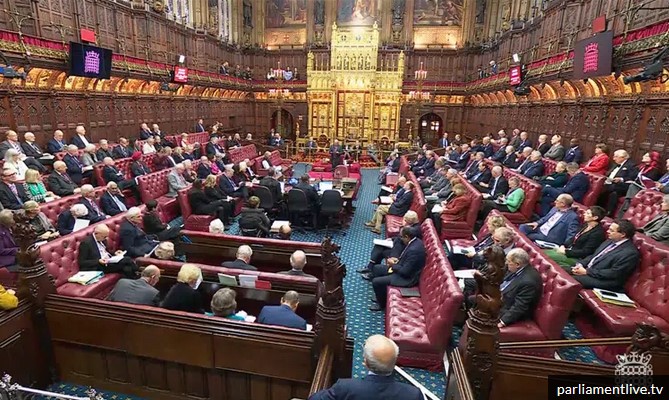
Assisted Suicide Legal Trench Warfare in Lords
Supporters of state-sanctioned murder and pro-life peers are engaged in what can best be described as 'legal trench warfare' in the House of Lords. Critics of the Labour-backed push for euthanasia are fighting for every inch of ground, while peers in favour of assisted suicide are trying to undermine even the limited safeguards against blatant abuse which have been inserted into the bill as amendments.
-

Pro-Lifers Jailed for Planned Parenthood Blockade
The founder of Operation Rescue and over a dozen other pro-life witnesses were jailed yesterday after blocking a Memphis, Tennessee, Planned Parenthood.
Randall Terry, Joan Andrews Bell, and Terrisa Bukovinac were among the approximately 17 rescuers taken into custody yesterday morning. As of publication time, a number of his companions have already been released, but Randall and Terrisa were still in prison when we last heard.
These brave pro-lifers are on the front line. This Sunday, pray for them, their families, and anend to the violence and injustice of abortion.
-
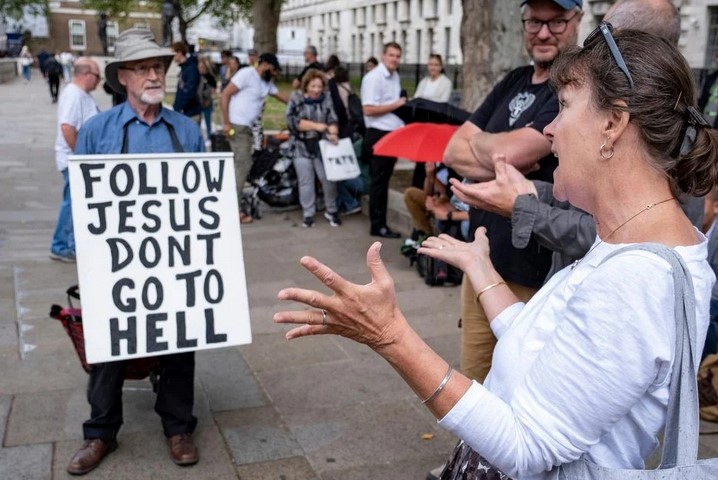
Attack on Street Preaching Rebuffed
The leftist war against Christianity has met with a welcome set back in Belfast.
A byelaw in the city which sought to limit the volume of street preaching will be redrafted, after being rejected by councillors.
The new rules included restrictions on amplification for street preachers and buskers to 70 decibels, the level of a vacuum cleaner or washing machine, or be fined £500. Both the DUP and Alliance opposed it, with the former saying it went too far, and the latter seeking more restrictive measures.
Proponents claim the limit is needed to reduce noise in the city, but critics have pointed out that other loud activities such as pickets, charity collections and parades are exempt, and have warned that it attempts to “effectively ban open air preaching”.
Nora Largey, the City Solicitor, explained to the Council’s Committee: “There was a general consensus there were some performers, and when we say performers we include anybody who uses amplification in the city centre, who are simply too loud.”
Alliance Councillor Jenna Maghie, however, said she believes the proposals don’t go far enough, and specifically called for a bigger fine and a ban on graphic images used by pro-life campaigners.
DUP Alderman Dean McCullough said his party could not support a 70 decibel limit “that renders amplification effectively useless”.
He told the City Council: “From the outset, these bye-laws were driven by a desire to target certain groups, primarily street preachers and the pro-life witnesses.”
McCullough continued: “We heard references to so-called hate preachers, whatever that means, and we all sat through the debates on graphic imagery. We were told that showing the reality of abortion was too graphic.”
One suggested rule was that street preachers should be required to get a permit, but McCullough stated: “What utter folly on the part of some far-left councillors to believe that street preachers, members of the most persecuted religion on Earth, would ever seek or need their permission to preach.”
He added: “Jesus Christ is Lord. It is Christmas, and I don’t need a permit from this council to proclaim that.”
-

Italian State Kidnaps HomeSchool Children
Traditionalists in Italy are shocked and outraged by the legally-sanctioned kidnap of three home-schooled children. The measure by which a juvenile court in Italy ordered the removal of three children from their parents has sparked heated debate between the government and the judiciary and fiercely split public opinion.
On November 20, three minors who lived with their parents in a farmhouse in the middle of a forest in Abruzzo, Italy, were removed by order of the Juvenile Court of L’Aquila, following checks conducted after a suspected mushroom poisoning incident. These checks revealed a dwelling without water, electricity, or heating, as well as the absence of vaccinations for the children and school enrollment.
The court order, filed with detailed reasoning, identified among the main reasons for intervention the children’s condition of isolation, deemed harmful to their fundamental right to social life and psychosocial development. Institutional reaction erupted when members of the Meloni government criticized the decision, raising doubts that led to a sharp confrontation with the juvenile judiciary.
“I cannot deny my perplexity regarding the decision taken,” declared Archbishop Bruno Forte, ordinary of the Diocese of Chieti-Vasto, where the case unfolded. “Dialogue could have been pursued with determination. I wonder whether the proportion between the parents’ actions and the measure is justified.”
Prime Minister Giorgia Meloni and Minister of Justice Carlo Nordio discussed the matter, considering the possibility of sending ministerial inspectors to L’Aquila – an initiative which, while falling within the executive’s prerogatives, was perceived by many as a potential influence on the juvenile judiciary. Deputy Prime Minister Matteo Salvini called the judges’ decision a “shame,” claiming that the state’s intervention had overstepped “into the realm of private education.”
In the face of silence on the matter from the Italian Episcopal Conference, a moderate but clear stance was expressed by Forte, who declared himself “perplexed” by the outcome of the proceedings. The prelate urged institutions to “recognize the space rightly due to the family and parental authority,” while affirming the need to act “in the service of the greatest good of the children.” His stance further amplified the resonance of the case, placing it also within the ethical debate on the relationship between public authority and the educational role of parents.
The episode gained political significance at a time when the Meloni government is promoting a reform of the separation of judicial careers lines, a project that envisions two distinct and non-communicating paths between judges and public prosecutors, in order to better define functions and responsibilities. The clash surrounding the “Forest Family” is seen as a test of the tension between judicial independence and the political direction of the executive, a topic long fraught in Italian political debate.
The family, of Anglo-Australian origin and composed of spouses Nathan and Catherine Trevallion and their three children aged between 6 and 8, lived in a farmhouse immersed in the Abruzzo forest. The entire episode originated from a health check following a suspected mushroom poisoning involving one of the minors. This incident led social services and competent authorities to inspect the family’s residence, organized according to a self-sufficient lifestyle, disconnected from essential service networks.
-
Scottish Taxes Support Abortion Lobbyists
Scottish taxpayers are furious to learn that their taxes are being given to a radical feminist group to help fund their campaign for one of the most extreme pro-abortion policies in the world.
-

Nuns Send Christmas Cards to Abortion Nurses
Nuns across the USA are joining a campaign to send Christmas cards to abortionists, in hopes of offering them a lifeline to potentially convert or leave the industry.
Writing at The Federalist, pregnancy care counselor Patty Knap details the nuns’ participation in the campaign, which was started in 2022 by pro-life activist and former Planned Parenthood official Abby Johnson, whose group And Then There Were None (ATTWN) is focused on helping abortion workers change professions.
Sr. Christina Nazareth, a Capuchin sister in a Pennsylvania convent without electronic communication, first learned of the project thanks to a letter from the organization and chose to get involved “like an extension of our prayer.”
“At the beginning of each Advent, Sr. Christina and the other nuns sit down to write notes on each Christmas card, expressing prayer and concern for abortion center staff,” Knap writes. “Before the cards are mailed, ‘All the cards are placed on our altar by the Blessed Sacrament. We pray that our Lord will bless them and get them into the hands that need them,’ Sr. Christina said.”
“Many abortion workers have some faith,” explained ATTWN marketing and communications director Karen Herzog. “Each year, we choose a Christmas card with a Holy Family scene. The nuns write handwritten notes inside, letting the person who opens the cards and hopefully everyone else working there, know that religious sisters are praying for them to choose to leave the abortion industry.”
As an example of the project’s effectiveness, Knap shares a firsthand account from one anonymous former abortion worker, who noticed an eye-catching envelope one day. The handwritten card inside read, “Are you looking for a way out? We can help you get out of the abortion industry. Call this number.”
“I asked a colleague if the letter was real, and she said don’t pay any attention to it,” the employee recalls. “Something prompted me, which I know is the Holy Spirit, to put it in my bag and bring it home.” She called the number, and ATTWN helped her find gainful employment elsewhere, as well as getting to talk to others in the same situation and join healing retreat programs.
ATTWN mails more than 22,000 handwritten cards and postcards to abortion facilities every year. What wonderful work! We pray that it bears more fruit than ever this year.
-

Pressure to Stop Puberty Blocker Experiment
Health Secretary Wes Streeting is being strongly urged to abandon plans for a puberty blocker trial involving scores of gender-confused children.
Parliamentarians, Tavistock whistleblowers, campaigners and newspaper columnists are among those raising serious concerns about giving experimental drugs to more than 200 under-16s.
Even King’s College London (KCL), which is leading the research, concedes there are short and long-term “potential side effects” to puberty-blockers, including severe headaches, mood changes, fertility problems, an increased risk of fractures, and impaired cognitive function.
KCL intends to recruit approximately 226 gender-confused children for the two-year drugs trial, roughly half will be given puberty-blocking injections every six months from the outset, while the remainder will only receive the injections for the second year of the trial.
Researchers state that the upper age limit for participation is “15 years 11 months”, but acknowledge there is a possibility that some children under the age of eleven may “show the necessary level of understanding of the treatment to be able to take part”.
The Government-funded trial — which is said to be costing the taxpayer £11 million — is expected to run for five and a half years.
Conservative Party Leader Kemi Badenoch branded the study “activist ideology masquerading as research”.
In a letter to Streeting, she said: “Your job is to promote the health of the nation, not indulge an ideology that has permanently damaged so many children.” Badenoch urged the Government to “stop this trial from going ahead before more damage is done”.
Rosie Duffield, the Independent MP for Canterbury, said she could not “believe I came to Parliament to have to point out that we should never use experimental/irreversible drugs in trials on children under 13 which halt their puberty”.
Tavistock whistleblower Dr David Bell told The Daily Telegraph that the trial was “neither safe nor will it provide meaningful evidence”, and the clinic’s former employees Susan and Marcus Evans warned that the “stakes are too high and the lessons from recent failures too fresh to ignore”.
The Bayswater Support Group, which represents over 650 parents of gender-confused children, described the decision to proceed with the trial as “a profound betrayal of children by the NHS”.
-
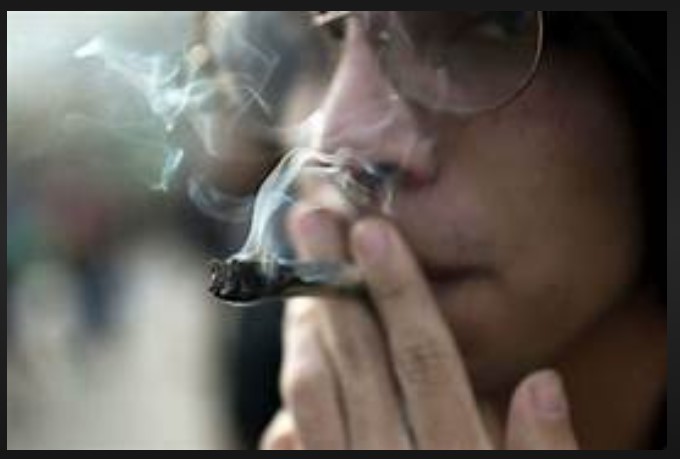
"Voices Told Me to Kill Myself"
The extraordinary mental health damage done by cannabis use is becoming clearly by the day. A clinic in south London aimed at combatting the rise of cannabis psychosis is making strides in helping people recover, but its story highlights the terrible harm being done by the UK authorities' virtual legalisation of 'weed'.
Dr Marta Di Forti, a professor of drug use, genetics and psychosis at King’s College London, established the clinic in 2019 when she realised the “ridiculous” number of psychosis patients who were also cannabis smokers.
South London has the highest levels of psychosis in Europe, much of which is linked to cannabis. While use of the drug is declining in England and Wales, Dr Di Forti explains that people who are using tend to take the drug more frequently, and at higher potencies than before.
Isiah, 29, who is on the waiting list for the clinic, but has regular phone check-ins, shared how he became paranoid while using cannabis, and had to be rescued from jumping from a building.
He first tried the drug at 14 and was using it daily by the age of 17, which only increased when he went to university, “because this is how you meet people”.
His mum Nicci describes cannabis as a “king” in her son’s life: “It’s ruling everything. It’s there every day.”
She said “I just didn’t recognise my son”, and urged: “He has to come off it.”
Katie, 46, first tried cannabis at eight years old and was using it daily by age 12. She described it as “self-medicating”.
She recalls hearing “intrusive, commanding voices” from a young age, that told her “to beat people up, stab people, to try and kill myself”.
Between the ages of 20 and 40 she was sectioned 50 times, and explained that she was first admitted to hospital after “running down the Old Kent Road wearing fluffy pyjamas and nothing on my feet at 2am thinking I was God.”
She said: “My paranoia was so bad I couldn’t get on a bus or a train, could barely get out of bed and leave my house at my worst”.
However, after attending the clinic she is able to properly sleep, eat, and travel again: “I wouldn’t say I’m better, but I’m a lot healthier – I’m able to do a lot more”.
The clinic has seen 74% of patients who completed the treatment stop using cannabis, and 91% are back into education or work.
However, there is a months-long waiting list for one-on-one sessions which Dr Di Forti described as “a huge wasted opportunity”.
She said the delay means “The chances of them getting a severe presentation of their psychosis and needing hospital admission is between three and four times greater.”
More available and more potent
Dr Di Forti noted that the increase in talk of medical cannabis has impacted the way people perceive the drug: “‘If cannabis is medicinal it can’t be too bad’: this is something I get all the time from my patients”.
Dr Diego Quattrone, who runs the psychiatric intensive care unit at University Hospital Lewisham in south London, reported that at least 80% of new patients at the unit use cannabis. He explained that daily use of the drug is associated with “a distinct subtype of violence driven by psychotic symptoms, such as paranoid delusions and hallucinations”.
Dr Di Forti’s husband Sir Robin Murray, who is also a professor at King’s College London, commented: “As cannabis becomes more available, more potent, then we’re going to see more, more and more psychosis.”
He highlighted concerns over the societal impact even where the degree of psychosis is less, saying: “Those who are using a lot are more likely to be a bit paranoid. They’re not sufficiently paranoid to get admitted, but they’re sufficiently paranoid to quarrel with colleagues, to be suspicious of friends, to fight with their spouse.”
-

Majority of Doctors Turn Against Assisted Suicide
The closer it gets and the more they consider it, the more UK doctors are turning against assisted suicide. New polling has revealed that a majority of medical professionals in the UK who take a firm opinion on assisted suicide are opposed to its implementation.
The polling surveyed members of the Royal College of Physicians and Surgeons of Glasgow on the practicalities of implementing the assisted suicide bills in England, Wales, and Scotland, should they become law.
The Terminally Ill Adults (End of Life) Bill would legalise assisted suicide in England and Wales for those with a prognosis of six months or less, while the Assisted Dying for Terminally Ill Adults (Scotland) Bill would legalise assisted suicide for adults resident in Scotland with no prognosis requirement specified.
The survey revealed that, based on the current forms of the assisted suicide Bills in Westminster and Holyrood, 50.52% of medical professionals who took a firm view would oppose its implementation. It also found that a vast majority of medical professionals who took a firm view would not be willing to participate in either prescribing the fatal drugs for individuals to self-administer – 70.49% – or directly assist an individual in ending their life – 74.19%.
A majority of medical professionals who took a firm view – 68.75% – also stated that they were not confident that the legislation provided sufficient legal protection for medical professionals who would be involved in assisted suicide.
A strong majority of those who were surveyed and who expressed a firm view – 76.19% – also felt that the method of assisted suicide should be addressed in the legislation. Currently, this is not the case in the Bills in England and Wales or Scotland, with powers to decide on the specific drugs to be used for assisted suicides being delegated to government officials.
Of the respondents who took a firm view, a large majority – 62.37% – also stated that they were not confident that the current professional standards and oversight would allow the legislation to be implemented safely.
The poll also revealed that a majority of respondents who took a firm view – 73.53% – did not believe that the proposed safeguards against coercion in the legislation were practical within current service structures and protocols.
A majority of respondents who took a firm view also stated that they had concerns regarding the definition of a terminal illness within both the legislation in Scotland and in England and Wales; 73% of respondents in Scotland who took a firm view expressed concerns regarding the definition in the Scottish legislation, and 54.05% of respondents in the rest of the UK outside of Scotland who took a firm view expressed concerns regarding the definition in the legislation in England and Wales.
55.56% of respondents in Scotland who expressed a firm view said that the definition of a terminally ill person in the McArthur assisted suicide Bill was not sufficiently clear for clinical application.
Additionally, a majority of respondents who took a firm view felt that they would face challenges in being able to competently assess individuals’ eligibility for assisted suicide based on an individual’s capacity, lack of coercion, or terminal illness. Of those who took a firm view, 90.43% of respondents felt that they would face challenges in assessing an individual for a lack of coercion; 86.46% felt that they would face challenges in assessing an individual’s capacity; and 85.42% felt that they would face challenges in assessing whether an individual met the definition of terminal illness.
-

Undercover Videos Expose Pro-Abortionist Lies
Three undercover videos released this month by the political pro-life group RightNow have reignited the abortion debate in Canada – and triggered chaos amongst Liberal MPs and abortion activists.
Pro-Life activist Alissa Golob caught pro-abortionists admitting that late-term abortions are being carried out on healthy babies. The admissions made front page of the National Post. The paper featured an ultrasound image of an unborn baby and the headline: “The Undiscussed Truth About Late-Term Abortions in Canada.” NP dedicated two full pages to the story, explicitly rebutting the oft-asserted claim of pro-abortion politicians that late-term abortions are not perpetrated on healthy, viable babies.
TK Pritchard of Abortion Canada admitted to NP that “there does not have to be a medical concern that is named” to procure a late-term abortion – which is precisely the point Golob was making in her undercover videos. When Pritchard was asked directly whether there has to be a “fetal or maternal health risk,” she responded: “No.”
Frederique Chabot, executive director of Action Canada for Sexual Health and Rights, insisted that the videos were “heavily edited, deceptive, heavily narrated.” She then went on to admit that: “In Canada, we have nothing that criminalizes abortion care at any point in the pregnancy. There is no criminal law that says, ‘At this random time, this is when abortion will not be provided.’” She could have just said: “Golob is right.”
The liberal lie that late-term abortions are never perpetrated on healthy, viable babies – something the pro-life movement has been saying for decades – is now completely, and publicly, collapsing. As the National Post noted:
Federal officials appear to have backed away from Bennett’s never-without-a-medical reason assertion. The government’s website states that late-term abortions “usually occur” because of medical risks….
With no legal boundaries on abortion in Canada, there are also no legal restrictions on gestational age limits – how far along in the pregnancy is too far. Legally, a woman could have an abortion at any stage of pregnancy.