
News
-
-
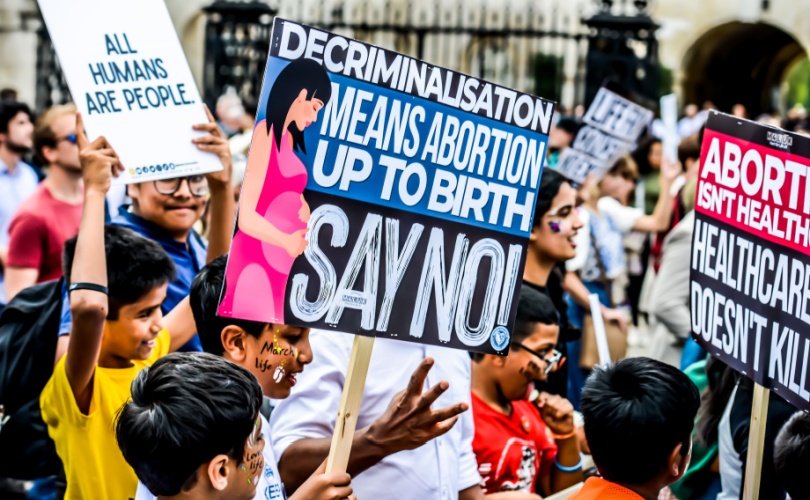
Decriminalisation Threatens Baby Girls
The United Kingdom is on the precipice of decriminalising abortion, a move that will lead to widespread sex-selective abortion practices among certain ethnic groups that prize male children over females.
“Britain’s wicked plan allowing abortions up to the point of birth (no other European nation allows the like) will mean many more sex-selective abortions here,” journalist and opinionator Colin Brazier wrote on X. He noted that the murdering of yet to be born girls is “(p)redominantly ordered by fathers from cultures that prize men above women.”
Brazier was referring to a report by John Power in The Spectator UK that claimed the about-to-be-voted-on measure — a clause buried in the Crime and Policing Bill alongside 1,482 other amendments — will enable sex-selective abortions.
“In June 2025, pro-abortion MPs, led by Tonia Antoniazzi MP, hijacked the Crime and Policing Bill to rush through the abortion up to birth clause (191) after just 46 minutes of backbench debate – there was no prior consultation with the public, no Committee Stage scrutiny and no evidence sessions,” explained Right to Life UK (RTL), a leading voice opposing passage of the legislation.
“The Antoniazzi clause would make it more likely that healthy babies are aborted at home for any reason, up to birth,” RTL said (emphasis added).
“Further liberalising access to abortion will mean more girls being terminated in the womb because of their sex,” Power declared.
“The practice of female infanticide is widespread throughout much of the world, most famously in China — where it dates back more than two millennia — but it also occurs in countries such as India, Pakistan, Bangladesh, Albania, Vietnam and Georgia,” Power wrote. “There are roughly 140 million fewer women because of sex-selective abortion and infanticide.”
-

Trump's Abortion Record One Year In
The first year of the second Trump administration has been a mixed bag for the pro-life movement.
A report from the abortion activist outfit the Center for Reproductive Rights (CRR) highlights the “pros” side of the Trump administration’s first year. CRR claims that “the Trump administration has further decimated abortion access during his first year back in office,” including:
- The pardoning of pro-life activists convicted of violating the FACE Act.
- Implementing “a new policy that would prevent veterans on VA health insurance from having abortions even in cases of rape, incest, or severe health risks.”
- “Forcing clinics to close or reduce services nationwide by taking away their Medicaid funding. About 50 Planned Parenthood health centers have since closed.”
- Launching “an FDA investigation into the abortion pill, which could make it much harder to access.”
- Calling “birth control an “abortifacient” in order to “destroy millions of dollars in contraception headed for African countries,” which CRR claims could lead to over “1.5 million unintended pregnancies.”
The “cons” side of the chart has been significant. Trump has consistently pushed for IVF, pitching a range of policies and urging the Republican Party to “own” the issue. He has advocated compromise on the Hyde Amendment, which bans the use of tax dollars for abortion and has saved millions of lives. Worst of all, his administration has approved a generic new abortion pill that will “normalize” pill abortions even further and make it increasingly accessible even as the percentage of such abortions exceeds 60% of the U.S. total.
All of this must be called out by pro-lifers, and the political arm of the movement must fight these policies. They have been doing so, and there is evidence that pro-life lobbying made Trump’s IVF policies significantly less damaging than they might have been.
We should also not be surprised. Donald Trump is a pragmatic, pro-choice politician who has stacked his administration with many pro-life figures and sees the pro-life movement as a political ally without sharing many of our principles. Trump made this crystal clear during the 2024 election, when he removed the pro-life plank from the GOP platform, advocated against six-week abortion bans, and emphasised his support for the abortion pill.
-
Pope Slams Abortion
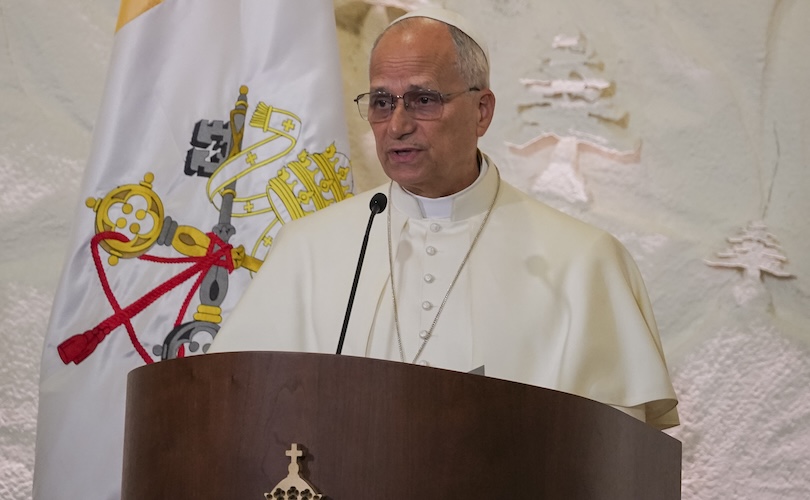
Pope Leo XIV denounced abortion and surrogacy while defending the family in a Friday address to the diplomatic corps.
He first highlighted what he considers to be two key challenges to the family today, namely, “a worrying tendency in the international system to neglect and underestimate its fundamental social role, leading to its progressive institutional marginalisation,” and “the growing and painful reality of fragile, broken and suffering families,” afflicted by internal problems such as domestic violence.
The vocation “to love and to life manifests itself in an important way in the exclusive and indissoluble union between a woman and a man,” Pope Leo said of marriage, and “implies a fundamental ethical imperative for enabling families to welcome and fully care for unborn life.” He did not specify what he meant by “enabling” families to welcome life. Nevertheless, married couples have a moral obligation to always remain open to life by refraining from contraception.
Such life is a “priceless gift” and is “increasingly a priority, especially in those countries that are experiencing a dramatic decline in birth rates,” he went on, without directly referencing contraception as a major contributing factor to declining birth rates.
He went on to condemn surrogacy and abortion, the latter of which he called a practice that “cuts short a growing life and refuses to welcome the gift of life.”
“In light of this profound vision of life as a gift to be cherished, and of the family as its responsible guardian, we categorically reject any practice that denies or exploits the origin of life and its development,” Leo said.
-

Judge Role in Assisted Suicide?
Peers have debated reintroducing judges to the assisted suicide process as fundamental questions about the plans are still being considered.
During the House of Lords’ fifth day of scrutinising amendments to Kim Leadbeater’s assisted suicide Bill, the Committee of the Whole House debated proposals tabled by Lord Carlile to return to a judge-based system to approve a person’s request to kill themselves.
The Terminally Ill Adults (End of Life) Bill initially required the involvement of a High Court judge, but after Kim Leadbeater was told this would be unworkable, she downgraded her self-described ‘ultimate safeguard’ to a multidisciplinary panel, comprising a social worker, lawyer and psychiatrist.
Baroness Berridge criticised this fundamental late-stage amendment, stating that it undermines the impact assessment which was “prepared on the basis of the panel” as well as the evidence heard by the select committee.
She said that “removing 16 clauses from a Bill, which is about 30 per cent of the Bill, makes this in my view potentially a new Bill.”
Lord McCrea told the House: “This flip-flopping does not inspire confidence, my Lords!” He added that the High Court safeguard was scrapped in the House of Commons because it challenged the Bill’s practical workability.
Lord Falconer, the sponsor of the Bill in the Lords, defended the panel-based model, claiming “you are better off and it is safer if one does it with a multidisciplinary panel”.
On Thursday, a motion put forward by Lord Falconer for extra time for Peers to scrutinise the Bill was passed without a vote. This could mean that debate in the House of Lords could continue into the evenings. This is a non-binding motion and the Government has not yet pledged any specific additional time beyond the ten extra days it made available at the end of last year.
Lord Falconer warned it “would significantly damage the reputation” of the House if the legislation was ‘timed out’. Parliamentary procedure dictates that, should the Bill not pass by the end of this session, it will fall.
Conservative Peer Lord Shinkwin responded to criticism that the scrutiny was taking too long by remarking: “We can only ever work with what we have been given. The volume of amendments, and the time taken to consider them, therefore, reflect the quality or lack thereof of the Bill that was sent to us.”
He added: “If any bill is so poorly drafted and so unsafe, surely the question is not so much whether the Bill deserves more time, as whether yet more time could transform it.”
-

Gambling Giant Fined £2 Million
Gambling is a one of the biggest social curses of all so, even though the UK government is notoriously soft on the family-wrecking industry, some good action does happen now and again. Paddy Power Betfair has been sanctioned by the industry regulator for systematically failing to protect customers from gambling harm.
The operator has been fined a £2 million penalty by the Gambling Commission after systems to identify and address harm were found to be ineffective.
In 2023, Paddy Power Betfair was fined £490,000 for sending ‘push notifications’ to self-excluding customers.
An investigation by the regulator found that “systems the licensees had in place were not sensitive enough to identify indicators of harm”.
One customer, it reported, “staked £86,000 over a 16-day period during which time they lost £6,000. Despite the high velocity of spend, no manual review of the account took place”.
Another “lost £12,300 in five weeks before being identified for an interaction”, while a third deposited £25,000 in 25 days before Paddy Power Betfair intervened.
Paddy Power Betfair owner Flutter Entertainment claimed: “Customer safety is our No 1 priority and there is no suggestion that any of the customers reviewed by the Gambling Commission experienced any harm.”
But Commission Director of Enforcement John Pierce said: “This £2 million settlement reflects the seriousness of the failings identified and the importance of meeting social responsibility and customer interaction standards.”
-

Scottish Bishops Denouce Buffer Zones
The Bishops’ Conference of Scotland (BCOS) published a message on Tuesday reflecting on and expressing their concerns over the country’s radical abortion buffer zone laws that have resulted in the arrest of pro-life activists silently praying near abortuaries.
In the January 6 statement, the bishops lamented that Scotland’s draconian “buffer zone” laws have punished pro-lifers for peacefully praying or holding signs outside abortion centers, and could punish citizens praying within their own homes. In 2024, the leftist-dominated Scottish legislature passed a law barring the harassment, intimidation, and “influencing” of anyone seeking to kill their babies within 200-meter-wide “exclusion zones” or “buffer zones” surrounding all the country’s abortuaries.
“It is therefore unsettling that this season saw the first person in Scotland charged under the new so-called ‘buffer zone’ law in Scotland; a law the Church believes curtails Scotland’s commitment to freedom of expression and conscience, and restricts critical voices from democratic debate in the public square,” the bishops wrote.
Here, the BCOS appears to be referring to the case of Rose Docherty, a 75-year-old pro-life grandmother who was arrested for silently holding a sign that read “Coercion is a crime, here to talk, only if you want,” within the “buffer zone” of Queen Elizabeth University Hospital’s abortuary last fall. Docherty was held in custody for several hours, during which she was refused a chair to sit on in her cell despite making it known that she had a double hip replacement.
“I can’t believe I am here today. I simply stood, in love and compassion, offering consensual conversation to anyone who wanted to engage,” Docherty said after a court hearing just days before Christmas.
“Nobody should be criminalised just for offering a chat,” she declared. “Conversation is not a crime on the streets of Glasgow.”
The bishops noted that while the Church does not condone the harassment or intimidation of those planning to abort their unborn child, this “undemocratic” law was really meant to deny Scottish pro-lifers their basic freedoms.
“When parliaments introduce criminal offences where existing law is already sufficient, questions should be raised and alarm bells ring,” they said. “We oppose this law because it is disproportionate and undemocratic. It represents state overreach and curtails basic freedoms. The Church would similarly oppose legislation mandating buffer zones outside nuclear weapons facilities or refugee detention centres. This should concern every Scottish citizen, regardless of their views on abortion.”
“As the Parliamentary Officer for the Catholic Church in Scotland pointed out, women experiencing crisis pregnancies may be ‘denied the opportunity to freely speak to people and organisations who may be able to help them,'” they added. “A law supposedly designed to protect choice risks doing the opposite — eliminating one side of a conversation and one set of choices altogether.”
The bishops further stressed their concern that the law extends to private homes within the “buffer zones.”
“The Act extends to private homes within designated zones. A pro-life poster displayed in a window, a conversation overheard, a prayer said by a window; all could, in principle, fall within the scope of criminal sanction,” they said.
“That sends a chill down the spine of anyone who cares about civil liberties,” they added. “Criminal law that depends on the perception of a passer-by is certainly not the hallmark of a free Scottish society.”
“As we look to the child in the manger this Christmas and Epiphany, we are reminded that babies do not have a voice of their own,” they added. “It is a shame that the State has now also curtailed the voices of ordinary citizens who advocate for them within its borders.”
-

Cocaine in Most Northern Irish Rivers
Cocaine use in Northern Ireland has got so bad that most rivers and lakes in the Province are awash with it.
Research by Imperial College London and the Agri-Food and Biosciences Institute (AFBI) found the Class A drug in 91 per cent of the 140 samples they took from rivers and lakes across the region.
The Police Service of Northern Ireland reported 1,353 seizures of cocaine between September 2024 and 2025. It is the most commonly used illegal drug in the nation, according to Northern Ireland’s Substance Misuse Database 2023-24.
Lead author of the research, Dr Billy Hunter, said he was surprised to find cocaine detected “broadly everywhere”, and not just in high population areas like around Belfast.
He said that the findings showed illegal drug abuse is not “solely an urban problem; they are present right across Northern Ireland”.
Dr Hunter added: “One of the interesting things is actually the fact that it was showing up quite strongly in places like Lough Erne, which is maybe because it’s a recreation hotspot.”
Tom McGrath, whose 22-year-old son Matthew was found dead in County Armagh in 2024, highlighted the harms of cocaine earlier this year when he spoke to BBC Radio Ulster calling for a clampdown on drug dealers.
The penalty for possessing the Class A drug is up to seven years in prison, while supply may result in a life sentence.
But the father explained: “How many times do you see them going before the courts and getting custodial sentences? The dealers and suppliers aren’t being prosecuted properly.”
-

Court Piles Pressure on Planned Parenthood
An Obama-appointed federal judge has once again been rebuked for her attempts to stop a federal law, signed by President Donald Trump, that generally defunds Planned Parenthood and some other abortion vendors.
Since July, District Judge Indira Talwani has tried several times to stop the temporary defunding of abortion giant Planned Parenthood. The requirement is provided for in the July “One Big Beautiful Bill Act” signed by Trump. However, the Massachusetts judge is regularly reversed by other judges, even those appointed by Democrats.
Talwani’s latest act of judicial activism hit a roadblock earlier this week when the First Circuit Court of Appeals reversed another injunction the activist judge issued against the law on behalf of 22 states.
“A three-judge panel of the Boston-based 1st U.S. Circuit Court of Appeals at the administration’s request put on hold an injunction issued by [Talwani] who barred the law from being enforced in 22 states and the District of Columbia,” Reuters reported on Dec. 30.
“It marked the latest instance of the appeals court lifting an order by U.S. District Judge Indira Talwani preventing the law from being implemented, after the 1st Circuit on Dec. 12 overturned a ruling she issued in another case brought by Planned Parenthood declaring that the law violated the Constitution,” the news wire service noted.
All the judges that rebuked Talwani earlier this week were appointed by Democrats, Reuters reported.
Defunding Planned Parenthood will not eliminate abortion but could make it harder for women to kill their babies. Dozens of abortion facilities have announced they will be closing down due to the law, which further proves that killing babies is central to their business.
-
Parents Of Prem Baby Appeal for Blood Donors
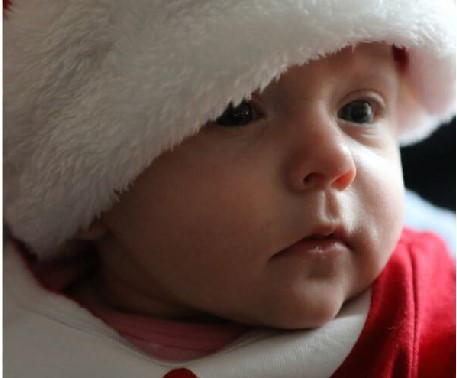
A family whose premature baby, born at only 26 weeks and weighing less than a kilo, received four vital blood transfusions, appealed for more people to donate blood and give the gift of life this Christmas, and want people to remember - and act upon - their message in the New Year.
Baby Alexandria, from Scotland, was born extremely prematurely and had to spend over three months in hospital. She faced challenges after being born prematurely and was the recipient of four blood transfusions. Now, her mother, Nicolle, is calling for people to donate more blood and help save lives this Christmas.
“After 102 days in hospital, in April this year, we brought our baby home”, Nicolle said. “She had been through so much in her wee life already. She was intubated at birth, needed oxygen support at home, and received four blood transfusions”.
“Her dad Dan and I believe she is our total miracle and our warrior princess. We absolutely cannot wait to celebrate her first Christmas”.
“She never gave up. To the blood donors who helped give her a chance at life – thank you for giving us our world”.
The percentage of people in Scotland who donate blood has decreased over the past decade from 3% to under 2%. This decline puts pressure on hospitals, according to the Scottish National Blood Transfusion Service (SNBTS), which may need blood to help save the lives of premature babies like Alexandria. These donations are especially important because blood has a shelf life of only 35 days, so regular donations are always needed.