News

  • "Assisted Suicide Puts a Price On My Head"

    A Peer with a disability has said the legalisation of assisted suicide “puts a price on my head”, as the Bill continues to make its way through the House of Lords.

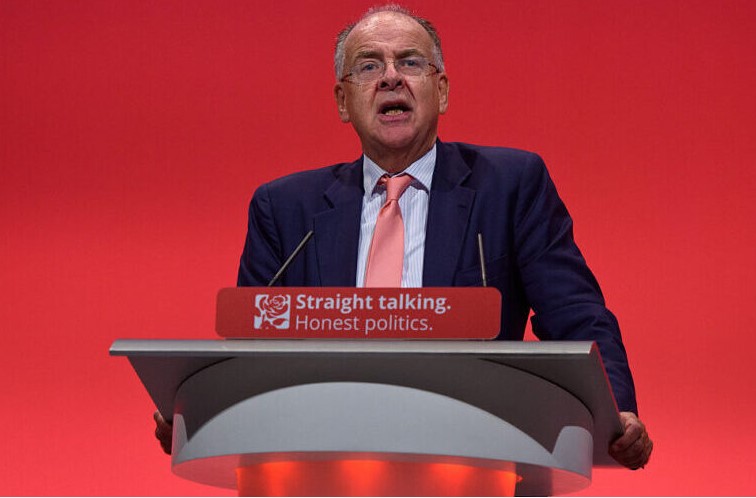
    Speaking during the second day of Second Reading of the assisted suicide Bill in the House of Lords, Lord Shinkwin, who was born with osteogenesis imperfecta, called the Bill “the stuff of nightmares”, saying, “There are savings to be made should assisted dying be introduced. This Bill effectively puts a price on my head”.

    Lord Shinkwin continued, saying that should the Bill “become law and precedents set elsewhere apply in the UK over time, I face the realistic possibility, as a severely disabled person, of being killed as a result of legislation passed by this House”.

    Shinkwin also highlighted the spoken contribution of former Prime Minister, Theresa May, who now sits in the House of Lords, in which she referred to the Bill as “the ‘Licence to Kill Bill’”. He said that Baroness May “is right: it gives the state a licence to kill the wrong type of people. I am the wrong type”.

  • Liberal Govt. Breaks Law to Push Abortion in Poland

    Unborn babies in Poland are now in more danger than at any time since the Fall of Communism. They are being butchered by government order, with public funds, in violation of Poland’s law and Constitution.

    When, in mid-2024, the government lost the votes on the proposed abortion bills, the minister of health, Izabela Leszczyna, issued unlawful guidelines recommending that hospitals murder Poles in their mothers’ wombs on the basis of certificates from psychiatrists about a broadly interpreted threat to mental health.

    As a result, the situation in Poland is close to a de facto legalization of abortion “on demand.” Even “threats to the mother’s health and life,” such as… adjustment disorders associated with taking on a new role in life, can serve as a pretext for abortion up to the moment of birth.

    No wonder that, even among psychiatrists, the government’s guidelines have sparked protests – although many have no qualms about pocketing blood money for “referrals to death.” You can get certificates during an e-visit – after a perfunctory interview, but for a hefty fee. Moreover, the Polish health ministry has prohibited hospitals from challenging even obviously baseless medical certificates.

    At the same time, the government and the National Health Fund (NFZ) consistently violate the consciences of doctors who are faithful to the mission of defending life. After all, many doctors don’t want to be complicit in mass murder. To crush any resistance, Poland’s left-liberal government imposes draconian financial penalties on hospitals where doctors refuse to poison, dismember, or suffocate babies during a forced premature delivery.

    The killings could be halted. Government lawlessness and mass abortion can be stopped by a ruling of the country’s Constitutional Tribunal. Admittedly, the “guidelines” are not a legal act, but the Constitutional Tribunal has in the past reviewed acts of state authorities that purported to be sources of binding law. It can also do it this time. Pro-Lifers in Poland are working hard to get this done. We wish them well and pray for their success.

  • Setbacks for Assisted Suicide in House of Lords

    In a significant win for opponents of the assisted suicide Bill, following the second day of Second Reading of the Bill in the House of Lords, Peers have approved the establishment of a dedicated select committee to further scrutinise the Bill’s proposals, with the commencement of the Bill’s formal Committee Stage being delayed until the select committee has reported.

    Last week, Baroness Berger tabled an amendment that delayed the commencement of the Bill’s Committee Stage until a select committee had reported. This was branded by supporters of the Bill as a “wrecking amendment” and dismissed by Lord Falconer as not “workable”. 

    However, on Wednesday of this week, in a significant U-turn, Lord Falconer made a major concession, agreeing that he would now back a new amendment tabled by Baroness Berger that would, in fact, still delay the commencement of the Bill’s Committee Stage until a select committee had reported. 

    This has been called a “significant win” for opponents of the Bill by Politico Playbook. Commentators have said this clearly showed that Falconer and supporters did not have the numbers to vote down the amendment, and so conceded. 

    This followed another strong majority of Peers speaking against the Bill on day two of Second Reading.

    An analysis of the speeches across both days one and two of Second Reading, completed by Right To Life UK’s Policy Team, found that of the 155 peers who took a position on the Bill, 104 (67%) spoke in opposition and 51 (33%) spoke in favour. This represents more than double the number of Peers speaking in opposition to the Bill compared to those who supported it. A further five Peers did not take a position.

  • Prayers Can Be Illegal in Australia

    Some prayers are now “unlawful” in New South Wales, Australia, the Attorney General has admitted.

    Michael Daley confirmed that some prayers are illegal, in response to a question from politician Susan Carter, who raised concerns over the Conversion Practices Ban Act. Daley implied that this could even include silent prayer, when Carter raised it as an example.

    The Conversion Practices Ban Act 2024 took effect on 4 April. Anyone accused of “changing or suppressing” another’s gender identity or sexual orientation could be fined up to $100,000 as part of the civil complaints scheme. If the person was deemed to cause “substantial” mental or physical harm, they could be sentenced up to five years in prison.

    A video publicising the law, released by Anti-Discrimination NSW, states that ‘conversion practices’ could resemble “prayer or pastoral conversation that is intended to change or suppress someone’s gender or sexuality”.

    Carter quoted guidance from Anti-Discrimination NSW, and accused the NSW Government of putting limits on people’s prayers, stating it “sounds like a prohibition on prayer does it not? Prayer is lawful, unless it is about a matter which has been declared unlawful.”

    Daley talked around the issue, but said: “If it’s an unlawful prayer, then it’s not a lawful prayer.”

  • "Let Them Die" Says Left-Wing Author

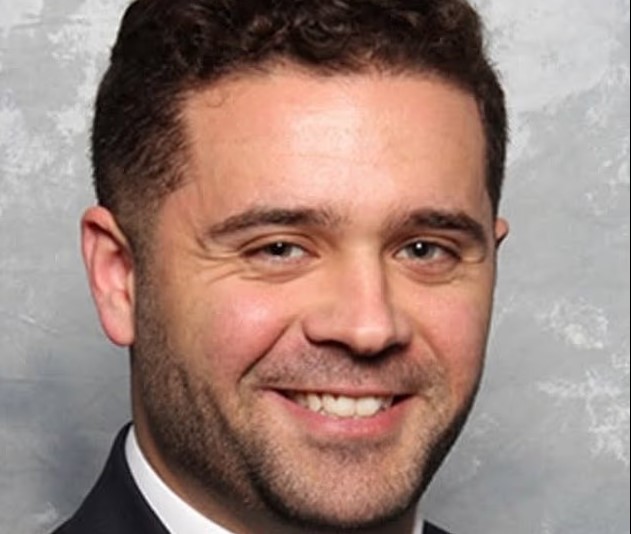
    From abortion to euthanasia, the enthusiasm of the left for killing and death continues to become ever more blatant. A young author named Oli Dugmore, writing in the latest issue of the socialist New Statesman, just let it all out.

    Under the delightful headline “Let Them Die”, the author sets out, with brutal candour, the reasons why he thinks assisted suicide is so urgently needed. Among others: we’ve got far too many old people, and they’re costing us far too much money.

    “The UK population is ageing,” he writes. “And if we don’t maintain high levels of immigration, ironically opposed by most older people, then it’s hard to overstate the demographic problem.” For one thing, there’s “the big fat juicy triple lock on pensions (reminder: which no other benefit is afforded)”. Then there’s “the increasing bill for the NHS and care sectors”. Assisted suicide “would appear to mitigate some of those problems”.

    He dismisses objections from Christians about the “alleged” sanctity of life (“I do not believe in the big man in the sky”), arguing religion should be kept separate from a secular democracy. Anyway, he goes on, plenty of older people would actually love the chance to die, because they don’t wish to become “a burden” – and they know how eager their children are to get their hands on their savings.

    If his parents are still alive, but happen to "die suddenly", the police will know who to call on first!

  • Common Sense Parents Oppose LGBT Grooming

    Parental common sense is banging heads with the increasingly aggressive LGBT grooming lobby in education. Many British parents are concerned about the use of inappropriate sex education material, an important poll has revealed.

    In the UK’s largest annual survey of parental attitudes, Parentkind sought the views of parents on a whole range of issues, including Relationships and Sex Education and gender-confused children in school.

    On behalf of the national charity, YouGov conducted fieldwork amongst 5,866 parents in the UK who have at least one child aged 4 to 18 in school.

    According to the poll, seven out of ten parents (71 per cent) believe it is “important that schools consult with parents in advance about the content of RSE lessons”.

    However, 33 per cent say they “have not always been informed in advance about the content of RSE lessons” and nearly a quarter of parents (23 per cent) “say their child has been exposed to inappropriate content”.

    Parentkind reported: “A majority (56%) of parents support the right to withdraw their child from some or all RSE lessons.”

    The charity’s Chief Executive, Jason Elsom, said: “Our parent survey shows there is a long way to go on consulting with parents and we need to stop situations where so many parents are shocked and upset when they learn what their children are being told in the classroom.

    The survey also found that nine in ten parents “think schools should inform them if their child has changed gender at school as long as there are no safety concerns”.

    More parents believe that schools “should teach there are two biological sexes only” (48 per cent) than hold to the view that children should learn “that people have different perceptions of sex and gender” (45 per cent).

    A majority of parents (55 per cent) say that boys who identify as girls “should not be allowed to use the girls’ toilets in schools”, only 23 per cent of parents were in favour of such a policy.

  • 10,000+ On Record Pro-Life March in London

    Record-breaking numbers of pro-lifers gathered in central London for the 11th annual March for Life, as over ten thousand pro-lifers marched, dwarfing a pro-abortion counter-demonstration.

    Held on 6 September, pro-lifers of all ages marched in opposition to the UK’s abortion laws, which generally permit abortion up until 24 weeks gestation.

    The March, which was described as “a peaceful and joy-filled demonstration of support for the unborn and their parents”, dwarfed a counter-protest from a pro-abortion group, which the organisers reported as being “a stark contrast noted by many onlookers”.  

    Co-director of the event, Isabel Vaughan-Spruce, who is currently being investigated for silently praying outside an abortion clinic for a third time, added “[T]he pro-life crowd exemplified the peace and joy of those who are confident that their cause is just, and their hope is rooted in something greater than politics”.

    As of April this year, it has been estimated that almost eleven million unborn babies have lost their lives to abortion in the UK since 1968, when the Abortion Act 1967 came into effect. The theme of this year’s March for Life was “Human rights for all humans”. 

    Starting in the Emmanuel Centre in central London at 10am, as well as pro-life stalls – including a Right To Life UK stall – and activities, the March hosted a ‘Pro-life Human Rights Summit’.

    The rally heard from a number of speakers, including Sara Spencer, a student midwife who was suspended for her pro-life views, and Carla Lockhart MP, Chair of the Pro-Life All-Party Parliamentary Group. Lockhart said “If human rights mean anything, they must be consistent, they must apply to all. If we are to see change, we must each play our part”.

    “We are called to speak truth in love, to support mothers in crisis, to defend the defenceless, to stand even when it is unpopular and to be unashamed in saying: 

  • Is JK Rowling On the Path to God?

    God moves in mysterious ways indeed! After years of being viewed with suspicion over introducing a generation of children to 'magick' and all sorts of darkness, JK Rowling has become a notable and powerful critic of trans gender madness.

    And now she has changed her mind about assisted suicide - which she now opposes. Furthermore, she seems to be on the road back to faith and God.

    In a fascinating response to a question on X, author J.K. Rowling revealed that she is now opposed to assisted suicide — and that she feels a “God-sized vacuum” in her life.

    During a debate over her views on transgender ideology, one X user demanded to know if she’d ever actually changed her mind on anything. Rather than responding with a pithy one-liner, Rowling gave a long, detailed, and surprisingly vulnerable response.

    “I used to believe nurture was everything and that nature wasn’t important,” she replied. “My belief changed because of my own life experience and from reading studies about genetic inheritance. In my early twenties I believed the difference between the sexes was entirely due to socialisation. I no longer believe that (for the same reasons as above.)”

    “I used to believe in unilateral nuclear disarmament. I no longer do,” she continued. “I used to believe cannabis was essentially harmless. I no longer do because I’ve witnessed it wreaking havoc on someone I care about’s mental health. I used to believe in assisted dying. I no longer do, largely because I’m married to a doctor who opened my eyes to the possibilities of coercion of sick or vulnerable people.”

    But Rowling goes even further, cutting to the heart of the matter. “I’ve struggled with religious faith since my mid-teens,” the famously liberal author wrote. “I appear to have a God-shaped vacuum inside me but I never seem quite able to make up my mind what to do about it.” She continued:

    I could probably list at least twenty more things I’ve changed my mind about. I don’t currently have a single belief that couldn’t be altered by clear, concrete evidence and in all but one case, I know what that evidence would have to be. The exception is the God conundrum, because I don’t know what I’d have to see to make me come down firmly on either side. I suppose that’s the meaning of faith, believing without seeing proof, and that’s why I’ll probably go to my grave with that particular personal matter unresolved.