
News
-
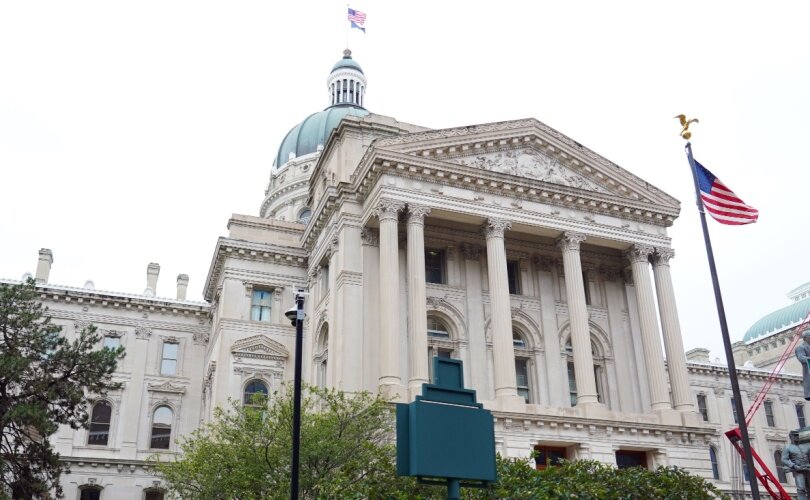
Judge Rules Abortion is a "Religious Right"
An appalling ruling in favour of abortion has exposed how - despite Dobbs and the presence of pro-lifers in various high offices - the United States of America is still desperately sick. An Indiana judge has just blocked the enforcement of the state’s abortion ban on the grounds that abortion is a necessary exercise of “religious” beliefs.
In a Thursday court ruling, Marion County Superior Court Judge Christina R. Klineman issued a permanent injunction against Indiana’s abortion ban, which allows exceptions in cases of rape, incest, or “medical emergencies” in the first 10 weeks or fetal anomalies “incompatible with sustained life” up to 20 weeks.
She ruled on behalf of anonymous plaintiffs, including a Jewish woman who believes that “life begins” after birth, and that “the health of a pregnant woman, both physical and mental, must take precedence over the potential for life embodied in a … fetus.” Another plaintiff believes we should “not harm other humans or this community of humanity,” but also that life does not begin at conception, that “a fetus is a part of the body of the mother,” and that “bodily autonomy that should not be infringed upon.”
These so-called “religious beliefs” may entail the idea that a human life does not necessarily constitute a “person” with rights, but it is a scientific fact that human life begins at conception. As soon as the mother and father’s genetic material combine, a unique, complete genetic blueprint is present in the chromosomes of the newly formed zygote-stage individual, whose sex, eye shape and color, hair color, and even physical mannerisms are already “in writing” in their DNA.
Despite their anti-scientific and anti-life basis, Klineman accepted the plaintiffs’ beliefs that an unborn baby should be killed to preserve the “health” of the mother as a legitimate expression of “religion.”
“The state’s Religious Freedom Restoration Act bars a law that substantially interferes with class members’ religious beliefs that a pregnant person’s mental or physical health takes precedence over that of a zygote, embryo, or fetus,” Klineman concluded.
“The abortion law would allow a plaintiff to seek an abortion if her pregnancy were the result of rape, but not if it were mandated by her religious beliefs. The state has not justified this differential treatment by establishing that its interest in the same prenatal life changes based upon the reason for terminating a pregnancy,” she continued.
Indiana Right to Life president and chief executive officer Mike Fichter decried the ruling on Friday in a statement:
For the court to rule that taking the life of an unborn child is an exercise of religious freedom is deeply distressing — and a perversion of the law’s intent.
Indiana’s Religious Freedom Restoration Act was never intended to equate taking the life of an unborn child with religious expression in our state. While this current injunction is limited to the plaintiffs in the case only, if it withstands challenge, it will be exploited so anyone claiming a spiritual belief, even if personal and non-theistic, can justify taking a child’s life.
We are encouraged by Attorney General Todd Rokita’s immediate move to appeal this injunction and pray it will be stayed during the appeal process.
The Satanic Temple in Indiana has also challenged the state’s pro-life laws in court on the basis that abortion prohibitions violated the group’s rights under the state Religious Freedom Restoration Act.
Judges defied their challenge not because abortion was not considered a genuine exercise of religion but because the Satanic Temple did not have “standing.” Judges upheld in January a lower district court ruling which concluded:
-
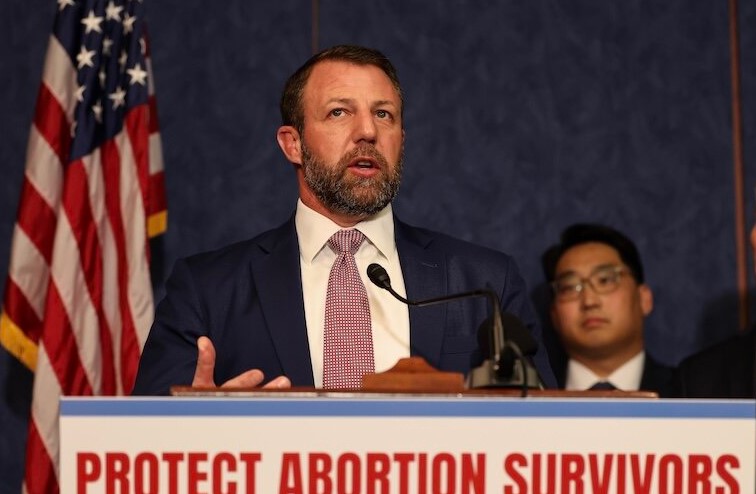
Pro-Lifer to Run US Homeland Security
A committed pro-lifer has just been appointed US Secretary of State for Homeland Security - their equivalent of the Home Office. President Donald Trump has named conservative Oklahoma Republican Sen. Markwayne Mullin to replace Kristi Noem in the post.
Mullin, a father of six, including three adopted children, has a strong pro-life record, having supported a national ban on abortion and opposed abortion even in cases when the life of the mother would allegedly be threatened.
Abortion, the destruction of an unborn child in his or her mother’s womb, is never necessary to protect a woman’s health, as medical experts have attested.
“As a Christian and an adoptive father, the fight to protect life is a personal one,” he said in response to the reversal of Roe v. Wade. “In Oklahoma, we’re already saving lives, but we cannot stop fighting until all of God’s children have a chance at life.”
Mullin has also pushed back against LGBT ideology, including “gender transitions” for minors, and voted against the 2022 pro-LGBT “Respect for Marriage Act.”
-

Born Alive But Left to Die in Ireland
108 babies were born alive and left to die following failed abortions in Ireland between 2019 and 2023, according to new data published by the health service.
According to reports, the figures released by Ireland’s Health Service Executive (HSE), following a parliamentary question asked by Independent Teachta Dála (Member of Parliament) Mattie McGrath, show that 29 babies were born alive after a failed abortion and subsequently died shortly afterwards in 2023, the most recent year for which data were available. There were 23 deaths of this nature in 2022, 14 deaths in 2021, 25 deaths in 2020, and 17 deaths in 2019; a total of 108 across these five years.
Furthermore, four of these babies were more than 24 weeks gestation and/or weighed more than 500g, in addition to not having been diagnosed with a major disability, meaning these babies may have been able to survive outside the womb.
-

Cash-Strapped Abortionists Turn to Botox
Abort-for-profit ginat Planne Parenthood has been hit so hard by being cut off from Medicaid payments that its 'clinics' are offering Botox injections a much-needed additional source of income.
Planned Parenthood is in desperate need of new revenue streams after President Donald Trump’s One Big Beautiful Bill blocked the abortion giant from receiving federal Medicaid reimbursements.
As a result, Planned Parenthood Mar Monte (PPMM) — the organization’s largest affiliate that serves a vast area spanning Northern California and Nevada — has been forced to scramble to plug an estimated $100 million revenue gap, according to a report by The Wall Street Journal (WSJ).
What is unsaid in the WSJ puff piece is that PPMM needs to generate money in new ways in order to subsidize aborting preborn children.
PPMM has already had to close five facilities, reduce the number of programs it offers, and lay off about 15% of its staff.
And PPMM isn’t relying solely on Botox to boost its balance sheet.
“Now, along with access to birth control, abortions and testing for sexually transmitted infections, patients can order an IV hydration after a night of drinking — or smooth crow’s feet. They might soon be able to get laser hair removal and cosmetic fillers,” the Journal reported. “The centers are also adding nitrous oxide, or laughing gas, for intrauterine device insertions. And they are launching a telehealth concierge program for perimenopausal care, named Poppy after California’s state flower.”
“We’ll never fill this $100 million gap. It’s impossible,” said Stacy Cross, president and chief executive officer of PPMM. “But we have to do everything we can.”
-
Same Day Assisted Sucide for Candadians
People in Canada are having their lives ended by assisted dying on the same day that requests are made, adding to fears that wrongful deaths may be occurring.
An official report by the Chief Coroner of Ontario’s Medical Assistance in Dying Death Review Committee (MDRC) highlighted that, in 2023, 65 people in Ontario had their lives ended by Canada’s assisted suicide and euthanasia programme on the same day that they made their requests to do so. A further 154 people had their lives ended the day after their request was made.
These same-day suicides, which comprise both assisted suicide and euthanasia, include the case of Mrs B, a woman in her 80s who suffered from complications following coronary artery bypass graft surgery and who chose to receive palliative care support at home.
After sharing her desire with her family to end her life through Canada’s euthanasia and assisted suicide programme, her spouse requested an assessment. However, Mrs B informed the euthanasia and assisted suicide assessor she “wanted to withdraw her request, citing personal and religious values and beliefs”, preferring instead to pursue “in-patient palliative care/hospice care”.
After being denied hospice palliative care, Mrs B’s spouse subsequently requested another euthanasia and assisted suicide assessment, which deemed Mrs B eligible for the euthanasia and assisted suicide programme. This approval was granted despite reservations from the first practitioner, who held “concerns regarding the necessity for ‘urgency’ and… the seemingly drastic change in perspective of end-of-life goals, and the possibility of coercion or undue influence (i.e. due to caregiver burnout)”.
Despite this, Mrs B’s request was approved by two separate assessors, and she died the same day.
Canada’s original assisted suicide and euthanasia law, known as Medical Assistance in Dying (MAiD), passed in 2016, required a 10-day waiting period between requesting assisted dying and being given the assistance to end one’s life.
The Canadian Parliament removed this requirement for individuals whose deaths were “reasonably foreseeable” in 2021. There are no specific criteria used to discern whether a same-day suicide should be applicable or not.
-
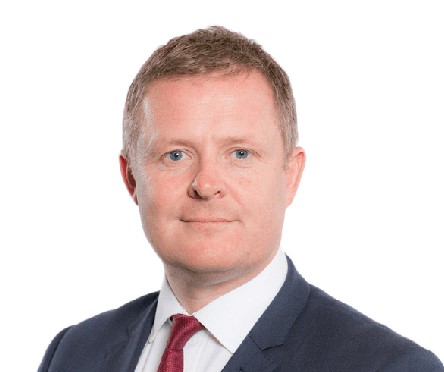
Minister Slams Assisted Suicide Bill
The Welsh Health Secretary, Jeremy Miles, has said that the assisted suicide Bill does not “provide sufficient safeguards for patients” after voting against a motion in the Senedd (Welsh Parliament) to consent to the Bill.
Speaking to the BBC the day after the vote, Miles said that he was “clear in my own mind that the fundamentals of the bill, as it’s going through Westminster, don’t provide sufficient safeguards for patients”.
“Although the vote yesterday was on the devolved areas… the net effect is to give powers in Wales to deliver a service that I don’t think I would support if I was operating over the border”, he added.
Speaking during the debate, Miles expressed concern about giving consent to what would be an unfinished version of the assisted suicide Bill, stating that they have found themselves in an “unusual position”.
The debate centred on a Legislative Consent Motion (LCM) pertaining to the assisted suicide Bill. An LCM is required under the devolution settlement where UK legislation would extend into devolved areas in Wales, since health services are a devolved matter.
While the Senedd decisively voted against legalising assisted suicide in principle in October 2024, only weeks before the Second Reading of the Leadbeater assisted suicide Bill in Westminster, it narrowly voted in favour of the LCM on Tuesday.
As supporters of the motion made clear, the vote was not on whether assisted suicide should be made legal in Wales. Rather, it was a vote on a narrowly worded motion regarding the implementation of assisted suicide in Wales, should it become law.
Tactics employed on Tuesday by the Bill sponsors, Kim Leadbeater and Lord Falconer, seemingly “blackmailing” Labour Senedd Members to support the motion with threats about forcing a private assisted suicide service on Wales, have been heavily criticised online.
-

Jersey Votes For Assisted Suicide
While England and Wales look set to be saved from state-sanctioned murder of the old and sick by the House of Lords, things have taken a turn for the worse in the Channel Islands. Jersey’s politicians have voted through an assisted suicide Bill.
The Bill was passed by 32 votes to 16. It will allow terminally ill adults to receive help to kill themselves if they are expected to die within six months, or 12 months if they have a neurodegenerative condition. It also makes provisions for euthanasia, where a doctor or nurse may directly administer the lethal drugs to end the life of their patient.
It will be sent for Royal Assent, with the first assisted suicides expected to happen as soon as next year.
Jersey State Member Louise Doublet, who voted for the legislation, called assisted suicide “one of the most meaningful things we can do for our island.”
The self-described humanist claimed she is “guided by principles of compassion”, and said: “It is a compassionate gift we are giving our island.”
Jersey politician Sir Philip Bailhache, who voted against it, commented: “I’m all in favour of compassion, I’m in favour of people having deaths which are good deaths, but I’m not in favour of the law which has just been passed.
“Life is a precious thing and I don’t think really that it’s for people to remove life in the way in which the assisted dying law is now going to authorise.”
-
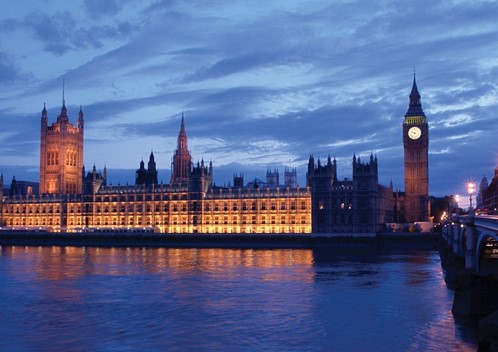
Peers Kill Assisted Suicide Bill
Pro-Life arguments CAN win - and this has just been proven in Great Britain. The assisted suicide Bill has been widely pronounced as dead by commentators after it was revealed that it will “almost certainly” run out of time in the House of Lords and will not become law. This conclusion comes after the Government Chief Whip in the Lords confirmed that the Government will not be committing any further time to the Bill.
Private Members’ Bills, like the Terminally Ill Adults (End of Life) Bill, are only debated on Fridays, and despite seven additional sitting Fridays being granted for the Bill before Christmas on top of the seven which had already been scheduled, even the team behind the Bill now expect it to fail.
Assisted suicide campaigners have repeatedly claimed that just seven Peers have been blocking the Bill by tabling lots of amendments, but this spin from assisted suicide campaigners paints a deeply misleading picture of the actual situation in the House of Lords.
Nearly 80 Peers have so far tabled or signed amendments highlighting concerns with the Bill and 131 Peers have either spoken against the Bill or signed amendments raising such concerns during its passage through the Lords.
This is significant because Bill supporters are seemingly attempting to persuade MPs to revive the Bill in the next parliamentary session and force it through using the Parliament Acts, on the basis that a small number of Peers have inappropriately blocked its passage. Our analysis shows this claim to be wholly untrue.
131 is an exceptionally high number of Peers opposing a Bill, particularly one where debates are reserved for Fridays when Peers are often not expected to be in Parliament. It is even more remarkable given that the Bill has not yet completed Committee Stage or reached its Report Stage or Third Reading. In addition to these 131 Peers, it is likely that more Peers will speak out during future sittings and it is known that many more Peers are opposed to the Bill. Others have already spoken out in the media or expressed concerns via written parliamentary questions.
Contrary to the misleading claims of Bill supporters, the number of Peers opposing the Bill by speaking against it or signing amendments raising concerns is therefore among the highest number ever recorded for a Bill in the House of Lords, even before the Bill has completed its Committee Stage.
Those Peers who have spoken against the Bill or signed amendments include Peers appointed to the House of Lords because of their expertise in relevant areas, including a former President of the Royal College of Psychiatrists and President of the British Medical Association, the former Chief Executive of NHS England, a leading Professor of palliative medicine, Peers living with disabilities, and legal experts, including a former Attorney General and the former President of the Family Division of the High Court.
This large number of Peers have been subjecting the assisted suicide Bill to extensive scrutiny due to what opponents of the Bill have said are dangerous flaws and a lack of adequate safeguards within the Bill.
-

Suzi Quattro's Abortion Regret
Seventies rock chick Suzi Quatro has spoken movingly about an abortion she had at the age of 18, describing it as “my life’s greatest regret”.
The singer and actress, who has sold over 55 million records, said in retrospect she would have kept the baby – who would now be 46 years old.
Quatro said she is delighted that her daughter, who also became pregnant at 18, kept her child.
The American performer, who moved to England in the 1970s, told the Daily Mail about her experience of abortion.
“When my two kids were born, I couldn’t get out of my mind who that first baby would have become. He or she would be 46 now.
“Any woman who’s been through an abortion and tells you it was nothing is lying.
“Of course I might well not have gone on to achieve what I did in my career if I’d become a young single mum.”
“But that doesn’t stop it being my life’s greatest regret.
“If I could turn the clock back, even allowing for everything that’s happened to me since, I’d have kept that baby.”
She also explained that when her daughter, Laura, told her she was pregnant at 18, Suzi spoke to her about own experience for the first time.
The singer said that she would have stood by her daughter whatever decision she made, but is delighted that she did not have an abortion.
-

Forced to Take Abortion Pills
The danger from abortion pills has been brought home by a new and shocking legal case. An Irish man has pleaded guilty to forcing a woman to take abortion pill.
The man forced the woman to take abortion pills, which he obtained from a pharmacy in Dublin, on Valentine’s Day 2020, ending the life of her nine-week-old unborn child.
It took the police in Ireland four years to access the accused’s phone because of a programme he had installed on it. Once accessed, it showed that the man had searched online for how to conduct an abortion at home using abortion pills.
The phone also contained an audio recording of the man forcing the woman to take the abortion pills, in which he can be heard saying, “I’m showing you what to do… take this… I’m dead serious… I’m forcing you. I don’t care, take it”.
Following the consumption of the abortion pills, the woman was in a large amount of pain and suffering from cramps. The man had locked her in a room during this time and told her not to eat anything.
The man is also charged with assaulting the woman and causing her harm, which he has also pleaded guilty to.
During her victim impact statement, the woman made it clear that she has suffered a long-term impact following this forced abortion.
“When he wrongfully imprisoned me and caused the termination of my nine-week pregnancy, he took far more than my freedom”, she said. “He took my child. He took my sense of safety. He took a future that I had already begun to plan and love”.
“My baby was real to me. I had hopes, dreams, and a bond with the life that was growing inside me, and all of it was violently stolen from me in a moment of cruelty that I will never forget”, she added.
“I will always grieve my child. I will always remember what was taken from me”, the woman said, adding, “What happened mattered. My child mattered. And justice matters”.