
News
-
Victory in Scotland
The Scottish Parliament rejected a bill that would have legalized euthanasia in the country, in a major victory for the right to life.
Scottish MSPs voted down the so-called “assisted dying” legislation on Tuesday night in a 69–57 vote, with one member abstaining. Twelve MSPs who supported the bill last May switched their votes over concerns about the risk of coercion, lack of oversight, and other problems, dooming the legislation.
The failed vote comes as a similar bill in the UK Parliament pushed by leftist PM Keir Starmer faces massive backlash and is also expected to fail.
Various prominent liberal MSPs opposed the euthanasia bill, including First Minister John Swinney, as well as Scottish Labour leader Anas Sarwar and deputy leader Jackie Baillie.
Baillie called Tuesday’s vote the most “consequential of the devolution era” and raised concerns about the lack of funding for palliative care.
Ruth Maguire, an SNP MSP diagnosed with cervical cancer, likewise advocated against the bill, saying it “frightens” her.
“My blood runs cold thinking about sitting in a room in hospital and having a doctor raise [assisted suicide] with me as we weigh up treatment options,” she said. “In voting against the bill I’m just choosing to vote for the inherent dignity of life and I urge colleagues to do the same.”
Scotland, a highly secularized country, would have been the first part of the UK to legalize assisted suicide.
-
Health Experts Against Assisted Suicide
The push for state-sanctioned murder in Scotland has hit a fresh hurdle. The professional bodies for psychiatrists and pharmacists in Scotland have separately announced their opposition to Liam McArthur’s assisted suicide Bill.
During last Friday’s debate in Holyrood, both The Royal Pharmaceutical Society (RPS) and The Royal College of Psychiatrists in Scotland (RCPsychiS) released statements opposing the Bill, citing the removal of conscience protections among other concerns.
The Assisted Dying for Terminally Ill Adults Bill, would allow those deemed to be terminally ill with less than six months to live to get help from a medic to kill themselves. MSPs are set to vote for the final time on the legislation tomorrow.
The letter to MSPs from the RCPsychiS stated that by failing to protect conscience, MSPs have “drastically weakened essential safeguards for psychiatrists and other healthcare professionals”.
It continued: “As a result, the Bill now poses unacceptable risks to the general public and the psychiatric workforce, meaning that we have no option but to oppose the Bill.”
The College explained: “Without explicit legal backing, psychiatrists are concerned that they may face pressure from colleagues or employers, or be placed in professionally contentious situations without adequate safeguards. This raises risks both for practitioners and for patients.”
-

Canada's 100,000 State Killings
Canada is soon set to reach a milestone unlike any other nation, as this year it is expected that over 100,000 Canadians will have died by state-sanctioned and promoted euthanasia.
The grim milestone comes 10 years after Canada’s euthanasia or “Medical Assistance in Dying” (“MAID”) program became legal, in 2016, under former Liberal Prime Minister Justin Trudeau.
This means that, on average, about 45 Canadians die per day from euthanasia, and 16,499 people died due to the practice in 2024 alone.
Commentator and activist Kelsi Sheren, in a recent blog post, highlighted Canada’s euthanasia deaths, noting Canada is “about to kill its 100,000th citizen through Medical Assistance in Dying”.
-
Pro-Abortionist Against Pills By Post
Even some pro-abortionists are realising that DIY-abortions-by-post have got to stop. Pro-abortion Peer Baroness Davies of Devonport has explained why she backs the reintroduction of in-person consultations for abortions.
The former Olympic swimming silver medallist said she has co-sponsored a Crime and Policing Bill amendment by Baroness Stroud to end home DIY abortions in order to “protect women”.
The ‘pills-by-post’ scheme, which removed in-person consultations for women to receive abortion pills, was introduced during the Covid pandemic.
Writing in The Daily Telegraph, Lady Davies branded the pills-by-post scheme as an example of “powerful drugs being too casually dispensed to women by the state in the name of ideology, from which tragic consequences have already unfolded”.
She explained: “being pro-choice does not excuse jeopardising safety or allowing a ‘Wild West’ of abortion pills, where pills can too easily fall into the hands of abusers coercing abortions, traffickers covering up abuse or women whose pregnancies are approaching full term”.
The former Olympian added: “The practical effect of the scheme is that women at any stage of pregnancy can get hold of abortion pills by misleading abortion providers on the phone about their gestation, either mistakenly or deliberately as in the case of Carla Foster, who was sent abortion pills by BPAS after pretending to be seven weeks pregnant when actually around 33 weeks.”
She said: “Reintroducing in-person medical consultations for women seeking abortions is not about reducing access to abortion but ensuring safeguarding and best practice.”
-
Tuesday 17th Could End Assisted Suicide Threat
Tuesday 17th March could see the crushing defeat of the Assisted Suicie threat in Scotland. That's when he final Stage 3 vote on the Scottish McArthur assisted suicide Bill at Holyrood is set to take place.
Scotland now stands at a crossroads – one that will decide how human life and the most vulnerable are treated for generations to come, in a similar way to what was faced six decades ago in 1967 when the Abortion Act was introduced.
Should Liam McArthur’s extreme assisted suicide Bill pass at this final vote on Tuesday 17 March, tens of thousands of vulnerable lives will be at risk in Scotland over the coming decades.
This is what is at stake.
The Stage 3 vote on Tuesday 17 March is the final vote.
There is a clear path to defeating this Bill at this final vote.
Following the Stage 1 vote, The Telegraph published a piece which revealed that more than 20 MSPs who initially voted for the Bill have indicated they could vote against it at the final vote at Stage 3.
If just seven of these MSPs switch their stance and vote against the Bill, it will be defeated at Stage 3.
Two MSPs have already publicly indicated that they will be changing their vote from supporting to opposing the Bill, so we now only have to move 5 more votes to ensure this Bill is defeated.
This means this really is winnable – but only if you and your family do everything in your power over these final two weeks to ensure it is defeated – and you don’t have to be based in Scotland to be able to help out.
TAKE ACTION – 10 EASY WAYS YOU CAN HELP ENSURE THE BILL IS DEFEATED
This is now the final fortnight of the powerful Support Not Suicide Scotland campaign to defeat this dangerous Bill.
The most important activity you can do during these two weeks is mobilise people you know in Scotland to contact their MSPs and ask them to vote NO on 17 March.
If you live in Scotland and haven’t already contacted your MSPs asking them to vote NO on Tuesday 17 March, please do that now. It takes about 30 seconds. Please click the button below to contact your local MSPs now, using our EasyAction tool:Then, please consider spending every spare moment you have over these final 13 days mobilising friends and family in Scotland to contact their MSPs.
- The easiest way is to share this page with friends and family in Scotland and ask them to take the same 30-second action today. If you can, please start by sending it to at least 10 people.
We have included 9 further actions you can take below to connect with your friends, family and local community to help get many more people mobilised:
- Message people you know in Scotland individually on WhatsApp or via text and ask them to contact their MSPs (www.righttolife.org.uk/ScotlandFinalVote).
- If you are based in Scotland, print off a large number of the leaflets we have linked to here and distribute them at your local church, community group or among friends.
- Share the link above in groups on WhatsApp or Facebook groups you are part of that include people who live in Scotland.
- Post the campaign link above on social media channels such as Facebook and ask Scottish friends to take 30 seconds to act.
- Encourage members of any Scottish community, volunteer or parent groups you are part of to contact their MSPs.
- Encourage people in Scottish churches, mosques, synagogues, prayer groups or Bible study groups you are connected with to take action.
- Ask any priests, imams, rabbis, pastors or church leaders you know in Scotland if they can share the link with members of their church or faith community this week and encourage people during the sermon or homily to contact their local MSPs.
- If you are based in Scotland, write the link on a small note and share it with people you meet locally.
- Message any Scottish contacts in work networks, alumni groups, or friendship circles and ask them to contact their MSPs.
Where possible, when taking the actions above, please encourage people not only to contact their local MSPs but also to contact at least three other people, asking them to contact their MSPs as well.
-
Four Votes Would Kill Assisted Suicide in Scotland
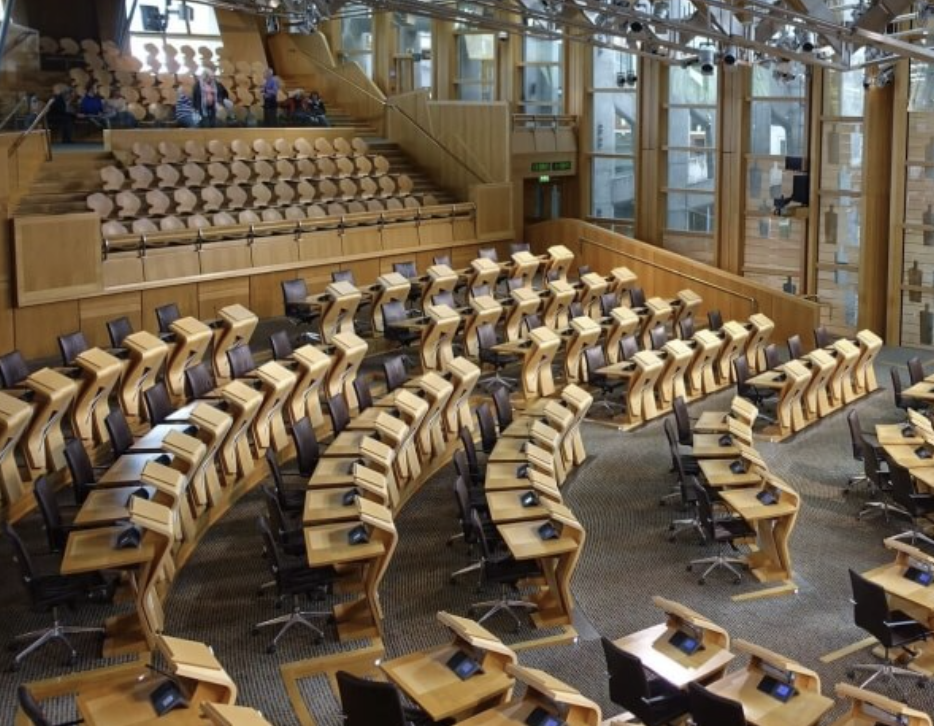
The Assisted Suicide Bill is very near to the rocks in Scotland. 86% of MSPs who expressed an opinion during a speech in the debate on the McArthur assisted suicide Bill during the Stage 3 debate today spoke against the assisted suicide Bill.
An analysis of the speeches on day one of Stage 3, completed by Right To Life UK’s Policy Team, found that of the 21 MSPs who made speeches and took a position on the Bill, 18 (85.7%) spoke against it and 3 (14.3%) spoke in favour of the Bill. This represents six times the number of MSPs speaking in opposition to the Bill compared to those who supported it in their speeches. The Government Minister did not take a position in his speeches.
The overwhelming opposition to the Bill among those speaking at the Stage 3 debate follows the news yesterday that the Leader of the Scottish Conservative Party, Russell Findlay MSP, had dropped his support of the Scottish assisted suicide Bill, vowing that he will now vote against it as “the risks are too great”.
This now means that the leaders of the three largest parties in Holyrood are opposed to the assisted suicide Bill.
If just seven of the MSPs who voted for the Bill at Stage 1 switch their stance and vote against the Bill at the final vote at Stage 3 next Tuesday 17 March, it will be defeated.
Russell Findlay MSP joins two MSPs who have already publicly indicated that they will be changing their vote from supporting to opposing the Bill, and according to media reports, others are set to follow.
Only four more MSPs have to move from supporting to opposing the Bill for it to be defeated.
Supporters of the McArthur assisted suicide Bill rejected a number of sensible amendments to the Bill today.
Those rejected included amendments to:
- Only permit assisted suicide for terminally ill people who are suffering (Amendment 136 by Daniel Johnson)
- Require a person to have been offered palliative care options before being eligible for assisted suicide (Amendment 138 by Douglas Ross)
- Protect vulnerable people with a history of suicidal thoughts or self-harm (Amendment 139 by Douglas Ross)
- Ensure an opt-in register for medics involved in assisted suicide, protecting conscience (Amendment 142 by Miles Briggs)
- Ensure a pregnant woman could not go ahead with assisted suicide (Amendment 137 by Sue Webber)
Radical supporters of the McArthur assisted suicide Bill also voted to approve an amendment (107) tabled by Liam McArthur to remove the provision in the Bill (Section 18) that provides conscience protections for health professionals.
The decision on whether there will be conscience protections in the Bill and, if so, how they will operate, will now be handed over to Westminster. There will be no accountability or oversight from MSPs and those who will be directly affected by the Bill if it becomes law.
In a joint letter to Holyrood, several medical and professional bodies have warned that removing the “no duty to participate” and employment protections from the primary legislation would weaken transparency and robustness, and leave key matters to a process with limited parliamentary scrutiny.
The signatories included the Association for Palliative Medicine (Scotland), RCGP Scotland, Royal College of Physicians and Surgeons of Glasgow, Royal College of Psychiatrists in Scotland, Royal College of Surgeons of Edinburgh, and the Royal Pharmaceutical Society.
-

Abortion Pill Dangers Exposed
Abortion pills pose a very real danger to the very women the pro-death lobby claim they help. A new investigation into how abortion pills are used in the United States adds to the growing body of evidence that the abortion lobby’s favored method of preserving “access” is dangerous to the very women they claim to help.
According to the FDA, since 2000, approximately 7.5 million women have taken the abortion pill to end the life of the child in their womb in the United States. The FDA identified thirty-six deaths of women associated with the abortion pill. The FDA caveats this by stating, ‘The adverse events cannot with certainty be causally attributed to mifepristone…’
But campaign group Live Action detail two examples of young women who died shortly after receiving abortion pills, Holly Patterson and Alyona Dixon, as well as two who suffered severe adverse reactions, Shanyce (septic shock and an infection requiring a partial hysterectomy) and Leslie Wolbert (severe pain and bleeding followed by the psychological trauma of delivering and flushing her baby).
In 2017, the United States saw the end of a long-term decline in abortions, with numbers beginning to tick upward once again each year, By 2020, abortions had increased nearly 8% from 2017. In February of 2025, Guttmacher Institute’s estimated abortion data analysis revealed a whopping 648,500 abortion pills sold in 2023 alone, which translates to an abortion pill count of 54,042 monthly, 1,777 daily, 74 hourly, and one abortion by pill every 49 seconds in 2023.
A study from September 2025 quoted authors affiliated with the Guttmacher Institute asserting that telehealth abortion ‘has contributed to the overall increase in abortions in the US. Based on a conservative estimate of 63%, it is projected that more than 664,000 abortion pills were utilized in 2024.”
Phone calls to Planned Parenthood locations inquiring about abortion pills reveal that no meaningful review occurs before the abortion giant agrees to mail out abortion pills; the age of an unborn baby is not checked, medical contraindications are not screened out, counselling is not done beforehand, follow-ups are not performed, and pills will even be mailed to alternate addresses to avoid parents discovering them.
“By failing to require any safety measures, Planned Parenthood (and other abortion pill vendors) functions as a drug dispensary instead of as a medical provider for patients,” Live Action says. “This process is putting women at increased risk should they experience any abortion pill-related complications, including hemorrhage, incomplete abortion, or life-threatening infection.”
-
Abortionist Turned Prolifer
https://www.youtube.com/shorts/ekqISZckM-U
-
Assisted Suicide Bill on Knifedge in Scotland
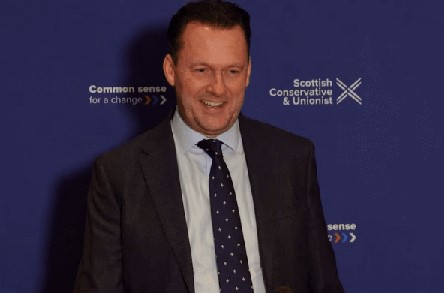
The effort to push state-sanctioned murder on Scotland is now in serious trouble. The whole plot now sits on a knife-edge. he Leader of the Scottish Conservative Party has dropped his support of the Scottish assisted suicide Bill, vowing that he will now vote against it as “the risks are too great”.
Russell Findlay MSP previously supported the Assisted Dying for Terminally Ill Adults (Scotland) Bill, which, as written, would legalise assisted suicide for adults resident in Scotland with no prognosis requirement specified; however, he now opposes the Bill due to numerous concerns with it.
This now means that the leaders of the three largest parties in Holyrood are opposed to the assisted suicide Bill.
Findlay is the third MSP who supported the Bill last year to now oppose it, meaning that if only four more MSPs change their minds and commit to voting against the Bill, it will fail.
Findlay said that he changed his mind about the Bill due to “numerous” concerns about the Bill that have not been addressed.
He stated that one of the key concerns he has with the Bill is “the real risk that people could be coerced into ending their own lives”.
“There are already cases in which unscrupulous relatives, or ‘trusted’ medical or legal professionals, exploit elderly people for financial gain”, he said, adding, “And even without any coercion from others, some elderly people may feel pressured to end their lives because they think they have become a ‘burden’ on loved ones”.
Findlay said that he was also concerned that it would be “inevitable” that the eligibility criteria for assisted suicide would expand following legal challenges.
“We have seen examples of this ‘slippery slope’ in other jurisdictions, and I would be deeply uncomfortable at being responsible for legislation that might end up mutating beyond its original remit to, for example, allowing someone with a mental health condition to compel the state to prematurely end their life”, he said.
-
Who's Paying for Assisted Suicide Propaganda?
Who is paying for the wave of assisted suicide propaganda which has hit Scotland in recent days?
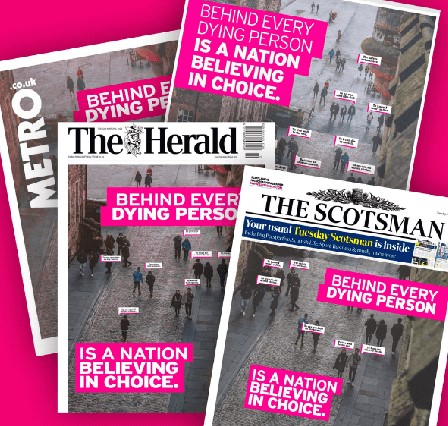
The well-funded assisted suicide pressure group Dignity in Dying has taken out full front-page adverts in multiple Scottish national newspapers, lobbying for the Scottish assisted suicide Bill, prompting a major backlash, amidst concerns that the adverts promote and sanitise suicide.
The adverts, which appeared as the front page of The Herald, The Scotsman, and The Metro, caricature suicide as a “choice”, and do not even make it clear that they relate only to suicide for the terminally ill, prompting criticisms that they glamorise suicide more widely.
Consultant psychiatrist and former Chair of the Royal College of Psychiatrists Eating Disorder Faculty, Agnes Ayton, simply asked “Why is this allowed?”
Dr Cajetan Skowronski, a geriatric and palliative care doctor, also criticised these adverts, urging people in Scotland to “Say no to NHS suicide”.
Attorney Erwan Le Morhedec said that the amount of money behind the pro-assisted suicide lobby enabling these adverts was “staggering”, arguing that it amounted to “pro-euthanasia propaganda”.
Who is paying for it all, given that a clearly majority of Scots are, at the very least, sceptical about the proposals?
There are three main most likely culprits: The Open Society Foundation, now run by George Soros' son Jonathan; Big Pharma and aobort-for-profit businesses, both of which are constantly looking for new 'profit centres', and, third, the government/civil service, pushing to reduce the welfare bill by encouraging the elderly and the sick to commit suicide.