

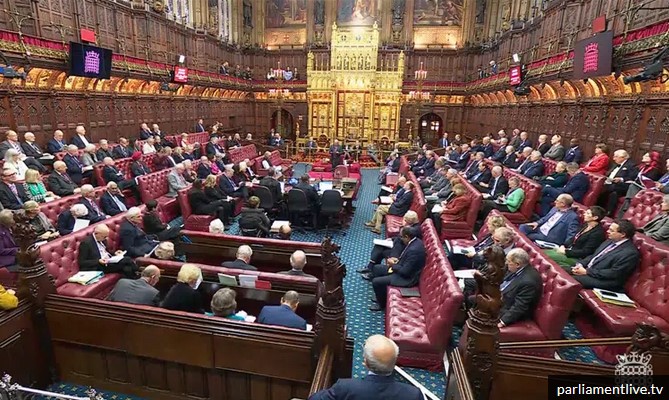
Supporters of state-sanctioned murder and pro-life peers are engaged in what can best be described as 'legal trench warfare' in the House of Lords. Critics of the Labour-backed push for euthanasia are fighting for every inch of ground, while peers in favour of assisted suicide are trying to undermine even the limited safeguards against blatant abuse which have been inserted into the bill as amendments.
Pro-life peers are warning in particular against “watering down” safeguards in continued scrutiny of the assisted suicide Bill for England and Wales.
Amongst other issues, Peers debated a number of amendments proposed by Lord Falconer, who is the lead supporter of the Bill in the Lords. He termed these simply ‘drafting changes’, but critics highlighted that many were, in fact, substantive policy changes and removed some key protections passed by the House of Commons.
While the Government has said it is neutral on the Bill, documents leaked this week revealed that the Labour Party considered using its influence to legalise assisted suicide via a Private Member’s Bill, rather than as Government policy.
One of Lord Falconer’s amendments would have watered down Jess Asato MP’s safeguard, which required that training in domestic abuse must include coercive control and financial abuse.
He also put forward a proposal which would have weakened Jack Abbott MP’s Committee amendment that doctors “must first ensure the provision of adjustments for language and literacy barriers”. Lord Falconer’s amendment would only require doctors to take “all reasonable steps to ensure that there is effective communication”.
This prompted Baroness Coffey to query why amendments which were agreed in the House of Commons are now being removed.
Another amendment from Lord Falconer would have widened the scope for doctor referrals. It raised the prospect of a patient being referred to another doctor because the first did not want to take further part in the process due to “suspicions” of coercion. Peers warned this would open the door to “doctor shopping”.
Following pressure from Peers, he withdrew all of his amendments.
Peers also debated Baroness Berger’s amendment to raise the age a person can get an assisted suicide from 18 to 25, on the basis that existing protections for vulnerable young adults are often extended to 25 such as those with Education, Health and Care Plans.
The Baroness called the current limit of 18 “arbitrary” and stated: “There is no reason, either in law or principle why we should assume 18 is the right age for eligibility for an assisted death”.
The Association of British Paediatric Nurses have previously said: “For young people who feel like a burden to their families or carers, the perceived pressure to seek assisted dying could be significant. The gap between capacity and true autonomy is wider for young people than for older adults.”