
News
-

Prem Baby Is Now Champion Powerlifter
A South African woman who was born prematurely, weighing only 640 grams, is now a record-holding powerlifter at the age of 23.
Faith Lehmensich, born at only 29 weeks gestation, was “so tiny she could fit in the palm of my hand”, according to her mother, Andrea. Now, 23 years later, Faith is a talented powerlifter who won the female junior title at the Amateur World Powerlifting Congress (AWPC) last year. This year, she broke the junior world record in her class for the squat, a record which had stood for 15 years.
Andrea said that, while pregnant, she developed pre-eclampsia, a condition that can cause serious complications during pregnancy.
“During the pregnancy the doctors tried to push me as far as possible, but there came a time where they said ‘If we don’t take her out now she’ll be dead by the weekend.’ They told me that she only had a 10 percent chance of survival”, she said.
Baby Faith was frequently admitted to the intensive care unit with infections and developmental problems, which Andrea described as “heart-wrenching”.
Thankfully, Faith survived, and three months later her parents were finally able to bring her home, weighing only 1.7 kilograms at this stage.
Faith is currently training for the World Powerlifting Championships, which are being held in South Africa in November. Her goal, she said, is “To become a world champion, and to become the best in the world”.
-
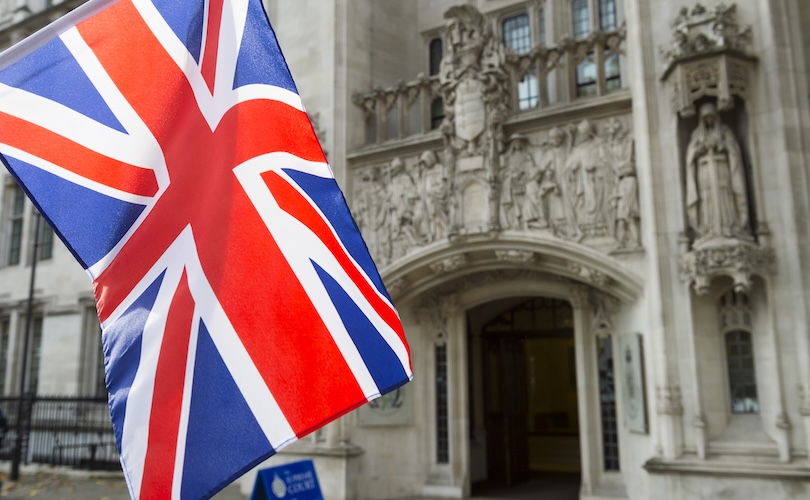
Trump Admin Condemns UK Protest Bans
The U.S. State Department has put the United Kingdom on notice for infringing on the free speech of pro-life English subjects, calling it an affront to the “shared values” between the two nations.
The Telegraph reported that the State Department issued a statement accusing one of its closest geopolitical allies of “egregious violation of the fundamental right to free speech,” specifically citing “many ‘buffer zone’ cases in the UK, as well as other acts of censorship throughout Europe.”
“The UK’s persecution of silent prayer represents not only an egregious violation of the fundamental right to free speech and religious liberty but also a concerning departure from the shared values that ought to underpin US-UK relations,” a spokesperson said. “It is common sense that standing silently and offering consensual conversation does not constitute harm.”
The rebuke refers to the UK’s establishment of “bubble” or “buffer” zones around abortion facilities, ostensibly to protect individuals entering or exiting them from “harassment, abuse and intimidation.” In practice, however, they have led to crushing fines against peaceful pro-life activists.
Earlier this year, retired scientist Livia Tossici-Bolt was found guilty and ordered to pay prosecution costs of £20,000 ($25,777.34 USD) for holding up a sign that read “here to talk, if you want to” within 150 meters of the BPAS abortion center in Bournemouth. Rose Docherty, a 75-year-old Scottish grandmother, was arrested under similar circumstances, but charges were dropped amid international outcry.
A UK government spokesman responded with a brief statement that “free speech is vital for democracy, including here in the UK, and we are proud to uphold freedoms while keeping citizens safe.”
In May, the Trump administration sent a State Department delegation to England to investigate the free speech situation, including meeting with Tossici-Bolt and Docherty and other similar victims, and report back on their findings to “affirm the importance of freedom of expression in the U.K. and across Europe.”
-

Girl Born at 27 Weeks Helps Neonatal Unit
In a country rapidly running low on children, young people who give back to society are more valuable than ever. A young girl who was born 13 weeks premature is now raising money for the neonatal unit that saved her life.
Summer Best was born at just 27 weeks gestation on 8 May 2015 in Manchester. She was critically ill and had to be put on a ventilator.
During her time in hospital, Summer suffered from breathing difficulties, heart problems, and two bleeds on the brain. She was ventilated multiple times, received numerous different medications, and underwent several blood transfusions. After spending three months in hospital, she was finally able to go home. Her mother says she has suffered no lasting damage.
“She’s our miracle”, said mum Rachel Best, recalling how doctors urged her to visit Summer urgently just one day after the birth. “I didn’t believe she would be coming home until she was about seven weeks – that’s when I started to think she was going to make it”.
Now 10 years old, Summer is determined to give back to others. After learning about poverty at her school, she began “Summer’s Mission”, a project supporting local food banks and collecting essentials for children in need, including Easter eggs and Christmas selection boxes.
Summer has also raised thousands of pounds for charities across Manchester and, most recently, has turned her attention to the neonatal unit that saved her life. She is fundraising to provide additional support for families and staff and to help refurbish the unit’s family room.
“She loves giving back”, her mum said. “Though she doesn’t really realise just how much it’s helping others”.
Despite having three fractures in her back following a fall from a horse, Summer recently completed a four-mile sponsored walk for the unit. She’s been so successful that she has also donated items to St Mary’s Hospital’s neonatal unit in Manchester.
Summer said, “I’m really grateful for all the amazing businesses and people who always support me”.
“It makes me so happy knowing they believe in me and are always there to help”.
The survival rates for extremely premature babies like Summer have significantly improved in recent decades. A 2008 study looking at survival rates for a neonatal intensive care unit in London found that neonatal survival rates at 22 and 23 weeks gestation had improved over time. In 1981-85, no babies who were born at these gestational ages survived to discharge. However, by 1986-90, 19% did and this increased to 54% in the period 1996-2000.
In the decade to 2019 alone, the survival rate for extremely premature babies born at 23 weeks doubled, prompting new guidance from the British Association of Perinatal Medicine (BAPM) that enables doctors to intervene to save premature babies from 22 weeks gestation. The previous clinical guidance, drafted in 2008, set the standard that babies who were born before 23 weeks gestation should not be resuscitated.
-

28% of Gen Z Murdered in the Womb
A horrifying 28% of Generation Z in the U.S. has been aborted, according to statistics pulled from the Guttmacher Institute that went viral this week.
According to Guttmacher estimates for the number of abortions performed each year in the U.S. from 1997 to 2011, the birth years of Gen Z, about 19.5 million conceived human beings of that generation, have been killed through abortion. There are currently an estimated 69.3 million Gen Z members in the U.S.
The most recent World Health Organization (WHO) data indicates the rate of abortion of Gen Z babies in the U.S. nearly matches the estimated percentage of preborn babies killed worldwide by abortion: 29%, or three out of every 10 pregnancies.
Statistics from England and Wales show very similar abortion rates. “The percentage of conceptions leading to abortion was 29.7%; this is a rise from 26.5% in 2021 and the highest proportion on record,” an Office of National Statistics (ONS) report from 2022 data found.
“I think that some things deserve to be said over and over and over again and in fact cannot be said often enough,” Dutch political commentator Eva Vlaardingerbroek remarked in response to the viral statistic. “Especially when it comes to abortion, which to me is such an unequivocal evil. We have to repeat these facts all the time.”
Vlaardingerbroek explained that the reason she always opposed abortion, even before converting to Catholicism and becoming a mother, is that “scientifically, intellectually, and morally speaking, the only valid, good faith, and consistent argument that one can make is that life begins at conception.”
“That means a separate human being has been formed in the womb. The stage in which that life finds itself, or whether it’s (dependent) on the mother, or any other person for that matter, is not decisive for whether or not it has the right to life.”
This means abortion kills “the most innocent being on the planet of the earth,” Vlaardingerbroek continued. “You kill something so fragile, so worthy of love and life. And I think that’s something that a lot of people don’t even want to admit to."
-

Abortionists Still Profiting in Pro-Life States
While the pro-life cause is advancing in the UA, there is still a lot more to be done. Planned Parenthood affiliates in states considered pro-life bring in about the same amount of average income as those in pro-abortion states, showing that much more needs to be done to stop the nation’s largest abortion vendor, a new report finds.
The American Life League (ALL) researched the revenue for 81 Planned Parenthood facilities in states considered pro-life and for 418 in pro-abortion states. The group views the phrase “pro-life states” skeptically, since it points out that even states with some restrictions have exceptions for abortion. Pro-lifers, however, stress that every preborn baby is deserving of protection no matter the circumstances of his conception. Direct abortion is also never medically necessary, as medical experts have affirmed.
ALL explains, “America has no truly ‘pro-life’ states, as many still allow for abortions early in pregnancy and exceptions in all/most cases.”
The group explained further:
ALL found that the average income of the 41 Planned Parenthood affiliates in pro-abortion states is $43,389,872. However, 11 Planned Parenthood affiliates in “pro-life” states saw an average affiliate income of $41,208,358. Clearly there is not much difference in Planned Parenthood’s affiliate income in states with more abortion restrictions than those in states with little-to-no abortion restrictions.
Affiliates refers to the overarching organization, while facilities is the individual building.
ALL’s national director shared a message of warning to pro-life activists and groups.
“I’ve heard life-advocates celebrate over states that have laws intended to protect preborn life at conception,” Katie Brown Xavios, stated in a news release. “[A]nd yet those same states have active Planned Parenthood facilities.”
Xavios said the “exceptions” in the abortion prohibitions are exploited by Planned Parenthood and that truly pro-life states must close them.
“The exceptions are the cracks that entities like Planned Parenthood prey on, and allow them to perform numerous abortions all while lawmakers can tout a ‘pro-life state,'” she said. “Babies condemned to the exception clause matter just as much as every other child, and until states seek to protect every single pre-born baby, they should not get to call themselves a pro-life state.”
-
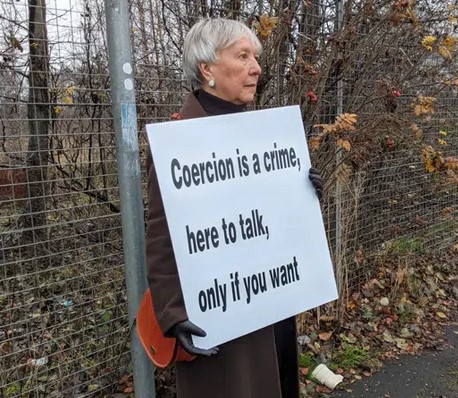
No Prosecution Over 'Here to Talk' Sign
A grandmother arrested for holding a ‘here to talk’ sign in an abortion censorship zone has expressed delight that no further action is to be taken against her.
Rose Docherty was arrested in February for offering consensual conversation near Queen Elizabeth University Hospital, Glasgow. The Crown Office and Procurator Fiscal Service initially said it would drop any threats of prosecution if she accepted their formal warning, but she refused to accept it as it was “unjust”.
Under the Abortion Services (Safe Access Zones) (Scotland) Act people risk an unlimited fine for handing out pro-life literature within 200m of a centre, speaking to anyone about abortion, or praying silently.
Docherty said that the decision of the Crown Office to withdraw action “seems to indicate that I was not breaking the law”.
She added: “This buffer zone law is all about intimidation, harassment and influencing. There is nothing intimidatory or harassing about an elderly woman standing by the roadside offering to lend a listening ear.”
The 75-year-old told BBC Scotland: “To be warned for having stood on the streets of Glasgow offering to have a conversation if anyone wants to come and speak to you – it just seems preposterous.”
“This is a victory not just for me, but for everyone in Scotland who believes we should be free to hold a peaceful conversation.”
“I stood with love and compassion, ready to listen to anyone who wanted to talk. Criminalising kindness has no place in a free society.”
-
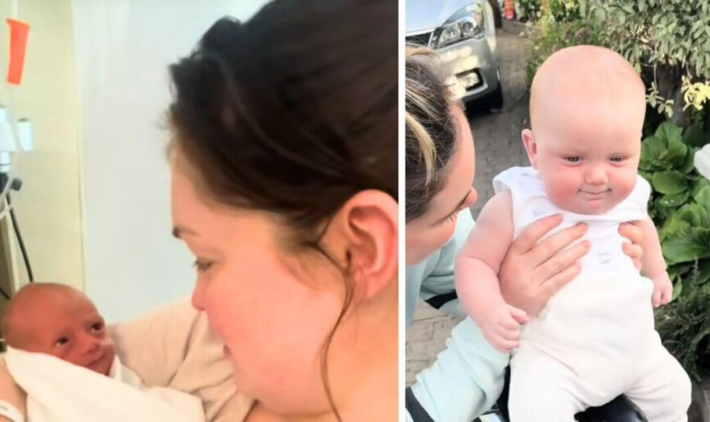
31 Weeker Goes Home
A baby boy who was born prematurely days before Christmas at just 31 weeks gestation is now “healthy and doing great” at seven months old.
Alice Varley, from Dublin, had only been pregnant for 31 weeks when baby Liam was born. Alice said she “had a low-risk pregnancy” until, during a routine midwife appointment in December, she found out her baby was measuring smaller than he should have been.
Earlier in the month, Alice had been experiencing migraines, extreme fatigue, and pain in her ribs, but she had visited maternity triage several times but no alarm bells had been raised.. Alice said that her gut was telling her something was wrong, and it was soon discovered that she had pre-eclampsia, a condition that can cause serious complications during pregnancy. A consultant told Alice and her partner, Alex Beck, that their baby would need to be born very soon, otherwise he may not survive..
Alice had to stay in the hospital for two days before the birth, which helped her “mentally prepare” to give birth sooner than expected. Fortunately, “Liam was a little fighter and his heartbeat stayed strong the entire time”,, and he was born tiny but in a stable condition, with his mum describing him as an “incredibly healthy preemie”.
Alice had to remain in the hospital’s high dependency unit because of her pre-eclampsia, so she was unable to be with her newborn baby for 36 hours. For the first day after giving birth, Alice could only see baby Liam in photographs and videos that her partner Alex had sent to her.
“I was able to look at his incubator briefly in a wheelchair for 10 minutes after 24 hours, but I probably didn’t hold, touch or see him with his eyes open until 36 hours after his birth”, Alice said.
A video of Alice and baby Liam, taken during the first time she got to hold him, has gone viral on TikTok, gaining over 2 million views. Alice said that “Baby Liam was asleep and as soon as I held him, he opened his eyes and looked straight at me”, describing the moment as “perfect”. Alice is now using her social media platform to share her story and raise awareness of the unusual symptoms of pre-eclampsia which she experienced.
Now, seven months on, Alice says that every day with baby Liam is “wonderful".
-
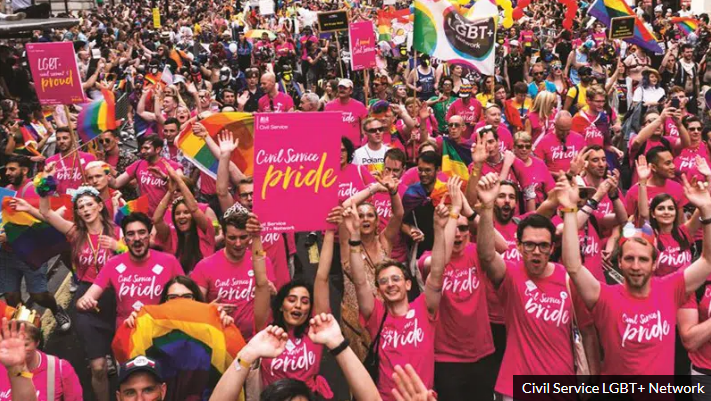
Christians Wage Lawfare vs LGBT Civil Service
Christians are using liberal 'equality' rules to go on the lawfare offensive against the hitherto virtually unchallenged LGBTQ lobby. The Christian Institute has warned that Civil Service endorsement of LGBT Pride breaches rules on impartiality and is launching a legal challenge.
On Wednesday, the Institute notified Cabinet Secretary Sir Chris Wormald of its intention to seek judicial review of Civil Service participation in Pride events. It also called for an end to rainbow lanyards and the use of ‘preferred pronouns’ in public-facing email signatures.
Its legal action follows a recent High Court ruling against Northumbria Police, which said participation in Pride marches breached the force’s impartiality duties. In taking on the Civil Service, the CI has instructed Conrathe Gardner Solicitors – the same law firm that helped gender critic Linzi Smith in her victory over Northumbria Police.
The Civil Service Code states that all employees are expected to carry out their roles with “integrity, honesty, objectivity and impartiality”.
Staff must act “in a way that is fair, just and equitable” and that does not “unjustifiably favour or discriminate against particular individuals or interests”.
Guidance on Diversity and Inclusion and Impartiality in the Civil Service calls on civil servants “to ensure individual personal and political views do not, and are not perceived to, influence our advice or actions”.
CI Spokesman Simon Calvert said: “The law is clear that civil servants must maintain impartiality on controversial political issues. Whether one agrees with it or not, no one can deny that the LGBTQ Pride movement and its hard-line gender ideology are profoundly political.
"Pride London, for example, attended by Whitehall-based civil servants, has even banned political parties because they don’t support its political demands, which include puberty blockers and gender self-ID.”Mr Calvert, pointing to Linzi Smith’s successful judicial review of Northumbria Police, said: “Involvement in Pride signals support for a highly contentious set of political demands. It is inappropriate for civil servants to be officially endorsing Pride.”
-
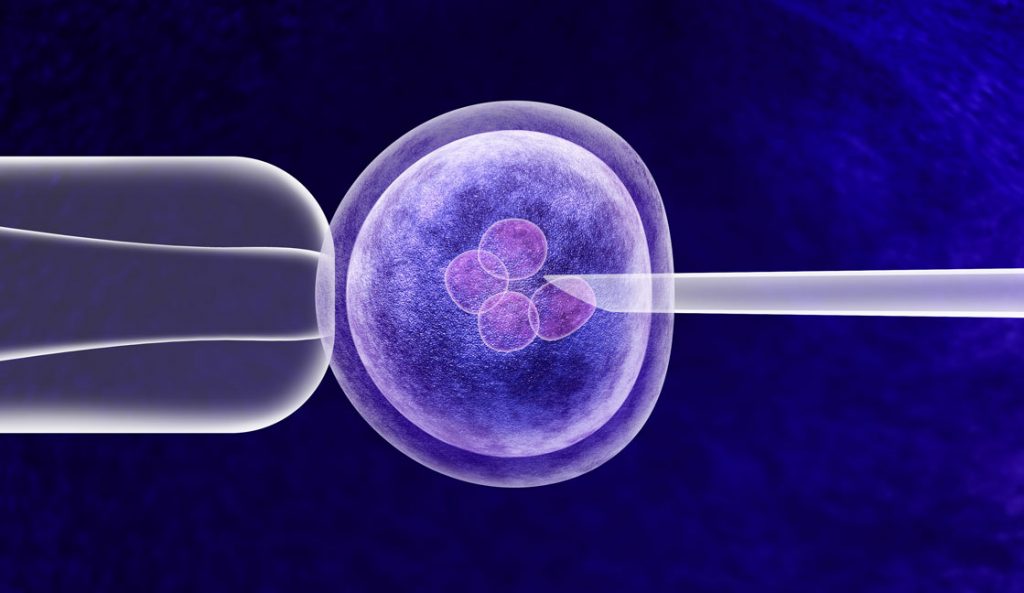
IVF Has Killed 250 Million
The in vitro fertilization business has likely directly killed 270 million unborn children or more since the beginning of the process in 1978.
A new academic paper in Fertility and Sterility estimates there were around 13 million babies born through “Assisted Reproductive Technology,” or ART, between 1978 to 2018. While there are other forms of ART that do not necessarily involve the creation of extra embryos, IVF is used 99 percent of the time when referring to “reproductive technology.” The first person was born from IVF in England in 1978.
The authors estimated that another four million or so babies have been born through IVF between 2018 to 2024. The authors acknowledge their data is not complete, due to spottiness in record keeping across different countries. However, their final number is “13–17 million infants” born via IVF since 1978.“This large number of infants born from both conventional and innovative applications of ART confirms that ART has helped millions of people realize parenthood, is now mainstream medicine, has had a significant societal impact, including novel family formation, and highlighted inequities regarding [so-called] reproductive rights and access to care,” the researchers claim.
While some factions of the pro-life or conservative movement would view this as a positive sign, because, they argue, these are people who had children, the truth is much grimmer.
This is because a low estimate is that IVF requires the intentional killing of at least 16 human embryonic children for every baby born.
Every IVF cycle typically involves the direct killing of at least three embryos, although the number could be larger. For example, Reproductive Medicine Associates, an IVF facility, says a typical cycle of 19 eggs will yield about 12 embryos. About six of these will develop far enough to be considered for implantation. The facility whitewashes over this, but it says that of these six, three will be considered “normal” and thus viable for implantation.
Left unsaid is that the other three are often discarded. A study in the United Kingdom similarly found “almost half of embryos used to help a women conceive through in vitro fertilization were thrown away during or after the process.”
-
Indians March for Life
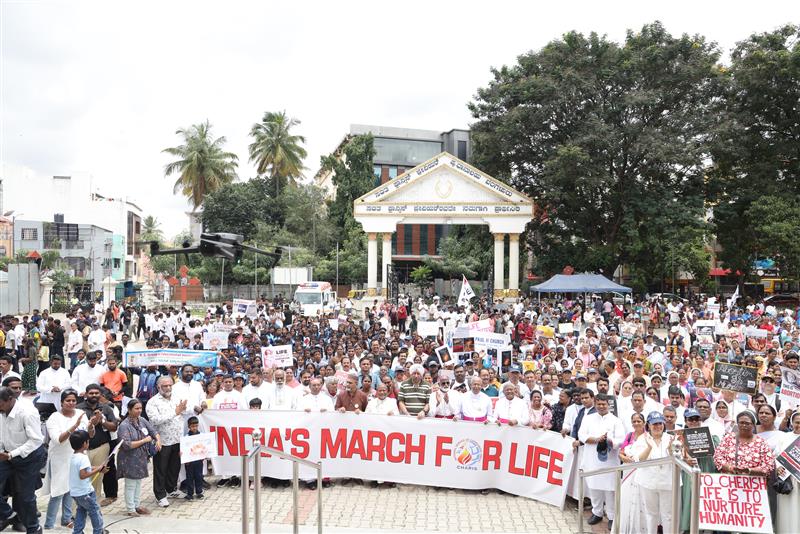
Every year in August, the streets in India are decked in saffron, white and green in preparation for the nation’s Independence Day celebrated on August 15. Amid these, a sea of black, white and red washed through the streets of Bangalore, one of the most prominent cities in India. That sea of young and old, men and women, priests, religious, and laity called to attention the blood-filled streets of an India that kills 42,000 every single day in the name of “empowerment.” From 1971 onward, India has permitted the slaughter of its most vulnerable, plunging the nation into deeper poverty — not material but moral.
In response to this senseless bloodshed and inspired by the Marches for Life that take place across the world, India began its own National March for Life in 2022 under the leadership of CHARIS India. Each year, the March is hosted by a different diocese on either August 9 or 10 in commemoration of the passage of India’s abortion law – the Medical Termination of Pregnancy Act that came into force on August 10, 1971. This year, the March was held in Bengaluru, hosted by the Archdiocese of Bangalore. It featured a LIFE exhibition, public gathering, LIFE seminar and a vibrant march.