

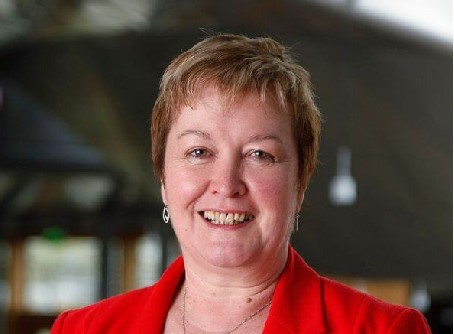
Rhoda Grant, a former Member of the Scottish Parliament (MSP) for the Labour Party, has called for Labour Party MPs to follow the lead of their Scottish colleagues and reject the reintroduced assisted suicide Bill.
The Scottish Bill was defeated in March 2026 by 69 votes to 57, with the Deputy Political Editor of The Scotsman, David Bol, describing the vote as “potentially the biggest decision in the history of the Scottish Parliament”. Now, Rhoda Grant is calling on her Labour Party colleagues in Westminster to follow suit.
In an article for Labour List, Grant explained that she and her Labour Party colleagues in Scotland voted to reject the assisted suicide Bill precisely because of their progressive and left-wing convictions.
The former Labour MSP said that the “Bill risks fuelling tensions within the Labour Party at a particularly sensitive political moment”, adding that the debate in Westminster is caricatured as “compassionate progressives” versus “socially conservative opponents”.
In Scotland, however, Grant said that opposition to the assisted suicide Bill came from Labour values of “solidarity, equality, disability rights, and the protection of vulnerable people”.
Grant argues that the Labour movement was built on the belief that people are not truly free “when crushed by poverty, insecurity, isolation or structural disadvantage”, adding that legalising assisted suicide “risks undermining that principle”.
Choice “does not exist in a vacuum”, she says, explaining that a “choice” made with excellent care is not the same as one made by someone who feels a burden, lacks support, fears loneliness, or thinks their care needs are exhausting their family – all factors that would likely influence people in their decision to end their lives by assisted suicide.
She adds that, in unequal societies, pressure is not always obvious; it is “shaped by economic and cultural pressure rather than overt coercion”, warning that the genuinely progressive answer is not to make death more accessible while leaving suffering unresolved, but to work to reduce suffering through providing better care. “No citizen should ever feel that death is their best option because society failed to provide sufficient care or support”, she said.