

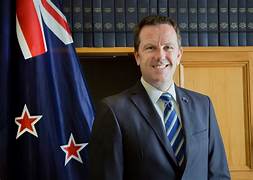
A former MP from New Zealand has spoken out against legalising assisted suicide in England and Wales based on his own country’s experience, saying that safeguards which were promised are “so rarely effective”.
As Kim Leadbeater’s Terminally Ill Adults (End of Life) Bill nears its Second Reading in the House of Lords, former New Zealand MP, Simon O’Connor, has warned British politicians that the assurances about safeguards surrounding assisted dying legislation were given in New Zealand too, but “have proven so rarely effective”. Writing in the Telegraph, he said that his colleagues “had repeatedly been assured that the safeguards [on the New Zealand assisted dying Bill] were absolute, inviolable, and complete”.
“But, if the experience of those who have passed these laws is anything to go by, British parliamentarians should think very carefully before passing the assisted dying Bill. Safeguards so often promised have proven so rarely effective”.
New Zealand became the first country in the world to introduce assisted suicide and euthanasia by popular vote in a binding referendum on 19 September 2020, and this came into force on 7 November 2021.
Under the current law in New Zealand, a person can end their life by assisted suicide or euthanasia if they are thought to have six months left to live.
However, there have been attempts to expand the law beyond the current six-month prognosis limit. Last year, ACT Party MP Todd Stephenson tabled a Members Bill to remove this.
Recent figures have shown a significant surge in euthanasia and assisted suicide deaths, as cases of euthanasia and assisted suicide increased by 37.21% for the year April 2024 to March 2025 compared with the same period the previous year, according to data released by the New Zealand Ministry of Health.
O’Connor compared the ‘death panels’, on the assisted suicide Bill – which will include a more junior legal figure, a social worker and a psychiatrist – with “The End of Life Review Committee” in New Zealand. This committee, O’Connor explained, contained “three experts – two health practitioners and one medical ethicist” whose “role was to review assisted deaths and to scrutinise complex cases where something may have gone wrong”.
However, the panel did not work as intended. “One of the Committee’s original members resigned over serious concerns about its ability to supervise the implementation of assisted suicide and euthanasia. Another member was pushed out, it is thought, because she was raising too many concerns about the operation of the new law. Two out of three members were gone”.
“Both subsequently went public and stated that the Committee’s oversight of the law was so limited that wrongful deaths could go undetected. They said they were ‘extremely concerned’ about how little information they received relating to patients’ deaths, leading to them feeling ‘constrained to the point of irrelevance’”, he said.
O’Connor warned of the dangers of a “slippery slope”. “We, like British MPs, were promised that the eligibility criteria would be tight and that claims of a slippery slope were a ‘fallacy’”, he said. ACT Party leader David Seymour MP called for the six-month requirement to be scrapped in 2022, only a year after the law came into effect in 2021.
O’Connor also highlighted the experience of Oregon, which UK assisted suicide campaigners, Dignity in Dying, cite as a model for rolling out legislation, saying “Oregon – one of the first jurisdictions to legalise assisted dying – has seen its eligibility criteria stretched to include patients with anorexia, diabetes, or arthritis. Around half of those opting for assisted suicide now cite feeling like a ‘burden’ on others as a motivating factor for them”.
O’Connor also highlighted the dangers of the assisted suicide law in Queensland, Australia, even though, he said, that “Queensland’s law was said to have taken extra time to progress through parliament to make sure the law would guarantee that every death was ‘truly voluntary’, ‘without coercion’, and with the strictest safeguards”,
Despite this, O’Connor points out that “patients there have killed themselves with others’ drugs”. Earlier this year, a man in Queensland nearly died after allegedly taking his partner’s lethal drugs for an assisted suicide.