

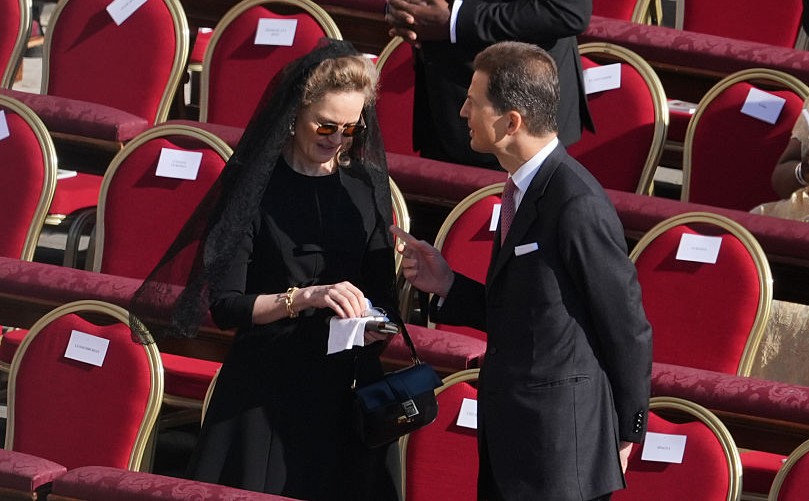
One brave and good man stands between the babies of one of the smallest countries of the world and the gruesome tools of the abortionists.
Abortion activists are pushing once more to legalise abortion in Liechtenstein, the tiny German-speaking country landlocked between Switzerland and Austria. It is the world’s sixth smallest country and one of the wealthiest; a constitutional monarchy with one of the highest standards of living in Europe. It also boasts one of Europe’s strongest pro-life regimes.
Abortion is illegal in almost all cases, with limited exceptions when a woman’s life is at serious risk, or in the case of sexual assault. Advertising for abortion is also restricted, and a handful of women — about 40 — travel to Switzerland or Austria each year to procure abortions. Previous attempts to legalize abortion have failed due to the resolute pro-life convictions of Liechtenstein’s royal family, the 900-year-old dynasty that has ruled the country since the dissolution of the Holy Roman Empire in 1806.
In 2012, a referendum on legalizing abortion until 12 weeks as well as in the case of fetal deformity was proposed. Several weeks before it was scheduled to be held, Hereditary Prince Alois, a devout Roman Catholic, stated that he would exercise his royal prerogative and veto any change in law that permitted abortion. The referendum resulted in a vote of 51.5% to 48.5% against legalising abortion.
Abortion activists claimed that the results had been a consequence of the prince’s intervention. Within the constitutional monarchy framework, the ruling princes hold veto powers over laws and hold a range of other powers, including the right to convene or adjourn Parliament. Tensions between the ruling prince and parliament resulted in a referendum in 2003 that confirmed and enhanced royal veto power.
In response, abortion activists launched a citizen’s initiative to curtail the power of the ruling princes in 2013, proposing that their power to veto future referendums be limited or removed. Prince Alois stated through his spokeswoman that his previous intervention had been “a clear signal that abortion isn’t an acceptable solution for an unwanted pregnancy,” and that if the people voted to limit his royal veto, he would step back from his royal responsibilities by leaving the country entirely.
In a devastating defeat for the abortion movement, 76% of Liechtensteiners voted to uphold the royal veto.
Over a decade later, they are trying again. The “Fristenlösung für Liechtenstein” (“Time-limit solution for Liechtenstein”) is an initiative backed by pro-abortion groups such as Women in Good Health, the Free List, and the Women’s Network that proposes once again to decriminalize abortion up to 12 weeks of pregnancy, remove the ban on providing information about abortion, and cover feticide under health insurance. On July 31, organizers submitted 4,970 signatures (well above the 1,000-signature threshold) for a new initiative.
Campaigners claim that a majority of citizens are with them. But as abortion activist Gabriella Alvarez-Hummel put it grimly in the Guardian, there is still one insurmountable problem: “A prince is standing in the way.”
In a column published on August 3, Alvarez-Hummel writes, “It should be a done deal. But no matter what the people say: the hereditary prince has already announced that he would veto any change in the law, long before a single vote has been cast.”
As she noted, Prince Alois had previously only threatened to use his royal veto a single time: In 2011, when a proposal to legalize abortion was last put to referendum. In June, he threatened to use it for a second time for precisely the same purpose: protecting pre-born children.