

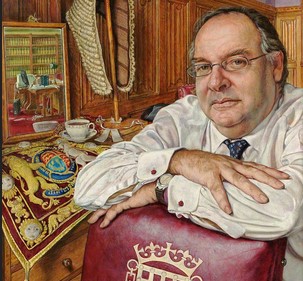
The Peer leading attempts in the House of Lords to introduce euthenasia has conceded that the assisted suicide Bill will not become law this year, unless it can be forced through without the Lords’ consent using the Parliament Acts.
Lord Falconer, the sponsor of the assisted suicide Bill in the House of Lords, told the BBC that, as things stand, there is “absolutely no hope” that the Bill will become law before the end of the current parliamentary session in May.
Lord Falconer has proposed a “fundamental change” in tactics in an attempt to ensure his assisted suicide Bill becomes law, by using the ‘Parliament Acts’ to force the Bill through without the consent of the House of Lords. However, the liberal elite may be relunctant to do this, since this would normalise the use of this constitutional bulldozer just a couple of years before a possible Reform government woulf find it a very useful tool.
The Parliament Acts 1911 and 1949 provide a rarely-used method of forcing legislation that has been agreed by the House of Commons through without the consent of the House of Lords. Only seven Bills have ever become law under the Parliament Acts, and they have never been used for a Private Members’ Bill – that is, a non-Government Bill – like the assisted suicide Bill. In practice, for the Parliament Acts to be used, it would likely require the Government to adopt the assisted suicide Bill as a Government Bill or to provide time for its passage.
Supporters of the assisted suicide Bill have been pushing to rush the legislation through Parliament, limiting the opportunity for detailed scrutiny of its provisions.
Previously, assisted suicide campaigners had encouraged the House of Commons to vote in favour of the Bill on the basis that more detailed scrutiny would come in the Lords. During the Bill’s progression through the Lower House, assisted suicide campaign organisation Dignity in Dying said “[t]he House of Lords is expected to bring high-quality scrutiny to the bill” through “meaningful second-chamber oversight”, while the Bill’s sponsor in the Commons, Kim Leadbeater, said the Lords would bring “robust debate and scrutiny” to the Bill. Now, supporters of the Bill are seemingly seeking to avoid this scrutiny by using the Parliament Acts to force the legislation through.
Rebecca Harris, a former Government Chief Whip who was in charge of Private Members’ Bills for seven years, said, “I can categorically state this system is not designed to deal with legislation of this importance and magnitude. This Bill alters the foundations of our NHS, the relationships between doctors, their patients and their families and would leave much of the actual practical implementation to Ministers, codes of practice and regulations years in the future with little Parliamentary oversight”.
Nikki da Costa, former Director of Legislative Affairs at 10 Downing Street, commented, “As predicted, Lord Falconer wants to bully the Lords and force this reckless PMB, which no Royal College will say is safe, on to the [statute] books. He wants to walk Labour MPs into a firestorm”.